Constitution India’s identity: PresidentA guiding document to shun colonial mindset: Murmu
| Date :27-Nov-2025 |
NEW DELHI :
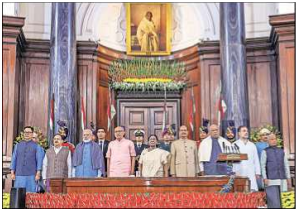
PRESIDENT Droupadi Murmu on Wednesday asserted that the Constitution is the cornerstone of the nation’s identity as also the guiding document to shun colonial mindset and adopt nationalistic thinking. Addressing the Constitution Day event at the Central Hall of the Old Parliament building, now called ‘Samvidhan Sadan’, Murmu also said the Indian Parliament, which expresses public aspirations in the world’s largest democracy, now serves as an example for many democracies around the world.
The President said the Constitution is the document of the country’s national pride and the text of the national identity. “It is a guiding text for taking the country forward with a nationalist mindset by abandoning the colonial mindset,” she said. Murmu said with this spirit and keeping in mind the social and technological developments, important legislations related to the criminal justice system have been implemented.
The Bharatiya Nyaya Sanhita, the Bharatiya Nagarik Suraksha Sanhita and the Bharatiya Sakshya Adhiniyam, based on the spirit of justice rather than punishment, have been implemented, she noted. (Contd on page 5)The three newlaws replaced
the colonial era Indian Penal
Code, the Code of Criminal
Procedure and the Indian
Evidence Act of 1872, respectively. The new laws came into
effect from July 1, 2024.
The President said India’s
parliamentary system,reflecting public expression, has
become stronger in various
dimensions and the success of
theConstitution’s faithin public wisdom through the provision of adult franchise is lauded in many other countries.
She said by moving forward
in accordance with the constitutional system,India’s executive, legislature and judiciary
have strengthened the developmentof thecountry and given stability and support to the
lives of its citizens.
The President also released
the digital version of the
ConstitutioninninelanguagesMalayalam, Marathi, Nepali,
Punjabi, Bodo, Kashmiri,
Telugu, Odia and Assamese.