Over 14,000 children died of malnutrition in seven districts in three years: Abitkar
| Date :13-Dec-2025 |
Staff Reporter :
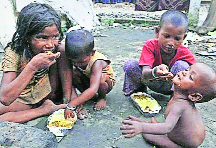
Seven districts of Maharashtra, including Vidarbha’s Nagpur, Amravati, Akola and Yavatmal, recorded 14,526 child deaths over the past three years. This was informed by Public Health Minister Prakash Abitkar in the Legislative Assembly on Friday. He was replying to a question raised by Bharatiya Janata Party (BJP) member Sneha Dubey.
Sharing the data, Minister said, “Between 2022-23 and 2024-25, Pune, Mumbai, Chhatrapati Sambhajinagar, Nagpur, Amravati, Akola and Yavatmal districts collectively reported 14,526 child deaths. The data collected represents infants and children under five years of age admitted to Government facilities. Some were admitted for various reasons including severe malnutrition.
The minister pointed out that 138 infant deaths have been recorded in the tribal-dominated Palghar district.
As per the November 2025 data, 203 children were identified as suffering from Severe Acute Malnutrition (SAM) and 2,666 from Moderate Acute Malnutrition. The proportion of underweight children was recorded at 0.23 per cent, while 1.48 per cent fell in the moderately underweight category.
Refering to the Sample Registration System 2022, released by the Registrar General of India, Abitkar explained, “The system estimated Maharashtra’s neonatal mortality rate at 11 per 1,000 live births, lower than the national average of 23.”
Abitkar said,
“The State Government has adopted multiple measures under the Integrated Child Development Services programme to reduce malnutrition.” These include regular health examinations, the Dr A P J Abdul Kalam Amrut Aahar Yojana for pregnant women, targeted interventions for SAM children, the Nutrition Campaign, the Pradhan Mantri Matru Vandana Yojana and the ‘Suposhit Maharashtra' initiative.
While talking to ‘The Hitavada’, Prakash Abitkar had said that his Government was trying to improve the situation. The Public Health Department (PHD) has decided to fill the vacancy of various posts and the addition of manpower can be used to work in the area where the problem of malnourishment is witnessed.
There are several NGOs working in malnourished areas but could not give solution. The staff of Public Health Department is working hard in this sector but they aren’t getting success due to certain
policies and lack of public participation. The department too is not able to monitor this issue the way it should have been. It was admitted by the public health official. Kothes’ model can be adopted
Jayant Moreshwar Kothe and his wife Jayashree Jayant Kothe have transformed the Halbaras, a remote village in Bastar, Chhattisgarh or Paulzola on the border of Gadchiroli and Gondia. Their model is simple--children are hungry, give them food.
They simply worked with dedication for the welfare of those tribals with a zeal resulting in them becoming an integral part of each home. When he went to the above villages in 1994, they both noticed that children, women were malnourished and nobody was there to guide them about the diet. They focussed on malnutrition. The children were found anaemic and so Kothes provided them protein-rich diet including rice, pulses, peanuts,oil. The families there did not have it in adequate quantity, so Kothes supplemented them. This model benefited people in sixty villages and later on the Chhattisgarh Government adopted it to bring improvement in malnourishment.