Dr Asha Juwarkar: A scientist who measures success by solutions, not numbers
| Date :18-Dec-2025 |
By Kunal Badge :
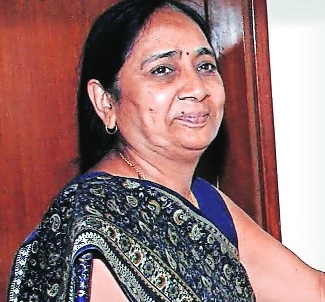
When Stanford University listed Dr Asha Juwarkar, Chief Scientist and Head, Eco-System Division, CSIR-NEERI, among the world’s top two per cent scientists, the recognition reflected depth rather than volume. Working out of Nagpur, Dr Juwarkar has spent decades shaping India’s approach to environmental biotechnology, focusing on restoring damaged ecosystems instead of merely documenting their decline.
Her inclination towards science took root early. Curiosity defined her childhood, reinforced by a family steeped in scientific thinking. “From childhood, I was always asking why and how,” she says. That questioning instinct later aligned with environmental biotechnology, then an emerging field, where biological tools offered practical answers to pollution and land degradation.
Dr Juwarkar’s most influential work lies in phytoremediation and bioremediation using plants and microbes to detoxify contaminated soil and water. The motivation was grounded in consequence.
“If contaminated land is not restored, the pollution does not remain confined,” she explains. “It enters groundwater and then crops. The damage is long-term and often invisible.” Her research has helped reclaim polluted sites, while preventing the slow transfer of toxins into the food chain.
Looking ahead, she identifies climate change driven by environmental imbalance as India’s most urgent scientific challenge. Given unrestricted resources, her focus would be on integrating Microbe-Assisted Phytoremediation (MAP) with High-Rate Transpiration Systems (HRTS), technologies she believes can address pollution, carbon stress and ecosystem degradation simultaneously.
She is unsparing in her assessment of implementation failures.
In Maharashtra’s industrial and mining belts, safe waste disposal and systematic land reclamation remain neglected despite existing regulations.
“Rules and regulations are there,” she notes, “but implementation at the field level is greatly lacking”. The issue, she argues, is not absence of science, but absence of will.
Nagpur, too, is under environmental strain. Dr Juwarkar points to indiscriminate tree-cutting in the name of development, groundwater depletion caused by unplanned cement road construction, and cementing of tree root zones that silently destroys urban green cover.
As a mentor, she consistently pushes young researchers away from a numbers-driven mindset. “Doing research just for publications or patents has no value,” she says.
“Research must be innovation-based and focused on solving real problems.”
Her own career, marked by selective but enduring work, underscores that belief.
On institutions like NEERI, her view is measured. They continue to generate solutions. The real test lies in whether industries and governments act on scientific advice rather than archive it. In closing, Dr Juwarkar offers a stark reminder to students and policymakers alike: science is not an exercise in recognition. It is a responsibility. “If research does not translate into action,” she implies, “it fails its purpose”.
Her career stands as proof that when science serves society first, global recognition follows quietly, and inevitably.