Parlt adjourned sine die Rajya Sabha passes G RAM G Bill
| Date :20-Dec-2025 |
NEW DELHI :
RAJYA Sabha Chairman C P Radhakrishnan on Friday strongly disapproved of disruptions by Opposition members during the passage of the rural employment guarantee bill (G RAM G), terming the conduct “unbecoming of Members of Parliament”, and urged them to introspect and refrain from such behaviour in future.
Radhakrishnan read out a synopsis of the legislative and other business transacted during the 15-day sitting of the Winter session before adjourning the proceedings sine die.
Adjourned sine die (Latin for ‘without a day’) means suspending a parliamentary session indefinitely, without setting a specific date to reconvene. It’s used when legislative bodies end a session without naming a future date for re-assemble.
The Winter Session of Parliament started on December 1.
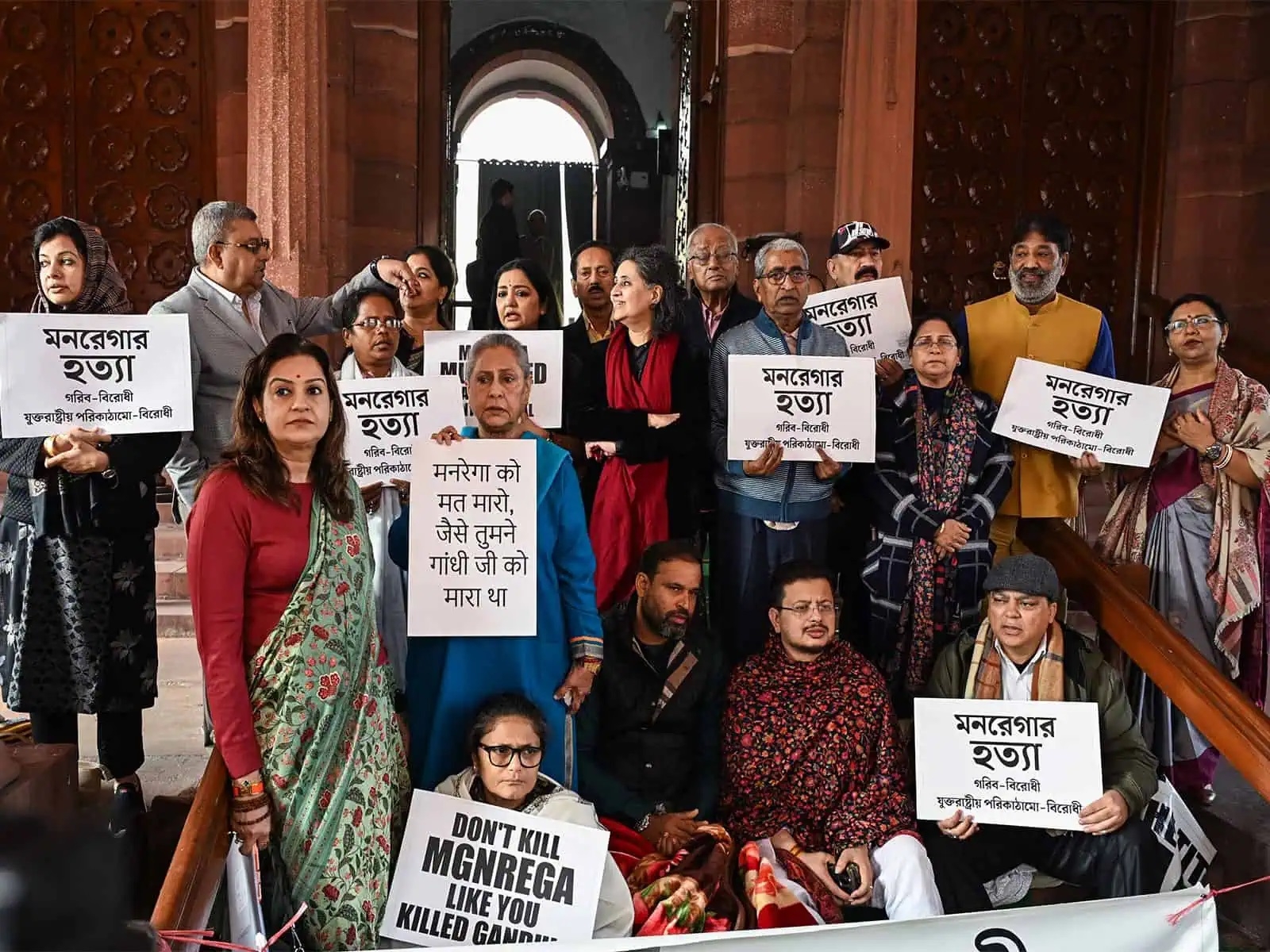
The Rajya Sabha sat past midnight on Thursday to pass legislation that replaced the 20-year-old rural employment scheme -- the Mahatma Gandhi National Rural Employment Guarantee Scheme (MNREGA) -- by boosting the number of guaranteed workdays to 125, up from the current 100 days per household for unskilled manual labour.
Opposition MPs protested the dropping of the name of the
Father of the Nation from the new legislation, Guarantee for Employment and Livelihood Mission - Rural (Guarantee for Rozgar and Ajeevika Mission - Rural). Other than that, the 269th Session of the Upper House was “highly productive”, registering 121 per cent productivity with sittings spanning about 92 hours, he said.
Delivering his valedictory remarks, Radhakrishnan said the Winter Session was significant as it marked his first stint presiding over the House after assuming office. He thanked Prime Minister Narendra Modi, Leader of the House J P Nadda, and Leader of the Opposition Mallikarjun Kharge for their felicitations.
“Disruption created during yesterday’s sitting by the Opposition Members by shouting slogans, displaying placards, disrupting the Minister replying to the discussion, tearing up papers and throwing them in the well of the House showed conduct unbecoming of Members of Parliament.
“I earnestly hope that Hon’ble Members would introspect and not repeat such unruly behaviour in future,” he said. “The warmth and affection in your felicitations proved a source of great encouragement for me as I sat down discharging my constitutional responsibility as the Chairman of this august House,” he said.
He said that in his first address, he sought the cooperation of members for the smooth functioning of the House. “I am happy that Hon’ble Members cooperated with the Chair to complete a significant amount of Business during this Winter Session.”
The Chairman noted that the House agreed to extend sittings or skip lunch recess on five days to transact business.
He said the session recorded an unprecedented rise in Zero Hour activity, with an average of over 84 notices received daily -- a 31 per cent increase over the previous two sessions -- while matters actually raised averaged more than 15 per day, up nearly 50 per cent.
Highlighting the quality of deliberations, Radhakrishnan said the House held a two-day special discussion on the 150th anniversary of the national song Vande Mataram, with 82 members participating. A three-day discussion on electoral reforms saw interventions from 57 members. During the session, the Rajya Sabha passed or returned eight Bills and adopted a statutory resolution on the Water (Prevention and Control of Pollution) Amendment Act, 2024, with participation from 212 members. As many as 59 Private Members’ Bills were introduced, reflecting what he described as the “vibrancy of parliamentary democracy”.
The Chairman also cited 58 starred questions, 208 Zero Hour submissions and 87 special mentions during the session, and said he issued a detailed ruling clarifying the scope of Rule 267.
LS registers 111 per cent productivity: Lok Sabha was adjourned sine die on Friday, drawing curtains on the 19-day-long Winter Session of Parliament, which saw the passage of crucial bills, including one to repeal the 20-year-old MNREGA and another on opening up the civil nuclear sector for private participation. The total sitting hours during the Winter Session was 92 hours and 25 minutes.
As soon as the House met for the day, Speaker Om Birla read out his brief valedictory address, noting that the productivity of the Lok Sabha during the session was registered at 111 per cent, with members sitting till late hours to discuss crucial legislation. He then adjourned the House sine die (for an indefinite period), drawing curtains on the brief session that commenced on December 1.
When Birla was reading out his valedictory statement, some members were heard raising “Mahatma Gandhi ki jai” slogans. Prime Minister Narendra Modi was present when the proceedings were adjourned.
During the 15 sittings of the Winter Session, the House took up two politically-charged debates -- one on the 150 years of Vande Matram and the other on election reforms.
The Prime Minister had initiated a discussion to commemorate the completion of 150 years of the national song. The House discussed the subject for 11 hours and 32 minutes, during which 65 members participated.
A debate on air pollution, which was to be initiated by Congress leader Priyanka Gandhi, could not take place.
The Opposition had been insisting on a debate on the Special Intensive Revision (SIR) of the voter list in 12 states and Union Territories, but the Government made it clear that the poll panel and its functioning cannot be discussed in the House, and agreed to hold a debate on election reforms instead.
The issue was discussed for approximately 13 hours, with the participation of 63 MPs. The opposition, however, focused its attack against the government on SIR, the new law on the appointment of the chief election commissioner and election commissioners, and the “vote chori” issue.
Eight bills were passed during the session.