WHO Global Summit on Traditional Medicine Traditional medicine doesn’t get recognition it deserves: Modi
| Date :20-Dec-2025 |
NEW DELHI :
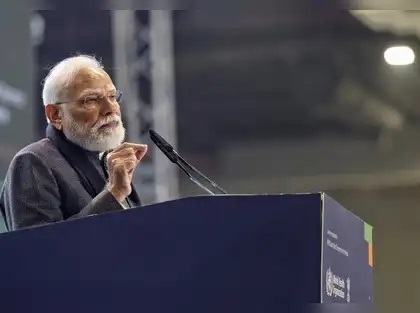
PRIME Minister Narendra Modi on Friday said traditional medicine does not get the recognition it deserves and has to win the confidence of the masses through science to expand its reach.
Addressing the WHO Global Summit on Traditional Medicine, Modi said strengthening research, use of digital technologies and developing a trusted regulatory framework will further bolster traditional medicine.
“The one whose body maintains this balance is healthy. Today, restoring balance is not just a global cause, but a global urgency. We will have to take steps at an even faster pace to address it,” Modi said.
“India is continuously working in this direction. Here, in this summit, you all have seen the example of Ashwagandha. For centuries, it has been used in our traditional medical systems. During COVID-19, its global demand increased rapidly, and its use began in many countries,” Modi said.
“India is promoting Ashwagandha through its research and evidence-based validation,” the Prime Minister said.
PM Modi launched several landmark Ayush initiatives including My Ayush Integrated Services Portal (MAISP).
He also unveiled the Ayush Mark, which is envisioned as a global benchmark for the
quality of Ayush products and services.
Modi released the WHO technical report on training in Yoga and the Book ‘From Roots to Global Reach: 11 Years of Transformation in Ayush’.
He also released a commemorative postal stamp on Ashwagandha, symbolising the global resonance of India’s traditional medicinal heritage.
India showed tradition, science can advance together: Tedros: ON THE closing day of the Second WHO Global Summit on Traditional Medicine, the global health body’s Director General, Dr Tedros Adhanom Ghebreyesus, on Friday said that healthcare must be integrated and inclusive, while stressing that science and tradition are complementary to each other.
The summit, jointly organised with the Government of India, opened on Wednesday and brought together ministers, scientists, indigenous leaders and practitioners from more than 100 countries.
Addressing the summit, the WHO Director General said, “Traditional medicine can help address many of the threats to the health of our modern world, the growing burden on economic capabilities, and inequitable access to healthcare services.”
Commending India, he said the country has shown that tradition and innovation can advance together. “India has shown the world that traditional wisdom and modern science are not inconsistent, but complementary to each other.”
“Traditional medicine can help address many of the threats to the health of our modern world, the growing burden of economic capabilities, and inequitable access to services and healthcare,” Tedros said, adding, “Prime Minister Narendra Modi’s leadership has helped bring this vision to the world.”
About the outcome of the summit, he said, “We have agreed to ensure safety, quality and public trust through common and risk-based regulation. We have also agreed to safeguard biodiversity and traditional knowledge while respecting cultural heritage, intellectual property and equitable sharing.”
The WHO D-G added, “We have agreed to harness digital technologies and innovation responsibly to improve access to research and data generation, and we have agreed to integrate safe and effective traditional medicine into health systems, especially private healthcare.”
“As we conclude this summit, let us live united by shared conviction that the future of health must be integrated, inclusive and informed. By restoring balance between people, communities and planet, we can build healthier societies for generations to come,” Tedros added.