Before Carols begin, ovens are filled with Christmas cakes
Date :24-Dec-2025
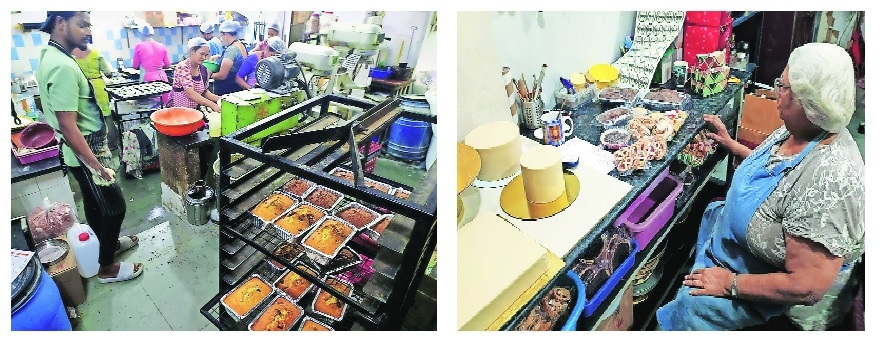
The cakes are being prepared for the Christams celebrations.
By Simran Shrivastava :
Ask anyone what they lover about Christmas, there would be near unanimity that it's the special cakes that are prepared to celebrate the occasion. So Christmas announces itself by cakes before calendar. Weeks before December 25, ovens are lit and glass jars brim with dry fruits immersed in rum. Christmas cakes stand at the centre of the season.
According to Ambrose Dalgado, proprietor, Jubilee Bakery, Mohan Nagar outlet, festive preferences are soaked in tradition. Customers, he explains, consistently gravitate towards rum or extra-rum cakes rich with butter. He notes that iced cakes are rarely favoured during this period. Instead, dry cakes dominate. As Christmas approaches, demand rises, while other seasonal favorites such as karanji, rose cookies, and similar baked delicacies continue to be staple purchases across the city.
Daisy Jose, an Income Tax Officer, with a personal attachment to baking, speaks of Christmas cake-making as an expression of joy directed outward. She situates the tradition within a wider cultural history. In many societies, December once marked the end of the harvest season, which made Christmas a natural moment for feasting and abundance. Cakes prepared with dried fruits, spices, and nuts, ingredients chosen for both flavour and longevity, became celebratory foods reserved for special occasions.
Jose also reflects on the symbolic interpretations that Christians associate with Christmas cakes. Many see the cake as representing Jesus Christ, the ‘bread of life.’ Some interpret its round form as representing the crown of thorns, while icing is viewed as a metaphor for heavenly glory. As practices blended with local tastes, a wide range of Christmas cakes emerged, from fruit, plum, and rum cakes to chocolate, ribbon, and walnut varieties. Introduced to India during the British period, the tradition gradually became a gesture of goodwill, with cakes shared among family, friends, and neighbours.
Joseph Dsouza, a teacher at St Anthony’s High School, Ajni, and a member of the Mary Queen of Apostles Parish, Pallotti Nagar, offers a broader perspective. He explains that Christmas cake is cultural instead of doctrinal. Early Christian communities marked major feasts with communal meals, and over time, sweet breads and cakes became symbols of thanksgiving.
European traditions shaped these forms, England’s rich fruit cakes prepared weeks ahead, Germany’s stollen symbolising the Christ Child, and Italy’s panettone and pandoro meant for sharing.
Though not a religious requirement, Dsouza says the symbolism endures. Sweetness reflects the joy of Christ’s birth, sharing embodies fellowship and charity, and fruits, nuts, and spices signify abundance and blessing. Dsouza concludes by sharing that at its heart lies hospitality, the impulse to welcome others, which makes the Christmas cake an expression of goodwill.