Multiple broken stretches in Chhatrapati Nagar: Craters create resentment in neighbourhood
| Date :30-Dec-2025 |
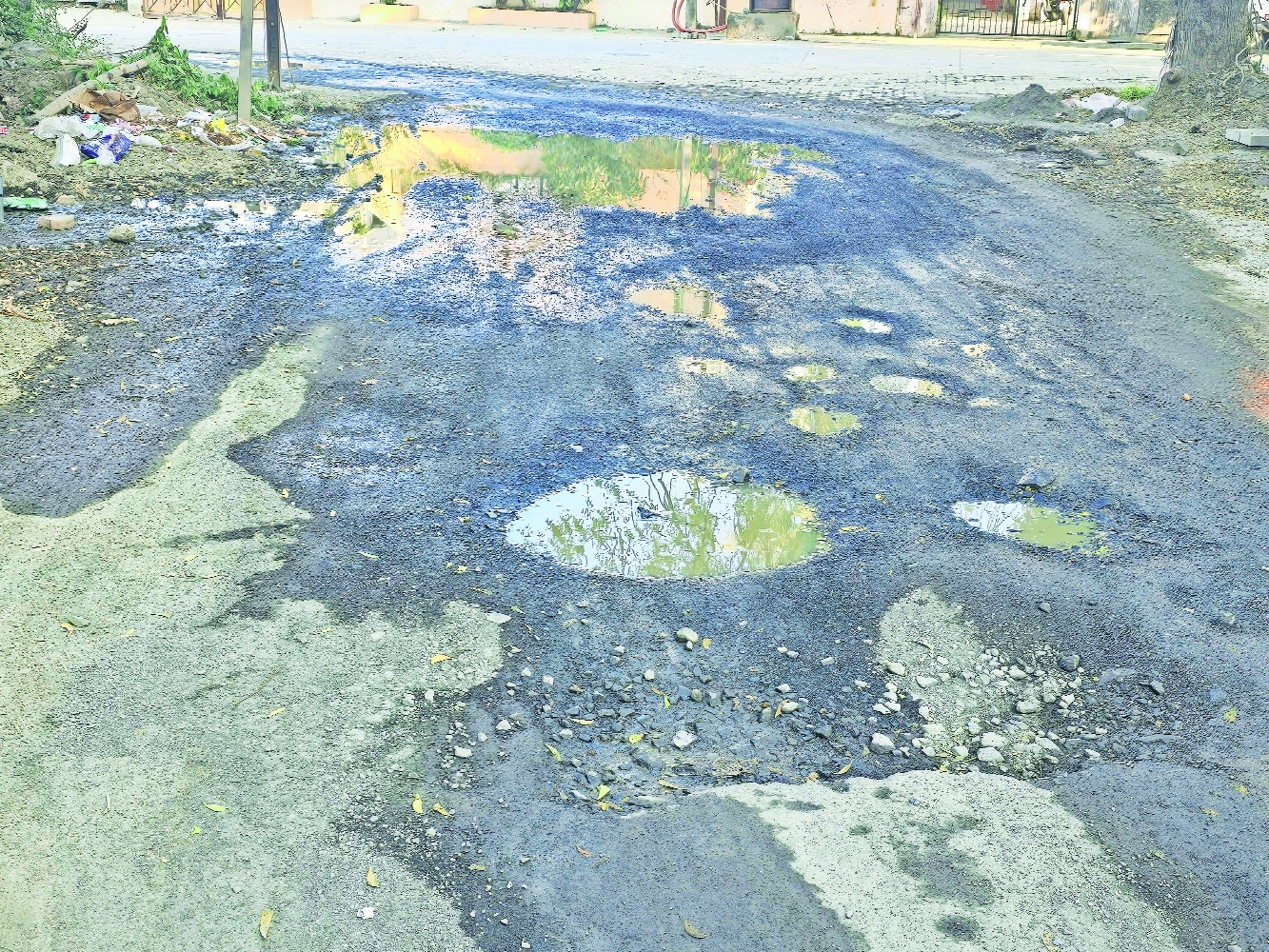
Stagnant water settles into broken asphalt from prolonged neglect of an internal road in Chhatrapati Nagar.
By Simran Shrivastava :
Across several internal road stretches of Chhatrapati Nagar, the surfaces have broken down into continuous chains of potholes, water-filled depressions, and loose gravel. The repeated pattern of damaged asphalt and uneven road edges is cumulative.
Multiple sections of the road have sunk and fractured, which has created shallow basins where water collects. These puddles, which have been created even when there has been no rainfall in recent days, indicate poor slopes and inadequate drainage. In many of the areas, the original surface has thinned to the point where stones and base material are exposed. This suggests prolonged wear without structured renewal.
A nearby resident shared her daily ordeal. “Two-wheelers have to weave carefully between these craters, and pedestrians like me have to step onto dirt shoulders.” She added that these roads function less as civic surfaces and more as a series of compromised patches that demand constant adjustment.
An NMC official took cognisance of the issue and said that construction is underway in various internal roads of Chhatrapati Nagar as an effort to ease the lives of residents and commuters, and the areas which have not been covered yet will be in the near future.
Prachi Shrivastava, a nearby resident and a student of Public Policy, reflected on the issue with measured concern. “Road construction is both necessary and welcome,” she said, “but what is consistently overlooked is the need for permanence. Roads are repeatedly repaired without adequate attention to quality, only to deteriorate again after a few spells of rain or routine traffic movement.
This cycle of superficial repair has become exhausting for residents.”
She added that sustained investment in durable infrastructure is essential. “Long-term solutions may appear costlier at the outset, but they ultimately reduce recurring expenditure, enhance public safety, and prevent avoidable accidents. More importantly, they offer citizens relief from a pattern of temporary fixes that merely postpone, rather than resolve, our everyday hardships.”
Chhatrapati Nagar is a part of rapidly densified residential belt of Nagpur, where housing has expanded while internal road infrastructure has aged unevenly. NMC disclosures also show that the internal colony roads of the area generate a high volume of pothole and waterlogging complaints.
Urban infrastructure experts consistently identify water stagnation as the most destructive force acting on asphalt roads. When drainage is absent or blocked, water seeps into cracks, weakens the base layers, and causes progressive sinking. In residential areas where stormwater systems are either incomplete or poorly maintained, roads effectively become collection channels. The repeated pools seen across these stretches point to systemic drainage failure rather than incidental damage. Persistent waterlogging on residential roads raises sanitation and public health concerns, particularly in warmer months when stagnant water can facilitate mosquito breeding.