Of musings of a classic director
| Date :27-May-2025 |
By Vijay Phanshikar :“The picture is over. Now I have to go and put it on film. ... I don’t understand why we have to experiment with film. I think,everything should be done on paper. ... If it is a good movie, the sound could go off and the audience would still have a perfectly clear idea of what was going on. ... In many of the films now being made, there is very littlecinema. They are mostly what I callphotographs of people talking...”- Alfred Hitchcock,iconic film-maker of classic mould(1899-1980).Prose
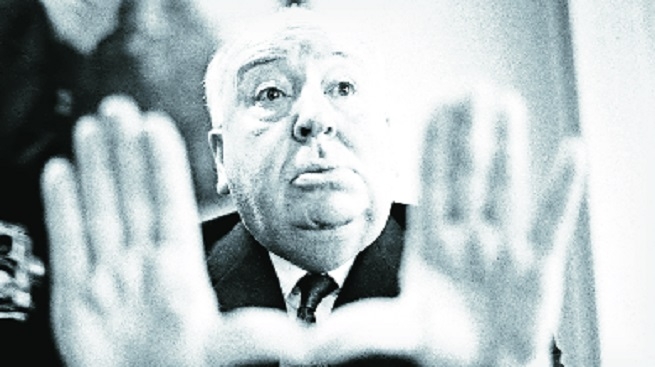
OF COURSE, there would be many people who would agree with Alfred Hitchcock. But then, there also would be many who would contest his opinions. And in this chasm between opinions Alfred Hitchcock -- the master
craftsman of movies -- resides. No matter that, the classicism in his opinion is truly endearing. For, in
simpler words, it speaks of his immense command of the medium -- and also his method, as well as his highly individualistic and at times I-care-a-damn-for-others’
ideology.
Today, it is just not possible to digest his frankness when he says, If it is a good movie, the sound could go off and the audience would still have a perfectly clear idea of what was going on. But if we realise that he started making movies in the ‘silent’ (or non-talkie) era, then we can fathom what Hitchcock has to say. Having come out of that old mould, he knew how to make his ‘silent’ movies ‘speak’. True, there used to be what they called title-cards, all right. But as Hitchcock progressed in his understanding of the art and the technology, the title cards became lesser and lesser. Without sound, too, he could tell the story -- as did every other
film-maker of the day.
But then, it was Alfred Hitchcock who gave England its first ‘talkie’ movie, and went on to master the sound so effectively that he was given the credit of fathering a whole new domain of art.
But such achievements do not actually explain what Hitchcock stood for.
What makes the real difference between him and the residents of today’s highly
commercialised world of movies is his approach to telling a story on the celluloid. He was described as a master of suspense. But he himself did not appreciate that
epithet very much. For, though he did not consider himself to be a psychologist, Alfred Hitchcock was a deep delver into human mental processes -- including, of course, fear. For him, fear was not something to be exploited as a tool of commerce; it was, at best, an expression of human persons responding to certain stimuli.
French actor and film-maker Francois Truffaut spent hours and days interviewing Alfred Hitchcock on his
understanding of the cinematic art. Famously Truffaut said afterwards, in effect, that in America, they would call him ‘Hitch’, and in France, ‘Monsieur Hitchcock’, and ‘the world’s greatest director’.
That was so because Alfred Hitchcock
created countless new normals for
movie-making the world over. He started his career in England and later shifted base to the United States to create countless
block-busters. Though the audiences the world over lapped up his movies, Hitchcock
never got an Oscar, so to say. A journalist asked him the reason. Hitchcock replied, in effect, ‘My dear fellow, how can they give me awards on the standards I have created and other are following?’
Then he just walked away laughing in a childlike innocence !