State unveils Rs 21,630 cr rural road revolution
| Date :11-Jun-2025 |
Staff Reporter :
Women’s hostels and district development blueprint
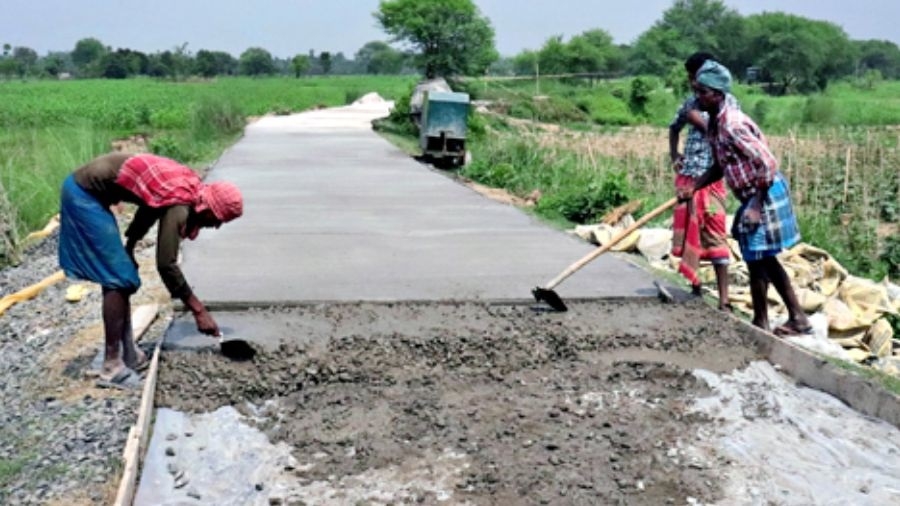
In a significant push for rural connectivity and socio-economic development, the State Cabinet chaired by Chief Minister Dr Mohan Yadav, approved several key initiatives during a meeting held at the state secretariat on Tuesday. The decisions aim to enhance infrastructure, support working women, boost the agro-industry, and streamline district-level development planning. Under the ambitious Mukhyamantri Majra-Tola Sadak Yojana, the Cabinet granted in-principle approval for a Rs 21,630 crore project to connect 20,600 remote settlements, including hamlets and tribal clusters, to main roads. The plan involves constructing 30,900 kilometres of all-weather roads across the state in two phases: The first from 2025-26 to 2029-30, and the second from 2030-31 to 2034-35.
The project will be funded through state resources and implemented by the Madhya Pradesh Rural Road Development Authority.
Settlements with at least 20 households, a population exceeding 100, and an area over 6,000 square meters, located more than 50 meters from existing all-weather roads, will qualify for inclusion. A priority list will be prepared for each assembly constituency based on population size, with provisions for modifications by district collectors to address local needs such as security, health, and education, in consultation with MPs, MLAs, and zila panchayat members. The final list will be published at the state-level.
To bolster the tur dal industry, the Cabinet exempted tur imported from outside Madhya Pradesh from mandi fees.
This move is expected to ensure adequate availability of tur dal, enhance transportation, and create employment opportunities in the State. The Cabinet approved the construction of four working women’s hostels in Jhabua, Singrauli, Dewas, and Narmadapuram under the Special Assistance to States for Capital Investment (SASCI) 2024-25 scheme. With a combined capacity of 350 seats, these hostels will be developed in Public-Private Partnership (PPP) mode at an estimated cost of Rs 40.59 crore. The initiative aims to provide safe and convenient accommodation for working women, improving their quality of life.
To streamline long-term development planning, the Cabinet approved the formation of District Development Advisory Committees in all districts, chaired by Chief Minister Dr Mohan Yadav. The committees, with district in-charge ministers as vice-chairpersons, will include MPs, MLAs, mayors or municipal chairpersons, zila panchayat presidents, janpad panchayat chairpersons, and 20 representatives from fields such as industry, trade, progressive farming, social service, medicine, and law.
District collectors will serve as member-secretaries.
The committees will formulate district-specific development roadmaps, incorporating suggestions from citizens, elected
representatives, and stakeholders. They will promote traditional skills under the Prime Minister’s “Vocal for Local” initiative, develop strategies for employment generation, and propose plans for sectors like industry, trade, water conservation, exports, agriculture, and minerals.
Additionally, the committees will identify local innovations and integrate them into actionable schemes while ensuring effective implementation of government programs tailored to local needs. These decisions reflect the state government’s commitment to inclusive growth, rural empowerment, and sustainable development, paving the way for a more connected and prosperous Madhya Pradesh.