Of the essence beyond words
| Date :24-Jun-2025 |
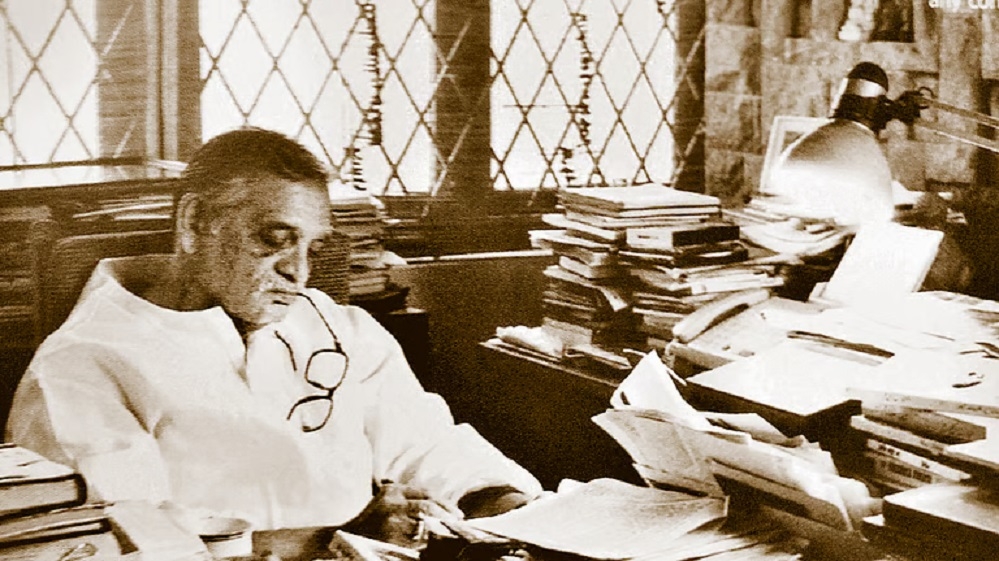
By Vijay Phanshikar :Meri likhee batonko(Whatever may I write)Har koee samaz nahin pata,(Everybody may not comprehend)Kyonki mein ehsaas likhta hoon(Because I express emotions)Aur log alfaaz padhate hein ...(And people read words ...)
VERY universal -- this experience !
This is the grief almost every poet, every artist, every expresser of human emotion and inner feelings suffers from. No matter how honestly and seriously may people try, it is truly not easy for everybody to
understand those intense emotions with the same intensity. For, people read words and may miss the
emotions embodied in those.
Gulzar -- or any other poet or artist, for that matter -- must be feeling that pinch. ‘Oh ! That’s not what I said !’, he may find himself muttering. This can happen in most cases where expression -- in words or in painting or sculpture -- is abstract (if not occult). For, as the common people take a look at work of art or literature, what they first ‘see’ is what matters more than what they may ‘sense’.
It is this sensing that matters the most in understanding of art.
The word is ‘essence’. The fragrance. The crux. The core value. That is one thing that needs to be seen or
comprehended with fine and deep and
elevated senses. As for poetry, its meaning has to be understood at the level of intense emotion, and not restrained by mere words and their dictionary meaning.
For, what Gulzar grieved about is the inability of many people to go deeper than the stated words and their stated meanings. For such people rarely understand that there is a hidden dictionary, too, in the pages of the dictionary in physical form. For, each word written and explained in the pages of the dictionary also has an unstated meaning that the reader has to derive from context of culture and differing and varying human experience.
For example the three words ‘I love you’:
When a mother says these words to her child, the context is different. And when a young man says those words to his fiancee, their meaning changes. What matters, thus, is the context -- which is entirely a cultural (even spiritual) domain.
Seen against this background of human comprehension, Gulzar’s grief can be
understood correctly. He may
not demean his readers or connoisseurs. Yet, his grief is real when he finds them restricting their reading only to the superficial meaning of the words their eyes fall upon.
In those four short lines, Gulzar has also brought to fore the fine art of appreciation of art -- which is a finely nuanced matter of comprehension or cognition.
To achieve that finesse, the individual
person has to delve deeper into his/her
own head and heart and look for millions
of culturally-tinted nuances of the word
or the expression or the situation or
the condition.
That fine distinction between Ehsaas and Alfaaz should be a point of awakening for many.