Bringing history alive
| Date :13-Jul-2025 |
Bringing history alive
By DR RAJESH SHARMA :
Reading a good history book
enriches the reader with information hitherto unknown or
only vaguely known, and
retained and remembered
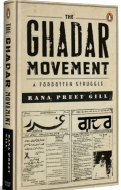
equally vaguely. The Ghadar
Movement, subtitled A Forgotten Movement,
by Rana Preet Gill, is such a book. And much
more.
Inspired by Tilak, Savarkar, Madam Cama,
and Shyamji Krishnavarma among others,
the Ghadar Movement was conceived in
1913 by Lala Har Dayal, Kartar Singh
Sarabha, Sohan Bhakna, Harnam Singh
Tundilat, and other Indians - immigrants in
the United States of America.
The book is a recounted tale of one of the
movements - the Ghadar Movement - of our
nation’s struggle for Independence that
began in 1857. The author is a seasoned
columnist and has written three novels and
a book of middles before this.
Some points need to be mentioned forthwith. First and foremost is that it is a history
book - pure history and no fictionalisation of
history. The second thing to be remembered
is the fact that the author is not a student of
history. Her formal learning of history in the
conventional sense didn’t last beyond high
school. For the trained veterinary doctor that
the author is, how much effort must have
gone into the research required for this book
can only be imagined. What the reader realises after reading
and savouring this engrossing and unputdownable book,
which is replete with a vast amount of references, is that to
write a meaningful book, your passion and effort for the subject decide the final outcome.
The book begins with a chapter titled “Bombay, Bengal and
Punjab Under British Rule” and describes the circumstances of
the Indian subcontinent and the beginning of British treachery after the Battle of Plassey in 1757.
Describing the crippling poverty and very harsh taxation of
the times, it goes on to describe the exodus of Indians, especially from Punjab, of moving abroad to improve one’s economic lot. Men who engaged in the Ghadar Movement find a
detailed description under individual names.
Shyamaji Krishnavarma is the first historical figure so
described. How many of us have heard this name, I have not.
I did not know much about him before I read
this book by Dr Gill. Vinayak Damodar
Savarkar is next. So are several more figures
describd in the book. The author’s description of the revolutionaries is non-judgemental and done as a matter of fact. Others mentioned in the book are Madam Bhikaji
Rustom Cama, Ramnath Puri, Taraknath Das,
Abdul Hafiz Mohammad Barakatullah
“Bhopali”, Kartar Singh Sarabha, Darirsi
Chenchiah, Jatinder Nath Lahiri, and Vishnu
Ganesh Pingle.
The list is long but the details
and descriptions are very pertinent, informative, and most of the time poignant too.
Lala Hardayal finds mention in greater
detail, and purposefully so, as he is considered to be the main protagonist of the
Ghadar Movement as it came to be known.
To know about the revolutionary in
Hardayal, to understand his unique
personality and genius, one needs to read
this book.
The failed mission of the ship Kama Gata
Maru, the struggles of those who moved to
shores abroad in an effort to improve their lot
evoke feelings of empathy.
That a struggle could be started from
places far away from the homeland to
unshackle from British rule, to throw away
the yoke that was strangulating, is testament to the idea of freedom and to the sacrifices that were made, especially in places
like Cellular Jail of Port Blair in the
Andamans. It is a story of human resilience
as also of how cruel and inhuman rulers can turn out to be to
suppress such struggles. All this finds a mention here, as it
should be in a history book.
Why struggle failed to achieve
Independence, what happened to the “Ghadarites”, and the
contribution of women in this struggle are well described.
Rana Preet Gill has come out as a master storyteller with a
history book which will rate very high on any readability
index. Transition from chapter to chapter is seamless, the
contents are enlightening and fully referenced. It is a collector’s book that should be read by every serious reader as also
by those who want to know more about our nation’s struggle
for Independence. This book will remain a standard reference
to the Ghadar Movement. An e-book is also available. The
production quality is flawless.
(The author is Ex-Professor of Medicine, Dr Rajendra
Prasad Govt Medical College, Kangra at Tanda) ■