Encountering CRATERS commuters’ daily ordeal Pathetic condition of Kamptee Road near RuB and Seminary Hills puts commuters at risk
Date :24-Jul-2025
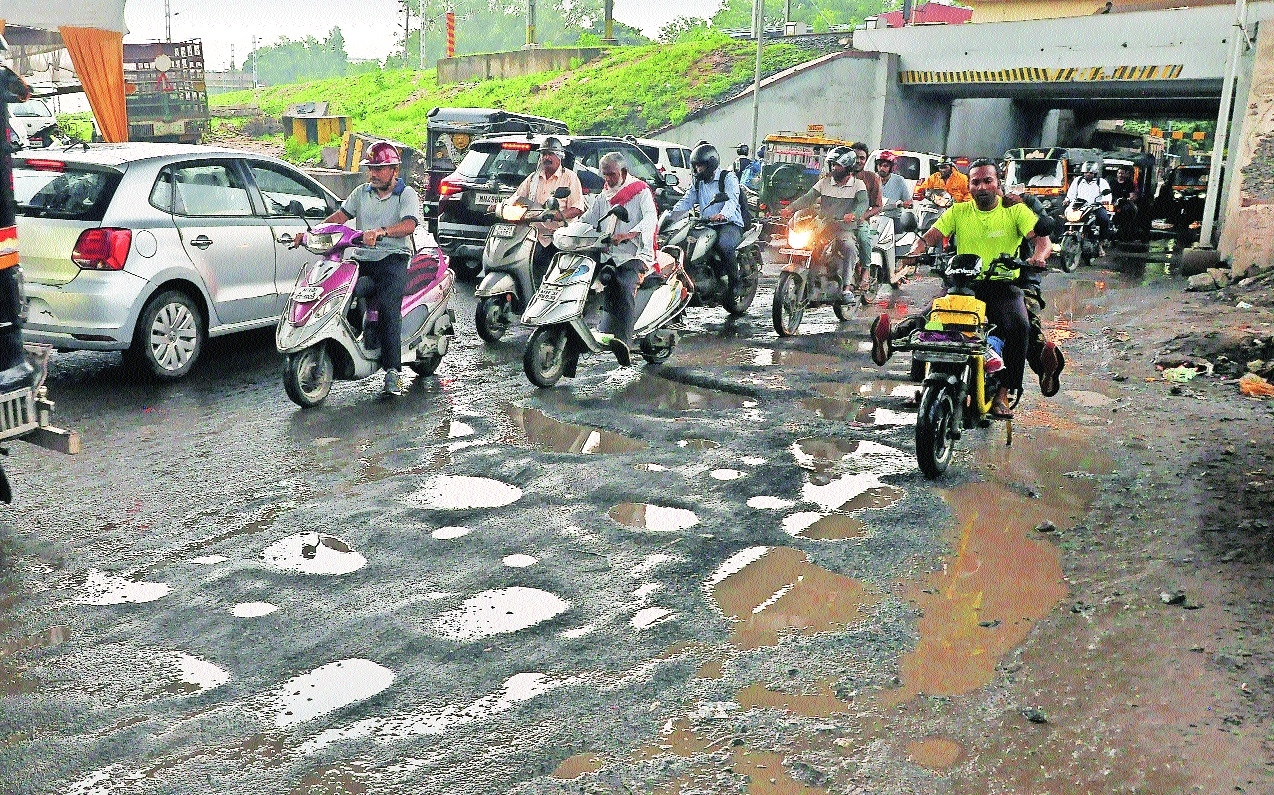
BUMPY RIDE: Vehicles navigate crater-filled, water-logged terrain on Kamptee Road near famed RuB, a key commuter route now plagued by daily traffic chaos. (Pic by Anil Futane)
By Simran Shrivastava :
Poor condition of roads across the second capital of the State is emerging as a central civic issue, particularly during monsoon months when neglected stretches become even more hazardous
While larger urban development initiatives continue across Nagpur, including fly-overs, metro corridors, and digital traffic monitoring systems, basic road maintenance remains a persistent issue
Urban roads in Nagpur, across neighborhoods of varying profiles, are showing signs of persistent neglect. From the interior lanes of Seminary Hills Colony to the busy approach road of the Kamptee Road Railway under Bridge (RuB), the condition of the roads in monsoon reflects a growing concern about civic infrastructure and maintenance. Despite being situated in vastly different areas of the city, these two stretches reveal a common issue, the deterioration of road surfaces and inconsistent response from civic bodies.
Kamptee Road
The situation on Kamptee Road RuB is more chaotic and widely visible. Serving as a major connector between West and North Nagpur, this stretch experiences heavy daily traffic, including autos, two-wheelers, private
cars, and commercial trucks. With the arrival of the monsoon, the road’s already fragile surface has deteriorated further. Water-filled potholes and mud patches dominate the route, especially near the underpass.
Vehicles frequently swerve to avoid hidden craters, creating unsafe driving conditions.
During peak hours, the congestion becomes particularly intense. The lack of a proper drainage system and absence of long-term repair work leads to frequent bottlenecks. Honking, vehicle stalls, and slowed down traffic are now everyday experiences for those using the route. Commuters report that navigating this stretch has become stressful and dangerous.
Residents of both areas are now calling for a change in the way civic maintenance is planned and executed. Their demands include scheduled resurfacing cycles instead of reactive patchwork, repainting of road lines and installation of reflectors, removal of garbage and provision of dustbins, proper management of stray cattle, and coordination between multiple maintenance agencies.
Shopkeepers near the RuB told ‘The Hitavada’ that they are fed up of the sorry state of affairs as the craters increase risk for road users. Especially during the night, the two-wheeler riders are most likely to meet with mishap, either due to vehicle slipping as the rider tries to avoid the craters, or due to collision with a bigger vehicle. They mentioned that daily one or two mishaps are reported at the stretch and said something permanent solution is needed to avoid such potholes on the busy national highway.
Seminary Hills Road
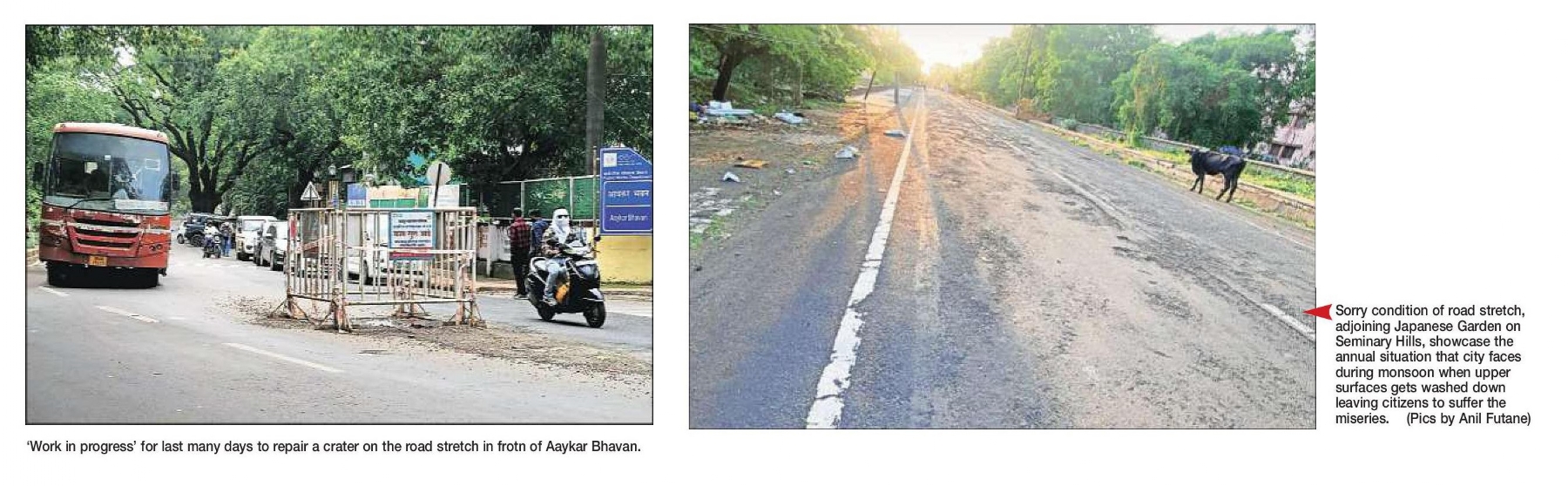
Set in one of the city’s more peaceful, tree-lined zones, Seminary Hills Road has historically been used by morning walkers, cyclists, students, and daily office commuters. Over recent months, the road has eroded significantly, with large sections of asphalt wearing away, especially during monsoon. The surface has become uneven and hazardous, particularly for two-wheelers and pedestrians. A man recently fell and broke his arm after skidding on a worn-out patch,” a resident shared the ordeal that stalks many who use the stretch.
The damage includes cracks and thinning tar, making travel risky, especially under low-light conditions where fading lane markings and poor illumination complicate visibility. Encounters with stray cattle and near-misses between vehicles are becoming more frequent.
In addition to the surface damage, the footpaths are turning into informal dumping sites.
Without dustbins or signage, garbage has gradually accumulated under the trees. This quiet degradation has gone largely unchecked.
Across different parts of the city, citizens are becoming
more vocal about the need for dependable and timely civic infrastructure.
The examples of Seminary Hills Road and the Kamptee Road underline the importance of regular maintenance, equitable treatment of different neighborhoods, and visible civic action.
While larger urban development initiatives continue across Nagpur, including fly-overs, metro corridors, and digital traffic monitoring systems, basic road maintenance remains a persistent issue. The gaps between policy vision and on-ground execution are increasingly being noticed by those who rely on these routes daily.
The poor condition of roads
is emerging as a central civic issue, particularly during
monsoon months when neglected stretches become even more hazardous.