Parking Crisis: A growing urban nightmare
| Date :28-Aug-2025 |
By Dr Sameer Manapure :
A big thanks to ‘The Hitavada’ for highlighting this burning issue faced by almost all citizens of Nagpur. We hope ‘The Hitavada’ will continue to highlight it until politicians and Government officials wake up from deep slumber.
Here, I want to share the solution for the parking crisis common to Nagpur and almost all Indian cities. We all are aware that India’s urban centres are grappling with a severe parking crisis. Roads are choked, footpaths are vanishing, and public spaces are shrinking—not due to a lack of planning, ideas but a glaring failure in implementation and enforcement. While rapid urbanisation and increasing vehicle ownership play a role, the root cause lies deeper. Its inaction by municipal authorities, dereliction of duty by enforcement agencies, and a complete disconnect between policymakers and ground realities.
The core of this crisis is inaction on mandatory parking laws. Municipal corporations across India are failing to enforce laws that mandate adequate parking spaces in new constructions such as residential apartments, commercial shops, restaurants, hospitals, marriage halls, hotels, and other public places with high footfall.
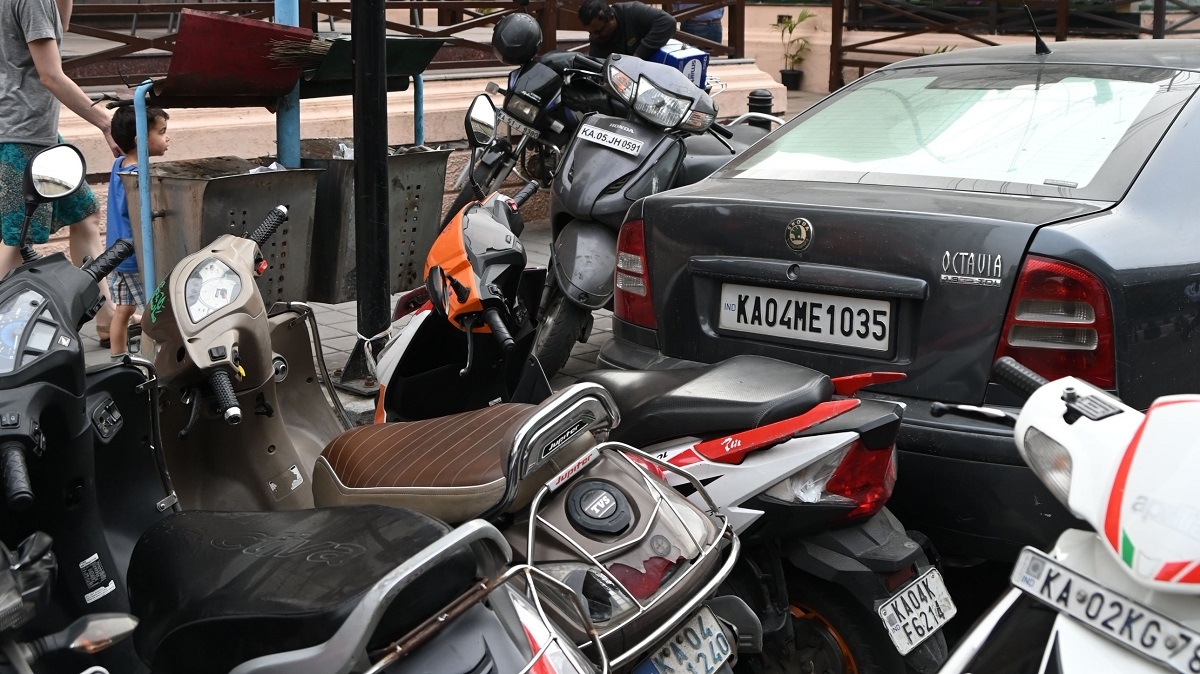
Despite building codes and urban development rules requiring designated parking provisions, these are either not implemented or blatantly ignored. This negligence has forced people to park their vehicles on roads and footpaths, places meant strictly for driving and walking.
The result? Traffic chaos, pedestrian inconvenience, and a stark compromise of public safety.
Government officials tasked with keeping roads and footpaths free of encroachment are rarely held accountable for their inaction. This has led to widespread illegal use of these public utilities for parking, commercial stalls, and even private occupation. This dereliction of duty not only reduces road width, increasing congestion and accidents, but also violates the fundamental rights of citizens to safe mobility and a clean urban environment. Pedestrians are forced onto dangerous roads, leading to injuries and fatalities, especially among children, the elderly, and disabled persons.
Measures like strict enforcement of building by-laws; Digitised public parking maps; Zero tolerance for footpath encroachment; dedicated parking zones and multi-level facilities; Heavy fine on Government officials for vehicle towing from areas meant for parking, but used for commercial activities; Cap vehicle ownership by introducing a permit-based model and allowing vehicle ownership only to those having parking facility will go a long way in ameliorating this burning issue in the second capital of Maharashtra.