Kundalini & Spine - A Neuroscientific View
| Date :31-Aug-2025 |
By DR BHUSHAN KUMAR UPADHYAYA :
K
undalini Yoga is a very fascinating stream of Yoga practices. It mainly forms the part
of Tantra and the Hatha Yogic traditions. Kundalini is said to be
existing in the subtle body of
humans. It is compared to a serpent and remains in a dormant
position coiled at the base of the
spine yogically known as the
Muladhara Chakra or the root
phlexus. It rises through purification practices followed by meditation, Pranayamas, Mantra chanting, visualisation, etc.
The question arises whether it is
just metaphorical or we can draw
some parallels with neuroscientific
findings.
The spine plays a very
vital role in the awakening of
Kundalini. According to neuroscience, the spine is one of the
most important parts of the central
nervous system including brain
cells and spinal column. Yogis
treat the spinal column as the
abode of three energy channels
or Nadis;
Ida - lunar and left energy
channel
Pingala - solar and right energy
channel
Sushumna - central energy
channel
Lunar energy channel is the
parasympathetic nervous system
which keeps the body calm and
relaxed. On the other hand the
solar energy channel aligns with
the sympathetic nervous system
which keeps the body active and
in fight or flight mode.
The central or Sushumna channel flows when both lunar and
solar are harmonised.
Neuroscientifically, this is the state
of perfect homeostasis. Yogis talk
of Amrit or the nectar secreting
from the Bindu Chakra situated in
the backside of the head. Actually
this nectar is the CSF or cerebro
spinal fluid flowing up and down
in the spinal column. The CSF
lubricates the spinal column and
keeps it healthy and energised.
Scientific studies have found that
breathing exercises and Yogic postures have positive impacts on the
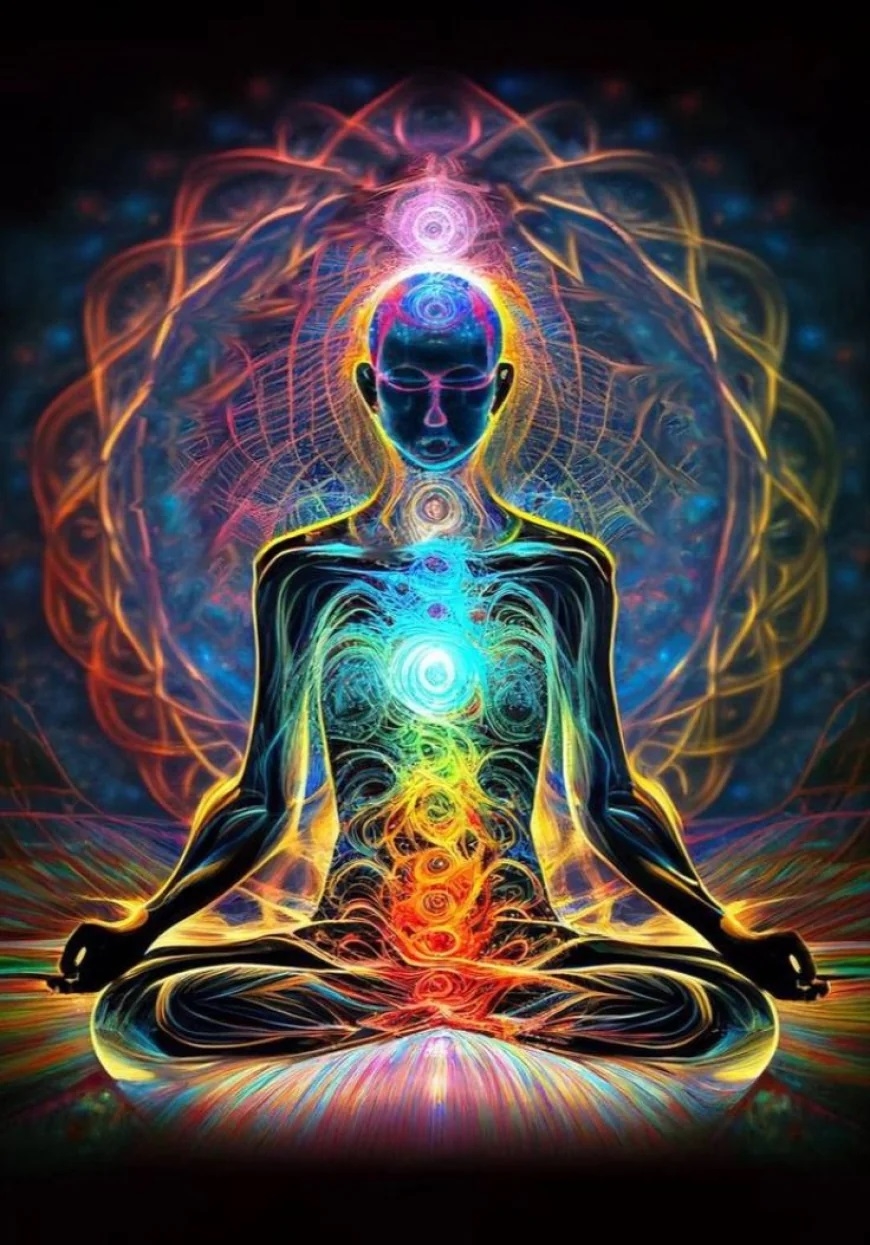
CSF. Yoga describes seven chakras
which are located in the subtle
body corresponding to the different junctions of the spinal column.
They are as follows;
Muladhara or the root chakra.
Survival instincts.
Swadhisthana - sacral chakra.
Pleasure, emotions, etc.
Manipura — solar chakra.
Power, confidence, etc.
Anahat - heart chakra. Love,
compassion, etc.
Vishuddhi - throat chakra.
Speech , communication, etc.
Ajna - third eye chakra.
Wisdom, insight, etc.
Sahasrara - crown chakra.
Enlightenment, higher consciousness, etc.
These chakras align with different endocrine glands and are akin
to the physical, psychological and
emotional functions of brain stems,
limbic system and prefrontal cortex. Studies have found that meditation and breathing exercises
quieten the Default Mode Network
of the brain and leads to higher
awareness and cognitive clarity.
The awakening of Kundalini is
also associated with a deeper
understanding and high level of
consciousness. The pineal gland
corresponds with the Sahasrara
chakra. Research has found that
prolonged practice of meditation
increases grey area in the brain
and causes permanent structural
changes. This is what the concept
of neuroplasticity talks about.
The
effects of Kundalini awakening are
certainly the neurobiological
changes which can be scanned
and examined. The spine is central to both neuroscience and
Kundalini Yoga. For one it is just a
structural column, while the other
treats it as the sacred column of
spiritual awakening and axis of
consciousness.

DR BHUSHAN KUMAR UPADHYAYA
(The writer is Former DG
Police & CG, Homeguards,
Maharashtra)
■