Split jurisdiction clouds Raipur Police Commissionerate rollout
| Date :10-Jan-2026 |
By Mukesh S Singh :
Raipur :
As Chhattisgarh prepares to usher in its first Police Commissionerate system in Raipur, the proposed hybrid structure has already triggered unease among senior police officers and governance experts. Drawing parallels with earlier experiments in Uttar Pradesh, where similar urban–rural splits in cities like Varanasi, the parliamentary constituency of Prime Minister Narendra Modi, were eventually abandoned due to coordination failures and jurisdictional confusion, observers caution that Raipur may be heading down a comparable path.
The concern stems from the decision to confine the commissionerate to urban limits, leaving vast and strategically critical areas under a separate rural policing command.
This unease gains sharper context when viewed against the state’s longer-term development roadmap. The proposed State Capital Region, approved by the legislature in late 2025, envisions an integrated metropolitan expanse covering Raipur, Nava Raipur and the Bhilai-Durg twin cities, with coordinated growth in infrastructure, governance and economic activity.
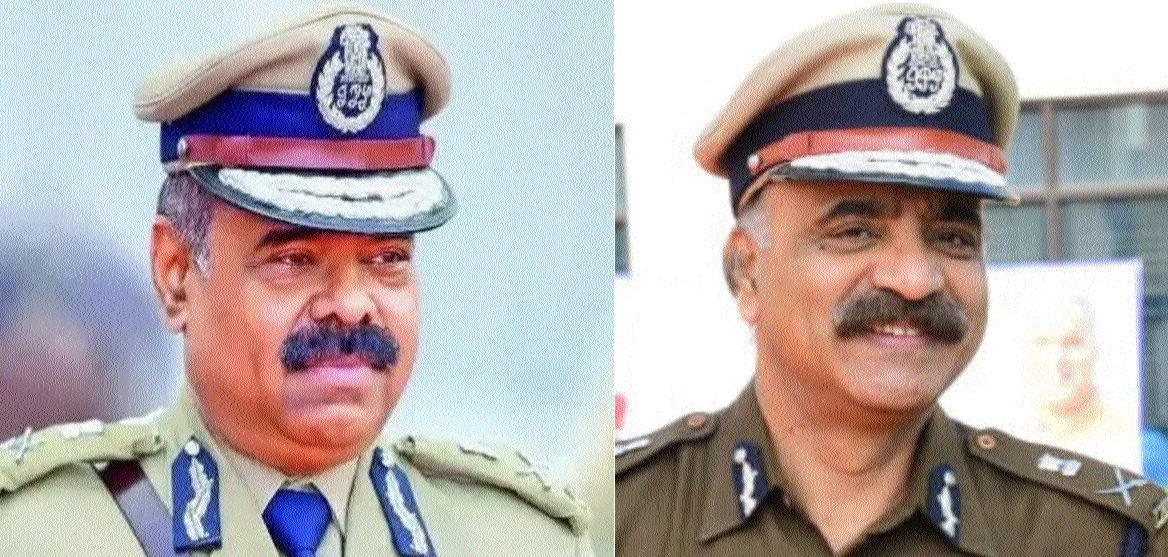
Former Director General of Police Durgesh Madhav Awasthi, who has earlier served in Raipur as ASP (Rural), SSP, IG Raipur Range and IG Intelligence, told The Hitavada that policing architecture must evolve in sync with urban expansion. “Raipur is fast developing. Fragmented policing will only create friction in areas that are no longer purely rural or urban,” he said.
Under the proposed arrangement, the police commissioner will oversee the city’s administrative and residential core, including Civil Lines that house the Governor’s residence and ministerial bungalows. However, key installations such as Raipur Airport in Mana, the Vidhan Sabha, the Secretariat and large parts of Nava Raipur will continue to fall under the jurisdiction of the Rural Superintendent of Police. Awasthi questioned this logic, saying the commissioner should deal with all major zones, including the airport, Nava Raipur and the industrial belt surrounding Raipur,
while the Rural SP should focus exclusively on genuinely rural policing.
Echoing these concerns, former Special Director General (SDG) Rajinder Kumar Vij said the effectiveness of the commissionerate would depend largely on the breadth of its jurisdiction. “In order to make the Police Commissionerate system function effectively, Nava Raipur, Mana and the surrounding industrial regions and upcoming towns must be part of it. A very small jurisdiction may itself create coordination issues,” he observed.
The Police Commissionerate is now slated to be rolled out from January 23, following multiple administrative reviews. Chief Minister Vishnu Deo Sai had announced the move on Independence
Day, projecting
it as a response to growing law-and-order challenges in the capital. With Raipur’s population having crossed the 10-lakh mark as early as the 2011 Census, the case for a robust commissionerate has long been considered administratively inevitable. Originally, the rollout was planned for November 1 as part of Chhattisgarh’s Silver Jubilee celebrations, but it was deferred after a closed-door meeting chaired by the Chief Minister. Officials cited the need for legal clarity, administrative harmonisation and inter-departmental coordination. Despite sustained efforts by Home Minister Vijay Sharma to keep the timeline intact, the government opted to shift the launch to January 2026 to avoid a hurried transition.
Highly placed sources said the process has since diverged from its original path. A detailed blueprint prepared after months of deliberation by a seven-member Police Headquarters (PHQ) task force was formally submitted to the Home Department but has not been acted upon. The task force was chaired by Additional Director General of Police (Planning and Provisioning) Pradeep Gupta and included IG Ajay Yadav, IG Amresh Mishra, IG Dhruv Gupta, DIG Abhishek Meena, DIG Santosh Singh and SP Prabhat Kumar, with legal inputs from Joint Director of Prosecution Mukula Sharma.
Instead, a fresh framework is now being drawn up within the
Home Department under the supervision of Himshikhar Gupta, a 2007-batch IAS officer serving as Home Secretary with additional charge of the Labour Department. This revised exercise is understood to draw heavily from the earlier Varanasi model, which Uttar Pradesh later modified after acknowledging operational difficulties with urban–rural splits. The revised Raipur draft is also a trimmed-down version of the original PHQ proposal. It divides the commissionerate into three zones and envisages a Commissioner of Police not below the rank of Inspector General, assisted by one Additional Commissioner of Police of Deputy Inspector General rank.
The number of Deputy Commissioners of Police has been reduced from eight to five, including three field DCPs along with DCP Crime and DCP Traffic or Protocol. The sanctioned strength of Assistant Commissioners of Police has similarly been pruned from 20 to 15. These structural changes translate into sharper jurisdictional complications on the ground. Urla police station is proposed to be split into two, with one portion brought under the commissionerate and the other retained under rural policing. At the same time, densely populated and strategically sensitive areas such as Nava Raipur, Raipur Airport in Mana, Dharsiwan, Tilda, Arang and Rajim-Nawapara are proposed to be kept entirely outside the commissionerate’s jurisdiction, despite their administrative importance, industrial activity, labour concentration and heavy national highway connectivity. Vij said such exclusions could weaken both coordination and accountability.
“If the jurisdiction of the Police Commissionerate remains very limited, there could be coordination and accountability issues,” he cautioned. He also flagged the process adopted for redrawing the blueprint, noting that if a proposal was prepared by the Director General of Police or a committee of senior police officers, it must be given due weightage. “Any changes proposed at the government level should be discussed, and differences, if any, resolved amicably. The ultimate purpose of bringing in a new system is to strengthen the enforcement agency and make it more effective,” he said.
The former Special DG also pointed to the absence of wider consultation, observing that no draft of the proposed commissionerate system had been placed in the public domain for suggestions or feedback. “Ideally speaking, to make the Police Commissionerate function effectively, the airport and Nava Raipur should be part of it,” Vij added. Awasthi, too, underlined that Mana, Mandir Hasaud, Urla and Chandrakhuri are witnessing rapid residential expansion, with several posh colonies coming up on the city’s outskirts.
He further noted that the CM’s residence, Vidhan Sabha, Raj Bhavan, Secretariat and ministerial bungalows are all located in Nava Raipur, making the presence of the police commissioner there operationally critical. “In my view, the police commissioner should have the entire Raipur district. Areas like Abhanpur, Arang and Dharsiwa are fast developing. If we are introducing a commissionerate, it should be the best possible model, not a compromised one,” the former DGP said.