Bhopal shivers amid dense fog, Khajuraho at 3°C for third consecutive day
| Date :11-Jan-2026 |
Staff Reporter :
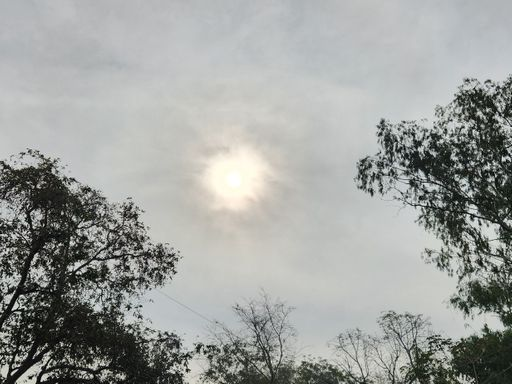
A harsh grip of winter continues to affect the State as cold wave conditions prevailed in several parts of Madhya Pradesh. Residents of the State capital are waking up to chilly mornings and cold nights, including on January 10, the city recorded a maximum temperature of 27.6°C and a minimum of 7.2°C, while morning humidity stayed at 93 percent, resulting in haze and mist across the city. Light winds of 8-10 kmph have added to the cold feel during early hours.
The Meteorological Department predicts clear skies with haze or mist continuing until the morning of 11 January, with temperatures expected to remain steady in Bhopal.
Meanwhile across the State, Khajuraho (Chhatarpur) recorded the lowest temperature at 3.6°C, followed closely by Shivpuri at 4.0°C, Rajgarh at 4.4°C, Kalyanpur (Shahdol) and Datia at 4.6°C, and Nowgong at 5.0°C.
On the warmer side, Khandwa recorded the highest maximum at 30.1°C, while Narmadapuram registered 29.8°C, Vidisha 28.9°C, Berasia (Bhopal) 28.6°C, and Bhairunda (Sehore) 28.3°C. Maximum temperatures over the past 24 hours were appreciably below normal by 3.9°C in Chambal division, below normal by 2.9°C in Gwalior division, slightly above normal by 1.9–2.3°C in Bhopal and Narmadapuram divisions, and normal elsewhere. Minimum temperatures were below normal by 1.6–2.2°C in Bhopal and Gwalior divisions, while remaining near normal in other regions.
Cold wave conditions were reported in Khajuraho and Shivpuri, while Prithvipur (Niwari) and Datia experienced a “cold day.”
Moderate fog was observed in Gwalior, and isolated dense fog is expected in Morena, Singrauli, Sidhi, Rewa, Mauganj, Satna, and Panna, potentially reducing visibility on roads, railways, and at airports. Residents are advised to avoid unnecessary travel during dense fog, drive cautiously, and use low-beam headlights by IMD, Bhopal.
The current synoptic situation shows a Western Disturbance over north Pakistan and adjoining Punjab at 3.1-4.5 km above mean sea level, accompanied by a trough in middle tropospheric westerlies along longitude 71°E north of latitude 30°N. An induced upper air cyclonic circulation over Haryana at 1.5 km above mean sea level persists. Additionally, the subtropical westerly jet stream with core winds of around 252 kmph at 12.6 km above mean sea level continues to dominate northwest India.
The 84-Year Milestone
The state capital of Madhya Pradesh has etched a new chapter in its climatic history. In a startling weather event, Bhopal has recorded its lowest November temperature in 84 years, signaling a dramatic shift in Central India’s winter patterns. According to official data from the India Meteorological Department (IMD), the current 2024-25 and ongoing 2025-26 winter seasons have outperformed nearly a century of winter data.
The most significant highlight of this season occurred on November 16, 2024, when the mercury in Bhopal dropped to 5.2°C. Meteorologists confirm that this is the lowest temperature recorded for the month since the previous record of 6.1°C on
November 30, 1941.
While
5.2°C is a record for November,
IMD archives remind us of the
city’s absolute extreme: a
bone-chilling 0.6°C recorded
on January 18, 1935, which
remains the all-time lowest
minimum.
Considering the intensity of
the cold wave, the
Meteorological Department
has issued safety guidelines
for residents to protect against
the cold wave, including covering the head, neck, fingers,
and toes, wearing adequate
winter clothing such as gloves,
caps, mufflers, and waterresistant shoes, and minimising outdoor exposure. People
should also watch for signs of
cold-related illnesses like
hypothermia or frostbite, and
seek medical attention
promptly if symptoms appear.
Farmers are advised to take
preventive measures for both
crops and livestock.
Crops
should be protected from
excess moisture and possible
diseases due to prolonged fog,
and livestock should be
housed in warm shelters with
dry bedding. Animals should
receive lukewarm water and
energy-rich feed such as jaggery, oil cakes, and grains. Rabi
crop sowing should be completed early, with proper field
levelling, moisture management, and monitoring for pests
and diseases.
Fertilisers should be applied
according to crop stage and soil
requirements, while fields
should be kept weed-free.
Deworming of calves, clean
water, green fodder, and protection against cold for livestock are also recommended.