Citizens avoiding metro as access roads turn perilous
| Date :02-Jan-2026 |
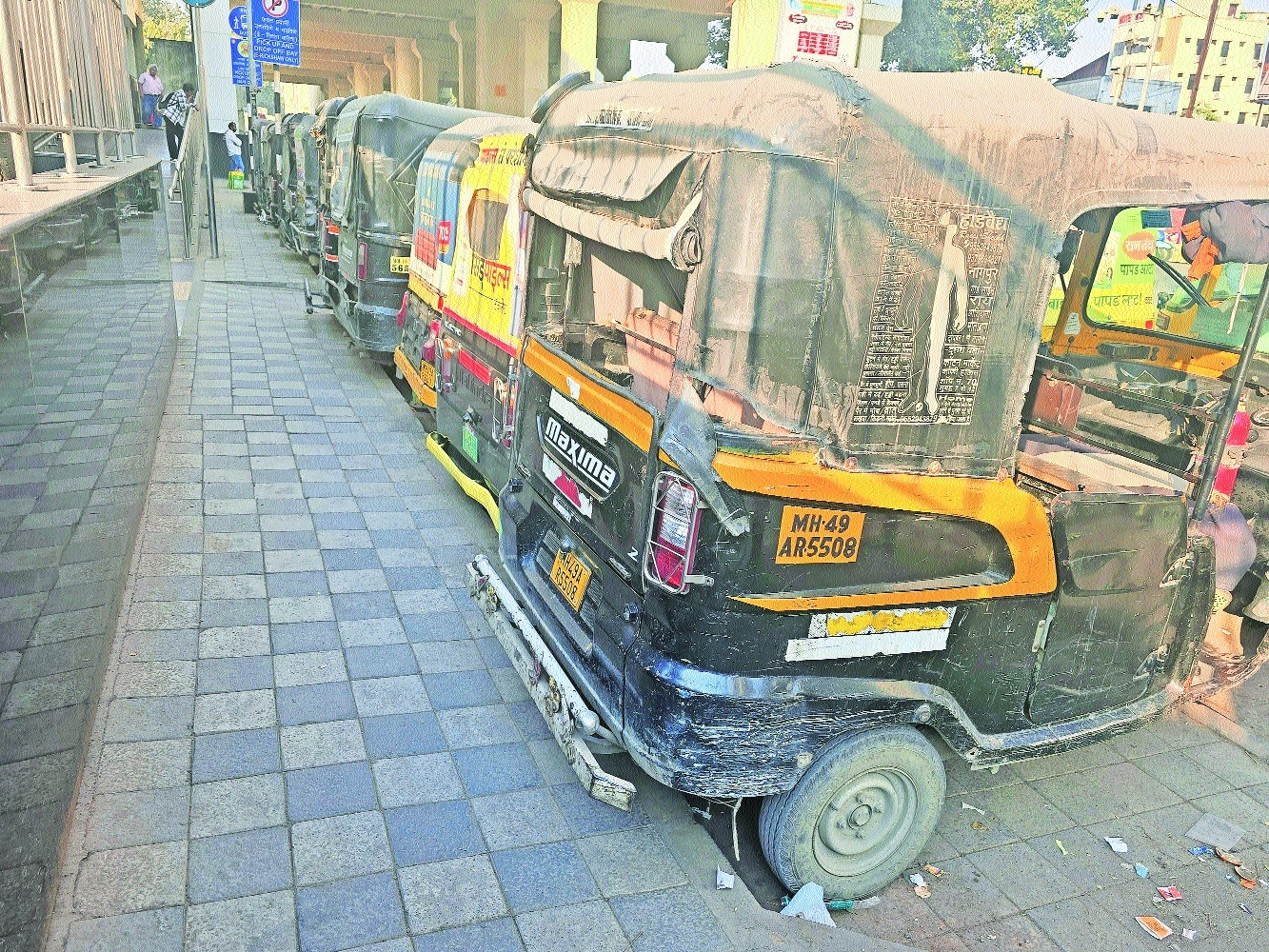
A continuous line of parked autos occupies the entire pedestrian footpath outside Nagpur Railway Station Metro Station
By Simran Shrivastava :
At most Metro stations, entry and exit becomes difficult due to encroachments
Nagpur’s metro system, envisioned as a safer and sustainable mode of urban transport, is being undermined by dangerous conditions surrounding several of its stations. The problem does not lie within the trains or platforms, but in the hostile pedestrian environments outside them. Across multiple locations, the absence of continuous footpaths, lack of zebra crossings, unchecked encroachments, and chaotic traffic movement have made access to metro stations unsafe. These factors are responsible for discouraging many of the citizens from switching over to metro from use of private vehicles.
Commuters report that walking to and from metro stations often feels more dangerous than the journey itself. Footpaths, where they exist, are frequently encroached upon by vendors, autos, and informal parking, forcing pedestrians onto busy carriageways.
Many passengers admit they avoid the metro for this reason, particularly during evening and late-night hours when low visibility and traffic indiscipline heighten the risk of accidents.
While stations such as Ajni offer relatively organised access,
several others reflect a systemic failure to integrate pedestrian planning with transit infrastructure.
Jaiprakash Nagar
At Jaiprakash Nagar, the station is located at a busy junction with vehicles moving in multiple directions without clear lane discipline. There is no continuous footpath. This compels commuters to walk on the road alongside cars, autos, and two-wheelers. Vehicles halt at irregular angles, two-wheelers cut across pedestrian paths, and there are no zebra crossings aligned with station access. Pillars of the elevated metro obstruct sight lines, which leaves commuters to navigate what many describe as a dangerous maze, especially after dark.
Munje Square
Munje Square presents a similar scenario. Autos are parked along pedestrian edges. This narrows road space and push walkers into traffic. Vendors occupy parts of the footpath. This forces pedestrians onto the carriageway. Congestion is worsened by damaged road patches and restricted visibility under the elevated structure. This has turned the area into an unmanaged parking and vending zone rather than a safe transit access point.
Sitabuldi Inter-change
In Sitabuldi, one of the city’s busiest commercial areas, vending carts line the
walking edge beneath the
fly-over, with autos queued closely behind them. The
footpath is fragmented and repeatedly blocked. This
leads pedestrians to squeeze through narrow gaps or step onto the road.
Despite metro entry and exit signage, there is no protected pedestrian route, and congestion intensifies during peak hours and after dusk.
Cotton Market
Outside Cotton Market Metro Station, handcarts and two-wheelers occupy space directly in front of entry
and exit points. Pedestrians
are pushed into active traffic lanes, often inches away from moving vehicles.
Passengers report severe congestion and heightened safety concerns at night due to inadequate and irregular street lighting.
Nagpur Railway Station
At Nagpur Railway Station Metro Station, the footpath is almost entirely taken over by parked autos, which forces commuters onto the road. This severely affects elderly passengers, persons with disabilities, and rail travellers carrying luggage. The tiled footpath beneath the vehicles highlights how planning intent has been nullified by lack of enforcement.