Indore water tragedy sparks ALARM in Bhopal
| Date :02-Jan-2026 |
By Chandravir Kumar:
THE tragic death of 12 people due
to contaminated water in Indore
has sent shockwaves across
Madhya Pradesh, yet the Bhopal
Municipal Corporation (BMC)
appears to be leaning on bureaucratic claims rather than addressing a ticking time bomb beneath
the city’s streets. While Municipal
Commissioner Sanskriti Jain has
certified 99% of the water distribution network as safe, the
ground reality in the state capital tells a more perilous story.
Bhopal’s water distribution is
a tale of two cities. While New
Bhopal enjoys relatively modern
infrastructure, areas like Itwara,
Budhwara, Bagh Farhat Afza,
Karond, and Bairagarh rely on a
network that is 40 to 50 years old.
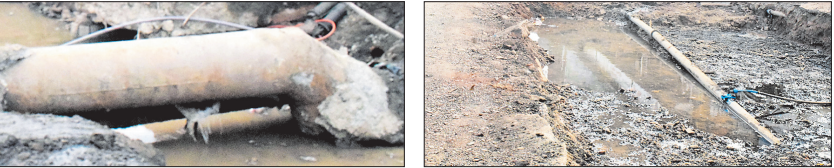
Of the city’s 2,500 km long
pipeline network, nearly 45%
passes directly through open
drains and sewage channels.
Public health experts explain that
when the water supply is cut off,
a ‘negative pressure’ is created
within the pipes.
This suction
draws sewage and filth from leakages directly into the main supply. In localities like Fiza Colony
(Ward 78), residents report having to flush out foul-smelling,
black water for the first 5 to 8 minutes every time the supply begins.
Following the Indore crisis,
Superintending Engineer Udit
Garg ordered the testing of over
300 water samples. Officials
claimed that no significant leakages were detected on the first
day.
However, experts warn that
standard chlorination, currently being ramped up by the BMC,
has its limits.“If sewage is directly infiltrating the pipes, the standard dose
of chlorine cannot neutralise all
pathogens, posing a severe risk
of water-borne epidemics,” a
public health specialist noted.
The Amrit 2.0 Lag: Under the
Rs 448-crore Amrit 2.0 Project,
the BMC plans to replace old
pipelines with Galvanised Iron
(GI) lines.
However, the pace of
execution remains sluggish.
Currently, the city’s water supply capacity stands between
514 and 575 MLD, but approximately 15-20% of this water is
lost to leakages, which also serve
as entry points for contaminants. Stung by the neighbouring city’s tragedy, Mayor
Malti Rai has directed officials
to implement rigorous monitoring.
“The Indore incident is
a grave warning for all urban
bodies. No negligence will be
tolerated in Bhopal,” she said,
demanding a detailed report
on pipeline vulnerabilities.