CG tableau ‘Vande Mataram’ brings alive saga of tribal heroes on Kartavya Path
Date :28-Jan-2026
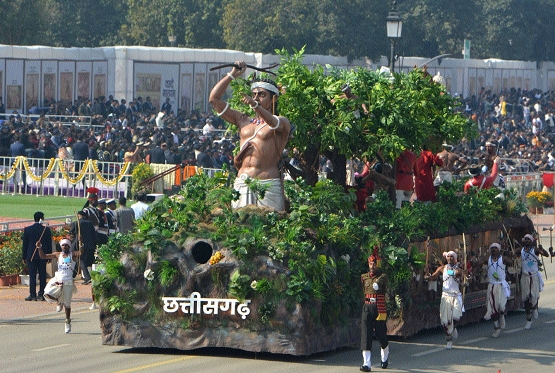
The tableau of Chhattisgarh gave an enchanting glimpse of the country’s first tribal digital museum as it cruised down the majestic Kartavya Path in New Delhi on Monday.
The tableau showcasing the digital museum pays tribute to the immortal tribal heroes who fought against the unjust laws of the British rule and sacrificed their lives for freedom.
Chief Guest of the 77th Republic Day celebrations, President of the European Council Antonio Costa and President of the European Commission Ursula von der Leyen along with President Droupadi Murmu, Prime Minister Narendra Modi and Defence Minister Rajnath Singh received the tableau with waving hands as it passed in front of the saluting base.
The spectators were astonished to see the presentation of tribal struggle against British rule. They greeted the tableau with huge applause and were spellbound with the depiction of tribal leader Gundadhur on the tableau.
Built at a cost of Rs 50 crore, the museum is a tribute to the immense contribution of tribal communities to India’s freedom struggle.
It is designed to connect present and future generations with the heroic struggles and sacrifices of their ancestors, ensuring that these stories remain alive in the nation’s collective memory. The museum is spread across 14 thematic galleries, showcasing more than 650 sculptures that vividly depict major tribal uprisings during British rule. The front of the tableau features Veer Gundadhur, the legendary hero of the historic Bhumkal Rebellion of 1910. A revered leader of the Dhurva community, he united tribal groups to rise against oppression and injustice. Prominent symbols of the Bhumkal movement—mango branches and dried chilies—are displayed, representing resistance and unity. The sheer magnitude of the rebellion is evident in the British administration’s decision to summon troops from Nagpur, yet Veer Gundadhur remained unconquered and uncaptured. The rear of the tableau portrays Veer Narayan Singh, Chhattisgarh’s first martyr, shown mounted on horseback with a sword in hand. A champion of the poor and oppressed during the devastating famine, he emerged as a key figure in the First War of Independence in 1857. Together, the tableau stands as a powerful tribute to the tribal community’s unbreakable spirit, patriotism, and unwavering determination in the struggle for freedom.