Encroachment, neglect, disorder choke railway station’s Cotton Market corridor
| Date :03-Jan-2026 |
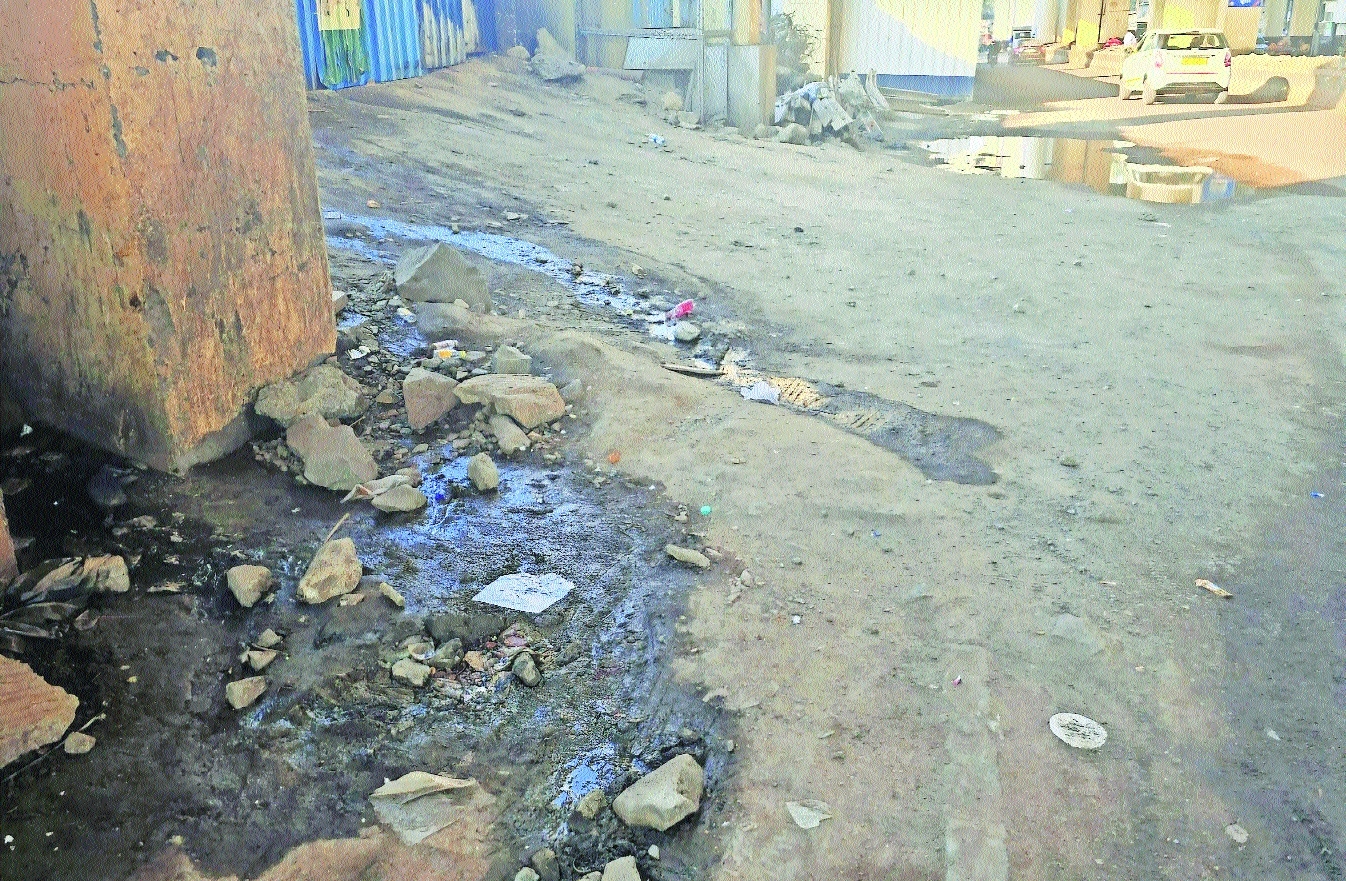
Stagnant sewage mixed with mud and scattered debris spreads turning a busy access point into a foul-smelling and hazardous patch for pedestrians.
By Simran Shrivastava :
The stretch linking Nagpur Railway Station with Cotton Market area has been devoured by encroachments and pervasive filth which has led to congestion, discomfort, and daily risk. Sanitation in the area has gone for toss as garbage, plastic waste, discarded food, and debris are strewn across pavements and road edges. Stagnant water mixed with mud and sewage collects around in the form of scattered patches. These pools, combined with the unhygienic conditions, greet the railway passengers with a nauseating stench that permeates the surroundings. The lack of drainage and routine cleaning has allowed these conditions to become entrenched rather than incidental.
Immediately outside the railway station, footpaths intended for pedestrian movement have been almost entirely usurped. Roadside vendors have established sprawling, semi-permanent stalls selling bedding, garments, mats, and assorted goods, their merchandise stacked in bulky piles that spill well beyond the pavement.
Handcarts laden with goods stand entrenched along the curb. This narrows the carriageway and forces pedestrians to step directly onto the road. In several sections, stalls have advanced so far that the distinction between footpath and roadway has all but vanished.
Compounding the problem is rampant parking by auto-rickshaws. Long, unbroken rows of autos occupy pedestrian tiles and pavements near station access points, which turns the designated walking zones into de facto parking yards. Under the metro viaduct and along the station frontage, autos are parked bumper-to-bumper. Elderly passengers, women, children, and travellers burdened with luggage are left with no option but to negotiate moving traffic.
Traffic conditions along this stretch have deteriorated badly as a result.
With vendors and parked vehicles encroaching upon the road, vehicular movement is constricted into narrow channels. Cars, two-wheelers, and autos slow abruptly, swerve unpredictably, and compete for the limited space available. This has been leading a wide number of near-miss situations throughout each day.
The deterioration continues uninterrupted towards the Cotton Market area, which lies along the same road. Here too, footpaths are either broken, uneven, or entirely absent in places. Loose stones, construction debris, and eroded surfaces make walking treacherous. The cumulative effect is a landscape hostile to safe movement.
In the little space that remains unoccupied, homeless individuals have established makeshift shelters, placing bedding, bags, and personal belongings along walls and corners of footpaths. This further compresses already limited pedestrian space and points to the complete absence of humane urban planning and structured management in the area.
Taken together, the unchecked spread of encroachments, illegal parking, broken infrastructure, and abysmal sanitation has made the Nagpur railway station-Cotton Market corridor into a zone of disorder. Despite its importance as a primary entry point to the city and a vital commercial region, the stretch lacks even the most basic elements of urban dignity, safety, and cleanliness.