AWC 2026 Birders identify 213 species
| Date :06-Jan-2026 |
Staff Reporter :
THE Asian Waterbird Census
(AWC) 2026 was successfully
conducted across the Jabalpur
district recently, marking a significant effort in regional biodiversity monitoring.
Organised annually by
Wetlands International in coordination with the Bombay
Natural History Society (BNHS),
this year’s initiative featured an
expanded collaborative framework involving eBird India and
the Madhya Pradesh Forest
Department.
The 2026 census utilised a citizen-science-driven approach,
emphasising the integration of
local expertise and digital data
collection.
A cohort of 25 skilled
birders and wildlife enthusiasts
surveyed approximately 20
prominent reservoirs including
Bargi Dam, Khandari Reservoir
(Dumna), Sangram Sagar and
Hiran Dam.
To ensure technical accuracy
and real-time reporting, all
observations were recorded via
the eBird mobile application.
This digital transition allowed for
the compilation of 100 comprehensive checklists, providing a granular view of the region’s
avian health.
The two-day survey yielded
impressive results, with participants identifying a total of 213
bird species.
While common
aquatic
birds were
found
in abundance,
the census also documented
several
rare
and
ecologically
significant
species.
The participants identified
Waterbirds & Waders
including River Lapwing, Pallas’s
Gull, Sarus Crane, Common
Pochard, Raptors including
Osprey, Peregrine Falcon
and Terrestrial & others
including Orangebreasted Green Pigeon,
White-capped Bunting
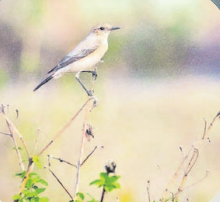
and Desert Wheatear.
The primary objective of the AWC 2026 is
the annual assessment
of waterbird populations
and the monitoring of wetland health.
It may be mentioned here
that by establishing a
consistent data set, conservationists can evaluate the ecological status of these sites and
implement necessary management strategies.
Furthermore, the programme
aims to foster environmental
stewardship among the
general public. By involving
local citizens in the scientific
process, the initiative promotes
a deeper understanding of
the vital role wetlands play in
maintaining the regional ecological balance.