Sukma’s remote health centres earn national NQAS recognition
| Date :08-Jan-2026 |
Staff Reporter:
EMERGING from its long association with left-wing extremism, Sukma district has marked
a significant public health milestone with three healthcare facilities receiving National Quality
Assurance Standards (NQAS) certification from the Union
Ministry of Health and Family
Welfare. The recognition has
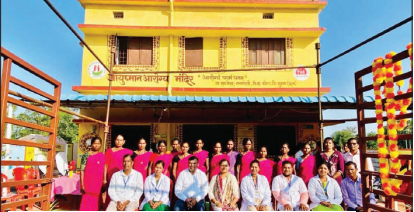
been conferred on Primary
Health Centre Buddi, Ayushman
Arogya Mandir Gagpalli and
Ayushman Arogya Mandir
Kristaram, all located in some of
the most remote and sensitive
pockets of the district.
The achievement represents a
rare national-level acknowledgement for health institutions
operating amid difficult terrain,
security challenges and limited
connectivity.
Officials said the certification
underlines the State
Government’s commitment,
under Chief Minister Vishnu Deo
Sai, to ensure that quality healthcare reaches the last person, even
in the most inaccessible regions.
Despite logistical and geographical constraints, the three
centres successfully met stringent
national benchmarks, securing
more than 70 per cent scores
across eight parameters, including service delivery, patient
rights, infection prevention and
control, clinical care and facility management. The performance places the Sukma centres
among the select public health
facilities in the country to attain
NQAS recognition from conflict affected areas.
District officials said a focused
administrative strategy was
adopted to achieve the standards Under a special action plan aligned with Niyad Nellanar,
continuous monitoring ensured uninterrupted availability of medicines and essential equipment in remote locations. Strong emphasis was laid on hospital hygiene, infection control practices and biomedical waste management.
A patient-centric approach was also prioritised, ensuring
respectful treatment, awareness of patient rights and dignified care. Sukma Collector Amit Kumar, talking to The
Hitavada, termed the NQAS recognition a historic moment
for the district, stating that national certification for health
centres located in Naxal-affected areas reflects the administration’s resolve to drive development through education
and healthcare despite formidable challenges.
He said the
achievement clearly demonstrates that sustained governance, planning and monitoring can deliver measurable
outcomes even in the most difficult environments.
Explaining the broader impact, the Collector said the
National Quality Assurance Standards framework is designed
to systematically improve the quality of public healthcare
facilities across the country.
With the certification now in
place, the recognised centres will become eligible for financial incentives from the Central government, which will be
utilised for further expansion of services, infrastructure
upkeep and strengthening of patient care systems.
He added
that for local communities, particularly those living in
remote forested regions, the certification would translate
into improved access to reliable, safe and quality healthcare closer to home. “As Sukma continues its transition from
conflict to development, the national recognition of its healthcare institutions signals a deeper and more durable transformation underway,” the District Collector said.