TOXIC WATER CRISIS IN INDORE
| Date :08-Jan-2026 |
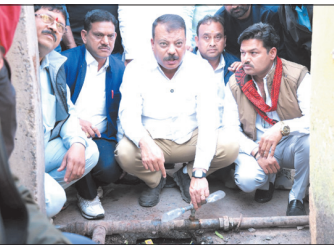
Staff Reporter:
INDORE is grappling with
a severe water crisis, with
multiple areas receiving
unsafe, contaminated
water. Madhya Pradesh
Assembly Leader of
Opposition, Umang
Singhar, conducted a
detailed on-the-ground
water audit, personally collecting samples from several neighborhoods. His
findings revealed alarming contamination, raising concerns over public
health and administrative
negligence.
This comes in
the wake of 20 deaths in
Bagirathpura due to polluted water, yet authorities and the municipal corporation continue to shift
responsibility.
In Madina Nagar, a predominantly Muslim area,
residents reported being
charged 7,000–8,000
rupees for new water connections, with annual bills
ranging from 2,000–3,000
rupees. Despite these payments, water supply
remained dirty and unsafe.
Singhar highlighted the
absence of municipal officials and the mayor in
addressing complaints,
sarcastically pointing out
that the mayor seems
focused only on a small
stretch of the city while
neglecting the rest.
In Khajrana, the situation was equally concerning. Narmada water, the
city’s primary source, was
found to be foul-smelling
and heavily polluted, making it completely unfit for
drinking. Singhar warned
that if left unchecked, more
areas could face tragedies
similar to Bagirathpura.
During inspections in
Bhuri Tekri, water samples
collected on-site were
found to be highly contaminated and hazardous
to health. Residents reported stagnant sewage, waterlogging, and frequent illnesses, with no permanent
solutions provided despite
repeated complaints.
Even politically significant areas like Indore
Assembly–2, which has
been represented by senior BJP leaders and ministers, showed pipelines running next to open drains—
a stark example of
administrative apathy.
Contaminated water was
also reported in Barfani
Dham and Kanadia, proving that the crisis is not
limited to isolated pockets
but is widespread across
the city.
Singhar emphasized
that it is unacceptable for
a city once hailed as one
of India’s cleanest to face
such public health risks.
He directly questioned the
state government and
municipal authorities
about accountability and
demanded immediate
remedial action. He urged
citizens to collect water
samples from their neighborhoods and report contamination, warning that
failure by the government
would leave the opposition no choice but to
launch a public movement
to protect residents’ lives.