Directives issued for regular inspection of water supply, pipelines
| Date :09-Jan-2026 |
Staff Reporter :
DRINKING water supply, its
quality, and the condition of
pipelines are under heightened
scrutiny in the wake of the recent
Indore tragedy, which has triggered serious allegations regarding contaminated water supply
and neglected pipelines. With
similar concerns being raised
about drinking water systems
and ageing pipelines in the
Bhopal division, the administration has moved to tighten
monitoring and accountability
across the division.
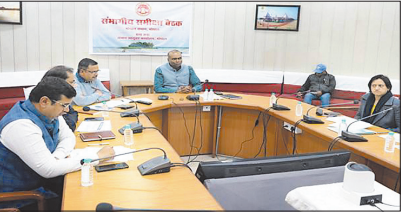
Against this backdrop,
Divisional Commissioner
Sanjeev Singh on Thursday conducted a detailed review of
drinking water arrangements
through video conferencing with
officials from all districts of the
division.
The review covered
both rural and urban areas, with
emphasis on preventing incidents linked to poor water quality or faulty supply lines.
Daily testing of drinking
water: Singh directed district
CEOs, Chief Municipal Officers,
and concerned officials to
ensure daily testing of drinking
water, making it clear that negligence in water quality monitoring will not be tolerated. He
instructed that all complaints
related to drinking water
received on the CM Helpline
must be resolved immediately,
stressing that delays could lead
to serious public health consequences, as seen in Indore.
Taking serious note of old and
deteriorating pipelines, the
Commissioner instructed officials of Rajgarh, Sehore, Vidisha,
and Raisen districts to conduct
immediate surveys of old water
supply lines. He said that wherever repair or replacement is
required, corrective action must
be taken without delay. In light of
allegations emerging from Bhopal
regarding water contamination
and pipeline issues, he emphasised proactive inspection rather
than reactive measures.
Water treatment plants be tested regularly: Singh also directed
that all water treatment plants
be tested regularly in co-ordination with urban local bodies and
that their functioning be closely monitored. Reviewing the work
of the Public Health Engineering
(PHE) Department, he instructed district CEOs to mandatorily
inspect drinking water systems
during field visits.
Testing of hand
pump water sources and regular cleaning of water tanks were
also made mandatory.
The Commissioner stated that
in the next review meeting, officials must present precise data
on water testing, supply systems, and available water
sources. He also reviewed rural
drinking water schemes and
directed that Village Water and
Sanitation Committees manage
and monitor water distribution
at the village level to ensure
transparency and safety.