Beyond Garba How Gujarati communities in Nagpur celebrate Navratri
| Date :17-Oct-2026 |
By Reema Mewar :
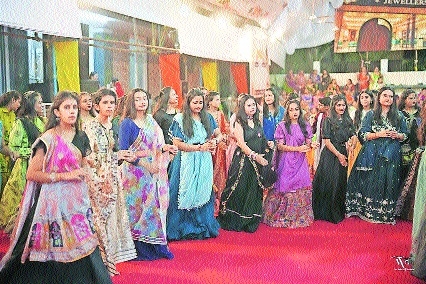
In Nagpur, Navratri brings together Gujarati communities through a mix of collective celebrations and traditions observed within individual homes. While Garba remains the festival’s most visible attraction, prayers, traditional meals and rituals continue to shape how families observe the nine days. Each community has its own way of celebrating.
For the Shree Dasha Sorathiya Vanik Samaj, Navratri has been a community celebration for over 70 years. This year, however, the Samaj is hosting the festivities independently for the first time, having previously celebrated alongside the Soni Samaj.
“We see around 300 people gathering at our premises every evening. We begin with the evening aarti, followed by a traditional dinner prepared without onion and garlic. The menu changes daily. We want people to come together, enjoy a meal, and participate in the festivities without worrying about cooking at home,” said Ritesh Selarka, president of the Samaj’s Yuva Mandal.
The Samaj performs aarti three times a day, and evening Garba begins at 9 pm and continues until 2 am. Selarka said members support the celebrations through voluntary donations according to their means.
For the Kutchi Patidar Samaj in Lakadganj, tradition also shapes the festivities. “Members gather twice a day for aarti, followed by Raas Garba. We practise well before Navratri begins.
Men and women perform Garba separately, married women cover their heads, and everyone is expected to wear decent, traditional clothing. We place great importance on maintaining this decorum,” said Kirti Patel, a member of the Samaj.
She added that families follow their own observances at home. Some worship a ‘ghat’, a small painted pot with a diya inside, while others organise kanya bhojan, inviting nine young girls for a traditional meal and gifts. Fasting practices differ too. Patel recalled that her mother-in-law observed ‘ek taana’, eating only once a day during Navratri.
Across Nagpur, other Gujarati communities also gather for their own aartis and Garba celebrations. Many families preserve old prayer books and devotional songs like ‘Jay Adhyashakti’ and ‘Vishwambhari Suti’.
Garba may be Navratri’s most recognisable expression, but Gujarati celebrations extend well beyond the dance floor. In community halls and family homes alike, the festival continues through shared meals, familiar prayers, and customs that each generation carries forward.