Festival season inflation hits household kitchen budgets
| Date :02-Oct-2026 |
DURG :
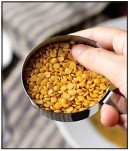
WITH the festive season underway, rising prices of essential food items are beginning to strain household budgets. Prices of tur dal (arhar) have increased by Rs 20 to Rs 30 per kg over the past 20 days, with good-quality varieties now retailing at Rs 140 to Rs 150 per kg. In the wholesale market, prices have climbed to Rs 135-140 per kg. Traders attribute the rise to concerns over supplies, declining stocks and uncertainty over fresh arrivals. An uneven monsoon and its possible impact on pulses production have also added to market concerns. Tur dal, which was selling at around Rs 110-120 per kg nearly three weeks ago, has witnessed a sharp increase in prices. Traders said Chhattisgarh largely depends on Karnataka and Maharashtra for its supplies. With the market currently relying on old stocks and the new crop yet to arrive, declining inventories have pushed prices upward. The increase is not confined to tur dal. Gram dal and rice have also become costlier, adding to the burden on consumers ahead of the festive season, when demand for essential food items generally rises.
Gram dal, which was earlier available at Rs 74-84 per kg, is now selling at Rs 78-90 per kg. Urad dal prices, however, have remained largely stable at Rs 110-120 per kg despite an increase in demand. Traders have not ruled out a rise in its prices if consumption picks up further during the festive period. Rice prices have also moved upward, with rates varying according to brand and quality. Varieties earlier selling at around Rs 70 per kg are now priced at Rs 75-78 per kg. Similarly, some brands that were available at Rs 60-62 per kg are now selling at Rs 63-67 per kg. Premium-quality varieties continue to command considerably higher prices. Traders said weather conditions and rainfall in various parts of the country have affected agricultural output, while increased festive demand has added to the pressure on prices. According to traders, the existing stocks of pulses are nearing exhaustion, and some relief in tur dal prices is expected once the new crop from Karnataka starts arriving. However, the future price trend will depend on the volume of fresh arrivals, production levels and market demand. Adequate supplies could help stabilise prices, while any disruption in arrivals may lead to further increases. For consumers, the rising cost of pulses and rice has come at a time when household expenditure normally goes up during the festive season.