Very close to finalising trade deal with India: Marco Rubio
| Date :20-Oct-2026 |
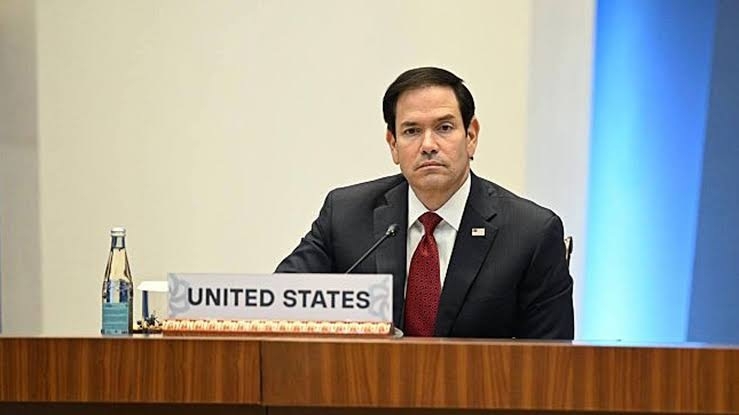
NEW DELHI/Samarkand,
US Govt had to waive sanctions over past few months because of impact on global supplies and prices, says US Secretary of State Marco Rubio
THE United States is very close to finalising a trade deal with India, Secretary of State Marco Rubio said on Monday, linking energy waivers and sanctions policy to broader trade considerations ahead of his visit to the country on Tuesday.
“We are trying to finalise a trade deal with India right now. We are very close to doing that,” Rubio said in Samarkand.
Rubio who is in Uzbekistan will be in Mumbai on Tuesday where he will meet External Affairs Minister S Jaishankar. Rubio will also travel to Jamnagar, home to one of the world’s largest refineries, later in the week.
On Russian oil and gas, Rubio said the US had to waive sanctions over past few months
because of impact on global supplies and prices.
“We have had to waive sanctions over the past few months because of the impact on global supplies and prices... We have to manage all of these things. We are trying to finalise a trade deal with India right now. We are very close to doing that. That’s one of the things we take into consideration when the President makes a decision about national security waivers and things of that nature. Every country has a complex set of factors that it has to take into account. Geography is real. For some countries, it’s very difficult to acquire energy from alternative sources. That’s not an excuse, but all of that has to be balanced when making foreign policy,” he said during his Central Asia visit.
India and the United States are close to sealing the first part of a trade agreement, with dairy access the biggest remaining obstacle ahead of his visit to India on Tuesday.
President Donald Trump has signed an order implementing the Lindsey O Graham Sanctioning Russia and Iran Act and waiving its tariffs on buyers of Russian oil.
Earlier, Rubio described India as an important ally whose energy needs must be considered before putting any tariffs or sanctions in place.
At its core, the trade negotiation is an exchange: lower and predictable US tariffs on Indian goods in return for wider access for American products in India.
Under a framework announced in February, the US cut its reciprocal tariff on Indian goods from 25 per cent to 18 per cent and removed an additional 25 per cent duty linked to India’s purchases of Russian oil. In return, India committed to eliminate or reduce tariffs on US industrial goods and a range of farm products, including tree nuts, fruit, soybean oil, wine and spirits.
“These sanctions were not just sanctions on Russia.
They include tariffs on a number
of countries—India, for example, and others. And so I think the President wants to take
the 60-day period of time to
sort of analyse what imposing both sanctions and tariffs will mean to the global economy and even to the US economy,” Rubio said.
“You’ve got countries like India, for example, that have voluntarily diversified their energy portfolio, but are still getting a substantial amount of energy from Russia. But they’re also an important ally and partner of the United States,” he added.
So we need that period of time to sort of study all this and figure out what the right combination is,” he added.
Rubio said that the US President was also taking into account the changing geopolitical situation since the Lindsey Graham bill was brought into law, especially with the increase in conflict between Saudi Arabia and the Houthi militia.
“I think when the bill was passed, one of the reasons the waivers were put in there is understanding that they would need some period of time to study this, given all the different things that are that are going on in the world right now, including the pressure on global energy supplies that are happening not just because of Iran and not just because of the Straits of Hormuz, but increasingly because of the Houthis attacking Saudi Arabia, and because of the war with Ukraine and Russia, where energy infrastructure is being hit, and so that’s having an impact on global prices as well,” he said.