French authorities ban planned protests
| Date :23-Oct-2026 |
PARIS :
FRENCH authorities in multiple cities
banned protests planned across the
country on Thursday after a weekend
of clashes and widespread looting in
France’s most violent unrest in years.
The turmoil in Paris and other French
cities has prompted a strong security
response from the Government. Night
curfews have been implemented in
some areas of the French capital, as
well as in other cities where calm has
been restored.
Demonstrations planned Thursday
in Paris, Lyon, Lille and Grenoble were
banned, a move seen by some as an
infringement on French people’s right
to protest.
But high school and university student groups say they will continue to
mobilise, even though the autumn
school break started
this week. The Paris
police prefecture said
the ban was necessary
given the risk of street
violence that erupted
over the weekend,
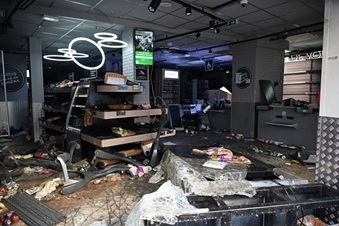
when groups of masked youth clashed
with police forces, looted shops and
torched cars.
The ban in Paris will last until 8 pm
local time and apply to areas including the Elysee presidential palace, both
houses of parliament, and the city’s
main train stations. Areas in downtown Paris which were severely hit by
the looting are also covered. Authorities are
bracing for another big
protest day. Thursday’s
planned protests were
seen as a prelude to
Saturday’s big demonstration, when activists from the “yellow vest” movement, whose demonstrations over fuel prices shook France
in 2018 and 2019, are expected to join.
Some of those protests, including
marches in Lyon, will also be banned,
local authorities said. PM Sebastien
Lecornu, who met union representatives on Wednesday, said a “massive”
security operation was planned for
Saturday to prevent a repeat of
the violence by small groups
of rioters that had exposed
shortcomings in security measures.
Meanwhile, French
President Emmanuel Macron
held a meeting Thursday morning with intelligence services,
Lecornu and ministers to
obtain a detailed account of
what went wrong on the weekend and review preparations for
upcoming protests.
Union representatives said
their meeting with Lecornu did
not result in concrete proposals. They are now focusing on
another big day of action
scheduled on November 5, and
called on private and public
sector employees to join.
From student protests to a
broader social movement
The demonstrations first
erupted last month in a high
school in Creteil, southeast of
Paris, over a lack of staff. From
there, class strikes, blockades
and demonstrations spread to
other Paris suburbs and then
nationwide, even in smaller
towns.
High school students have
raised concerns about underfunded schools, dilapidated
facilities and staff shortages,
particularly in lower-income
neighbourhoods. Some also
called for a reform of the university admissions system, seen
by many as complex and unfair.
With the Government unable
to respond to students’
demands, the school demonstrations and blockades have
morphed into larger protests
over soaring living costs, just
months before next year’s presidential election to choose
Macron’s successor.