Beyond Grandeur:Sculpting a lasting legacy
| Date :26-Oct-2026 |
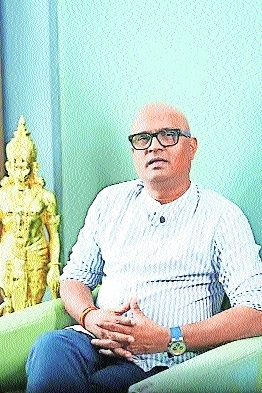
By Saniya Chakraborty :
A monument’s significance lies not merely in its height or grandeur, but in the history, faith and emotions it represents. International sculptor Naresh Kumar Kumawat, of Pilani, Rajasthan, who combines traditional Indian craftsmanship with modern technology, believes that monumental art must preserve cultural heritage.
Among his prominent works are the Statue of Belief, depicting Lord Shiva in Nathdwara, Rajasthan, and statues of Mahatma Gandhi installed in more than 30 countries. His latest creation, the 203-ft statue of Lord Hanuman at Koradi, reflects his approach to balancing artistic expression, spiritual
significance and technical precision. Belonging to a three-generation family of sculptors, Kumawat grew up observing and learning the craft.
“My family’s craftsmanship gave me a strong foundation, while my curiosity pushed me towards bigger ideas,” he explained.
The Hanuman statue at Koradi required particular attention to its relationship with the temple and its spiritual surroundings. “The intention was not simply to create a powerful figure because of its size,” he said.
According to Kumawat, monumental sculpture involves extensive research, conceptual drawings, models and technical planning before the actual construction begins.
The process requires
coordination among artists, architects, engineers and skilled craftsmen. While technical requirements may call for modifications, he believes the original artistic vision must remain intact. “A large statue is never made by one person alone; it is the result of an entire team’s efforts,” he emphasised. The Statue of Belief remains one of the most significant projects of his career. Statue of Belief is the tallest statue of Shiva in the world and the fourth tallest statue worldwide.
He follows different approaches while portraying historical personalities and religious figures, studying the former through their lives and achievements and the latter through scriptures, iconography and devotees’ sentiments. “When watching the statue, a person must not see only the face but the soul of the hero,” Kumawat observed.
With his work reaching audiences across countries, Kumawat believes Indian sculpture has considerable potential for greater international recognition. He advocates integrating digital modelling, advanced materials and modern engineering with traditional craftsmanship, while creating more opportunities for young artists and international collaborations.
For him, the true value of a monument lies not in the records it sets, but in the meaning it conveys. “I do not want people to remember a monument merely for its size or a world record. I want them to reflect on its meaning,” he said.