Western Golden Dartlets find a home in urban greenery
| Date :26-Oct-2026 |
Staff Reporter :
Ponds, garden water bodies, drainage channels, seasonal wetlands and rainwater-filled depressions can provide habitats for these insects
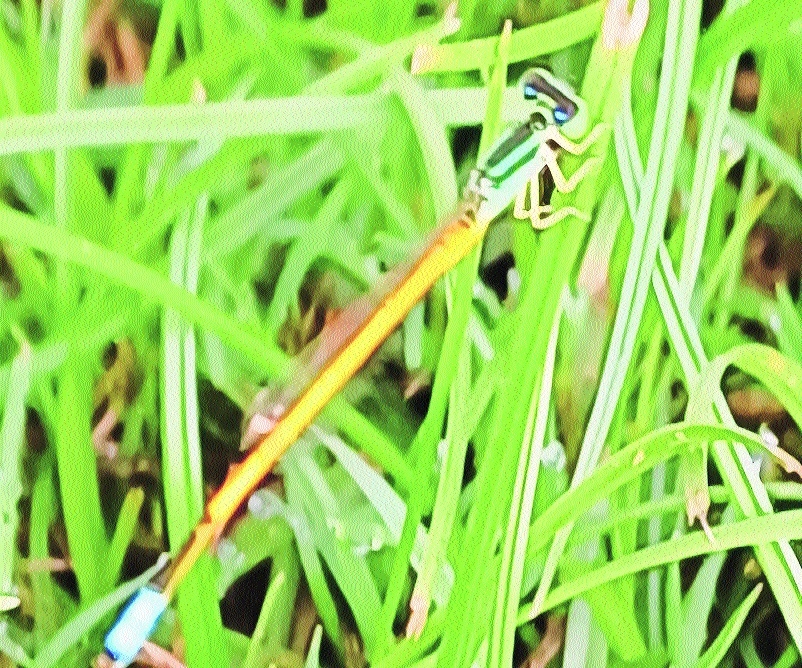
Small gardens, grassy patches and water bodies across Nagpur are providing habitats across the city for the Western Golden Dartlet (Ischnura rubilio), a tiny apple-green damselfly that offers a glimpse into Nagpur’s urban biodiversity.
According to observations by Dr Sharyu V Ghonmode, Professor, Department of Zoology, Shivaji Science College, Congress Nagar, the damselfly highlights the importance of small green spaces in supporting wildlife. Ponds, garden water bodies, drainage channels, seasonal wetlands and rainwater-filled depressions can provide habitats for these insects.
“The presence of the Western Golden Dartlet in city shows that even small patches of vegetation and water can support freshwater-associated biodiversity amid urbanisation,” Ghonmode shared. From garden ponds to grassy patches, the Western Golden Dartlet (Ischnura rubilio) is a reminder that urban wildlife does not always need sprawling forests to survive.
“The male, with its apple-green body, black thoracic markings and blue-tipped yellow abdomen, is easy to miss unless one looks closely. Females are generally duller, with a broader black stripe along the
upper side of the body,” Ghonmode shared.
For damselflies, water is not merely part of the landscape. It is essential to their life cycle. Ponds, seasonal wetlands, rainwater-filled depressions and vegetation along drainage channels can all provide suitable habitats. “The post-monsoon period is particularly favourable for spotting these insects. Moist soil, temporary pools and fresh vegetation offer suitable conditions, while cooler mornings provide opportunities to observe them perched motionless on blades of grass,” Ghonmode explained.
Their presence can offer clues about the availability of freshwater habitats. “Damselflies depend on aquatic environments during their larval stage.
Their presence can provide useful information about the availability of suitable
aquatic and semi-aquatic habitats,” Ghonmode added.