When the Goddess is a Daughter first, returning home
| Date :26-Oct-2026 |
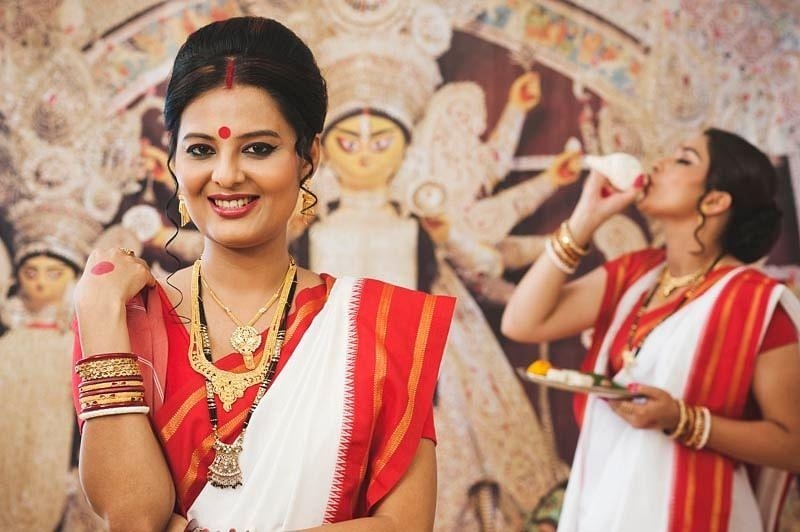
We build grand pandals to welcome a goddess who returns home, yet often forget to make the world safe for the women who walk among us.
For every Bengali, Durga Puja is far more than a festival; it is an emotion woven into the rhythm of the dhaak, the fragrance of shiuli flowers, the warmth of family gatherings and the bittersweet feeling of bidding farewell to something beautiful. Beyond the rituals and grandeur lies a story of a daughter, a home that awaits her and a society that must learn what it truly means to worship the feminine.
According to Bengali tradition, Goddess Durga returns from to her maternal home, her baaper bari, for a few cherished days. Think about it—the fiercest goddess, the slayer of Mahishasura, is also someone’s daughter.
She embodies ‘Shakti’, the strength to defeat darkness, yet she is also ‘Uma’, the beloved daughter who comes home. Marriage may change a daughter’s address, but it should never erase her belonging.
Yet, society continues to whisper that a daughter eventually becomes paraya dhan, as though marriage were a farewell to her rightful place in the home that raised her. Durga Puja challenges that very belief. Every year, we celebrate a married daughter returning home, reminding us that a daughter is never a guest in the house where her story began. But here lies the irony that breaks my heart. We bow before Maa Durga, but beyond the pandals, women continue to face harassment, abuse, discrimination, and violence. We invoke Shakti in our prayers, yet question a woman’s choices, silence her voice, police her freedom and sometimes even violate her dignity.
What is the meaning of offering flowers to a goddess if we cannot offer dignity to the women around us? Every woman carries a form of Shakti within her—in the courage to speak up, the strength to begin again, the determination to challenge injustice, and the freedom to choose her own path. But she should not have to become Durga to deserve safety.
The battle against evil cannot end with the immersion of an idol. When the dhaak falls silent and the pandals empty, our devotion must find its way into our homes, our relationships, our workplaces, and the choices we make when no one is watching.
So, before you humiliate a woman, judge her choices, restrict her freedom, or violate her boundaries, pause. Remember the goddess you bowed before. Remember the daughter you welcomed home. Remember that respecting women is not an act of generosity, it is the bare minimum of being human.
Perhaps the greatest offering to Maa is a world where no woman has to summon the courage simply to live with dignity. Because when Maa Durga returns to her baaper bari, she reminds us of something we should never forget: A daughter is never anyone’s possession, a woman is never an object to be controlled and the home that once loved her should never become a place where she has to prove that she still belongs.

By Dishti Bachar