BJP failed to learn from the past
| Date :30-Oct-2026 |
Staff Reporter :
From 1958 to 2014, the Nagpur Division Graduates’ Constituency remained a stronghold of the BJP. The party’s candidates enjoyed relatively smooth victories, and the BJP never had to depend on second-preference votes to secure the prescribed quota.
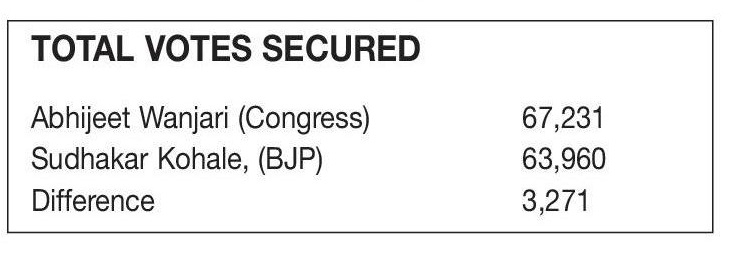
However, the political equation changed in 2020, when Congress candidate Adv Abhijeet Wanjari defeated the BJP’s Sandip Joshi by securing the required quota with the help of second-preference votes. Five years later, history repeated itself, with Wanjari once again emerging victorious through the preferential voting system.
According to a senior BJP leader, the party failed to learn from its previous defeat and planned its election strategy on the assumption that its candidate, Sudhakar Kohale, would secure victory on the strength of first-preference votes.
“Surprisingly, the leadership did not involve people who understand the technical aspects of the preferential voting system. We have several leaders who are well-versed in the calculations involved in this system, but their expertise was not adequately utilised,” the leader said.
The leader maintained that the party’s preparedness was strong at the ground level but inadequate at the strategic level. “The preparedness was high at the physical level, but not at the mental level,” the leader remarked.
While several party workers are blaming former MLC Anil Sole for Kohale’s defeat, the leader argued that the reasons went beyond any individual.
“Anil Sole cannot be held solely responsible for the defeat. The workers gave their 100 per cent, but those who planned the campaign and formulated the strategy failed to undertake effective micro-planning,” the leader pointed out.
The BJP managed to register a substantial number of voters, but the exercise was not followed by adequate voter education, the leader said. In contrast, Wanjari’s team reportedly trained voters in the preferential voting system, explaining how to mark their ballots correctly and avoid invalid votes.
This is believed to have helped the Congress candidate maximise his vote tally.
Chief Minister Devendra Fadnavis campaigned extensively for Kohale, leaving little to chance on the campaigning front. However, some senior BJP leaders believe that overconfidence among sections of the party leadership undermined the campaign’s effectiveness.
The defeat has once again raised questions about the BJP’s understanding of preferential voting and its ability to translate organisational strength into electoral success. The party is now expected to undertake an introspection exercise to identify the shortcomings and work towards reclaiming the constituency in the next election.