Reading between the records: The history of Nagpurkar Bhonsles
| Date :30-Oct-2026 |
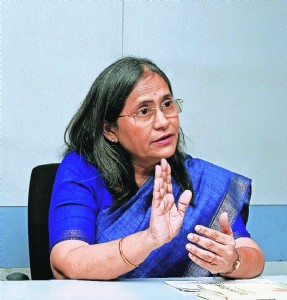
Radha Joshi, author of ‘Nagpurkar Bhonsle’. (Pic by Anil Futane)
By Reema Mewar :
Most people in Nagpur know Sitabuldi as the place you go for shopping, or where you get stuck in traffic. Radha Joshi knows it as a battlefield. That difference between what a place is today, and what it once was, runs through her book ‘Nagpurkar Bhonsle’, which documents the Bhonsle dynasty’s history from 1600 to 1860.
Joshi found her way into historical research through her maternal grandfather’s unfinished work. Joshi’s maternal grandfather served as personal assistant to the Governor of the Central Provinces and Berar during British rule. He collected historical documents and spent many years researching the history of Nagpur and Central India. He wrote newspaper columns and published booklets on historical subjects, but never completed his larger project. After his death, Radha’s mother preserved his papers.
Joshi learnt about the collection only much later and eventually used it as a resource for her own research.
“History is obscure,” Joshi said, discussing the challenges she faced while writing the book. “Some important Marathi records survive in Modi script, while other documents are difficult for ordinary readers to access. My grandfather’s collection offered a starting point, but I also consulted other historical works and received guidance from historian Dr Bhalchandra Andhare. Finding these resources is not the difficult part. Different accounts sometimes contradict one another, which is why British records need to be read very carefully,” she explained. “Although they contain valuable information, they have the narrative of the administration that commissioned them.
This has influenced how later generations understood Maratha military campaigns and political history. Without examining the original records and the circumstances behind them, simplified accounts can become accepted as fact,” Joshi elaborated.
Speaking on how Nagpur can bridge the gap between its residents and its history, Joshi believes the city needs a well-equipped history and heritage museum with research facilities and a library. Schools, too, should give regional history greater attention through museum visits, field trips and visits to historic sites. Sitabuldi is associated with a significant Anglo-Maratha conflict, yet many residents know the locality primarily as a commercial centre, she said.
The conversation turned to regional histories being made more accessible to a wider audience.
“I believe regional languages preserve cultural nuances that translations may not fully capture, but translation is essential to reach wider audiences. English can introduce regional histories to international readers, while Hindi can make them accessible to people across India. Translation offers a way to take Nagpur’s history beyond the boundaries of language and region. I learnt to read Modi script after attending a workshop, so I could better understand historical documents. Preserving traditional scripts is important to ensure that regional histories remain available to future researchers.”
As significantly as books and languages, Joshi believes authorities need to do more to conserve the city’s historic buildings. “We should have scientifically planned restoration involving Indian architects, local craftspeople and conservation specialists familiar with regional architecture, rather than relying on foreign experts who don’t have a holistic understanding of our structures,” she said.
Joshi believes that documenting the past is only one part of preserving it. Historical records must be made accessible, regional histories translated and taught, and heritage sites protected if Nagpur’s past is to remain a living part of the city’s identity.
n