Window on vidarbha DGCA approves Air India Flying Training Academy at Amravati
| Date :31-Oct-2026 |
Amravati Bureau :
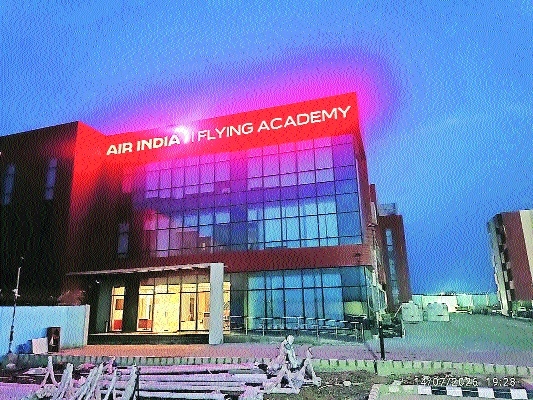
Directorate General of Civil Aviation (DGCA), on Friday, issued a Certificate of Approval to the Air India Flying Training Academy at Maharashtra Airport Development Company (MADC) operated Belora Airport in Amravati. The development was announced through a post by Deepak Kapoor, Director, DGCA, on social media.
The project is expected to be a game changer for Amravati district, putting the region on the country’s aviation training map and creating new opportunities for aspiring pilots. The Air India Flying Training Organisation (FTO), being developed jointly by MADC and Air India, a Tata Group company, has reached an advanced stage of completion, with around 95 per cent of the infrastructure work completed.
All 34 aircraft earmarked for pilot training have also arrived at Belora Airport.
The academy is expected to become one of the largest pilot training facilities in South Asia.
The training fleet comprises 31 single engine Piper Archer aircraft and three twin engine Diamond DA42 NG aircraft. All the aircraft are equipped with advanced Garmin G1000 NXi cockpit systems and Automatic Dependent Surveillance Broadcast (ADS-B) technology, facilitating modern flight training and navigation. Spread across approximately 10 acres, the academy has been equipped with modern infrastructure, including a hostel, dining hall, classrooms, briefing rooms, aircraft hangars and dedicated aircraft maintenance facilities.
Three flight simulators, including two single-engine and one multi-engine simulator, will also be available to trainees to provide practical experience before they undertake actual flights.
The academy will maintain a ratio of six trainee pilots per flight instructor to ensure individual attention and quality training.
The Commercial Pilot Licence (CPL) programme will have a duration of 18 months. Each trainee will be required to complete 200 hours of flying, comprising 185 hours on single-engine aircraft and 15 hours on multi-engine aircraft.
According to aviation experts, Amravati’s favourable weather conditions could provide suitable flying conditions for at least 300 days annually. The first batch is expected to comprise around 180 trainee pilots, with training likely to commence soon following the grant of DGCA approval and completion of the remaining operational formalities.
Apart from opening up opportunities for aspiring pilots, the project is likely to create direct and indirect employment and provide a boost to hospitality, transportation and other allied sectors.