The Iron Man’s Vision, Fulfilled: How India is completing Sardar Patel’s work
| Date :31-Oct-2026 |
By Arun Anand :
India marks the 151st birth anniversary of Sardar Vallabhbhai Patel. Since 2014, the day has been observed as Rashtriya Ekta Diwas, a national pledge to protect the country's unity, integrity and security. Each year it raises a question that is as old as the Republic: what does it take to hold a nation of India's size and diversity together? Sardar Patel answered it in 1947 and 1948 with a rare blend of dialogue, persuasion and firmness. Seventy-nine years later, his answer still frames the debate.
The map Sardar Patel drew
When the British left, paramountcy lapsed and more than 560 princely states were, on paper, free to choose their own future. The States Department was formed under Sardar Patel on 25 June 1947, and with V.P. Menon as his secretary he brought these states into the Indian Union in record time. Most rulers signed the Instrument of Accession after negotiation.
Where talks failed, as in Junagadh and Hyderabad, Sardar Patel did not hesitate to act decisively in the national interest. Without that effort, the map of India would have looked very different: a patchwork of enclaves, each one an opening for hostile powers.
Sardar Patel also understood that territory without institutions does not make a nation. He championed the All India Services, which he called the steel frame of the country, and ensured they were protected by the Constitution. That administrative backbone continues to hold the Union together. As India's first Home Minister and Deputy Prime Minister, he steered the country through the turmoil of Partition, overseeing refugee rehabilitation and the restoration of law and order.
In the Constituent Assembly, he chaired the committees on fundamental rights, minorities and provincial matters, helping to shape a Union that was strong at the centre and inclusive in spirit. It is no surprise that the American historian George C. Herring, writing as early as 1964, described him as the architect of modern India.
A celebration on a national scale
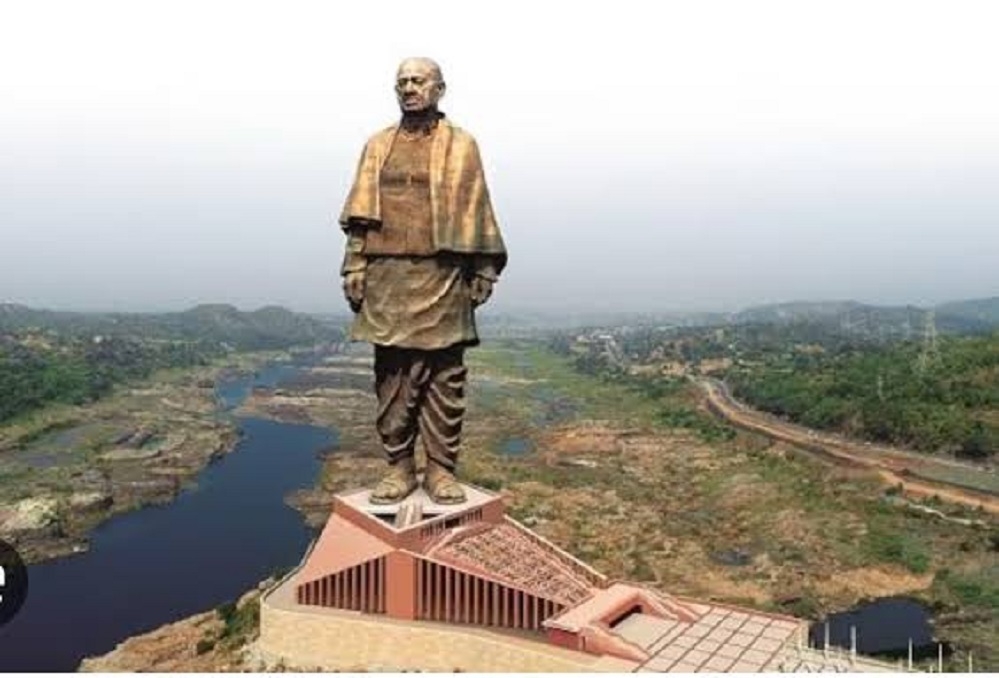
The scale of this year's commemoration matches the scale of his achievement. Prime Minister Narendra Modi will pay tribute to Sardar Patel at the Statue of Unity in Ekta Nagar and witness the Ekta Diwas Parade, which moves to the evening for the first time. Contingents of the BSF, CRPF, CISF, ITBP and SSB will march alongside state police forces that led the fight against armed Naxalism, with screens along the route telling the story of each force's role.
The cultural programme carries the same message.
The National School of Drama will stage a performance by 2,000 artists drawn from the 126 districts once affected by armed Naxalism, alongside folk and classical dances, a Unity Tableau Parade and an evening Light and Sound Show on Sardar Patel's life. For the first time, the tableaux have been designed by citizens through national MyGov competitions rather than by government departments, and the cultural theme for the day is Vande Mataram.
Beyond Ekta Nagar, Run for Unity events across cities have turned the day into a people's movement rather than an official ritual. And the celebration does not end on 31 October. Bharat Parv, the national cultural and arts festival, will be held at Ekta Nagar from 1 to 15 November 2026, with pavilions from States and Union Territories showcasing their crafts, cuisine and heritage.
Internal security as the first condition of unity
This year's commemoration has a distinctive focus. Union Home Secretary Govind Mohan has said that the first and foremost feature of Rashtriya Ekta Diwas 2026 is the celebration of the end of armed Naxalism. More than 5,000 people from districts where Naxal violence once threatened lives and property every day will be present at Ekta Nagar. Sardar Patel’s legacy is not a museum piece. Divisive narratives built on region, language, caste or faith continue to test the national fabric. His message, that India’s diversity is its strength and not its weakness, remains the most effective counter to them.
Many also see the abrogation of Article 370 in August 2019 as the completion of the integration Sardar Patel began in 1947, bringing J&K fully into the constitutional framework that binds the rest of the Union. The emphasis this year on a drug-free India fits the same logic: nation needs a strong, healthy society.
(The writer is an author
and columnist)