And then there was silence!!
| Date :09-Oct-2026 |
By Aasawari Shenolikar :
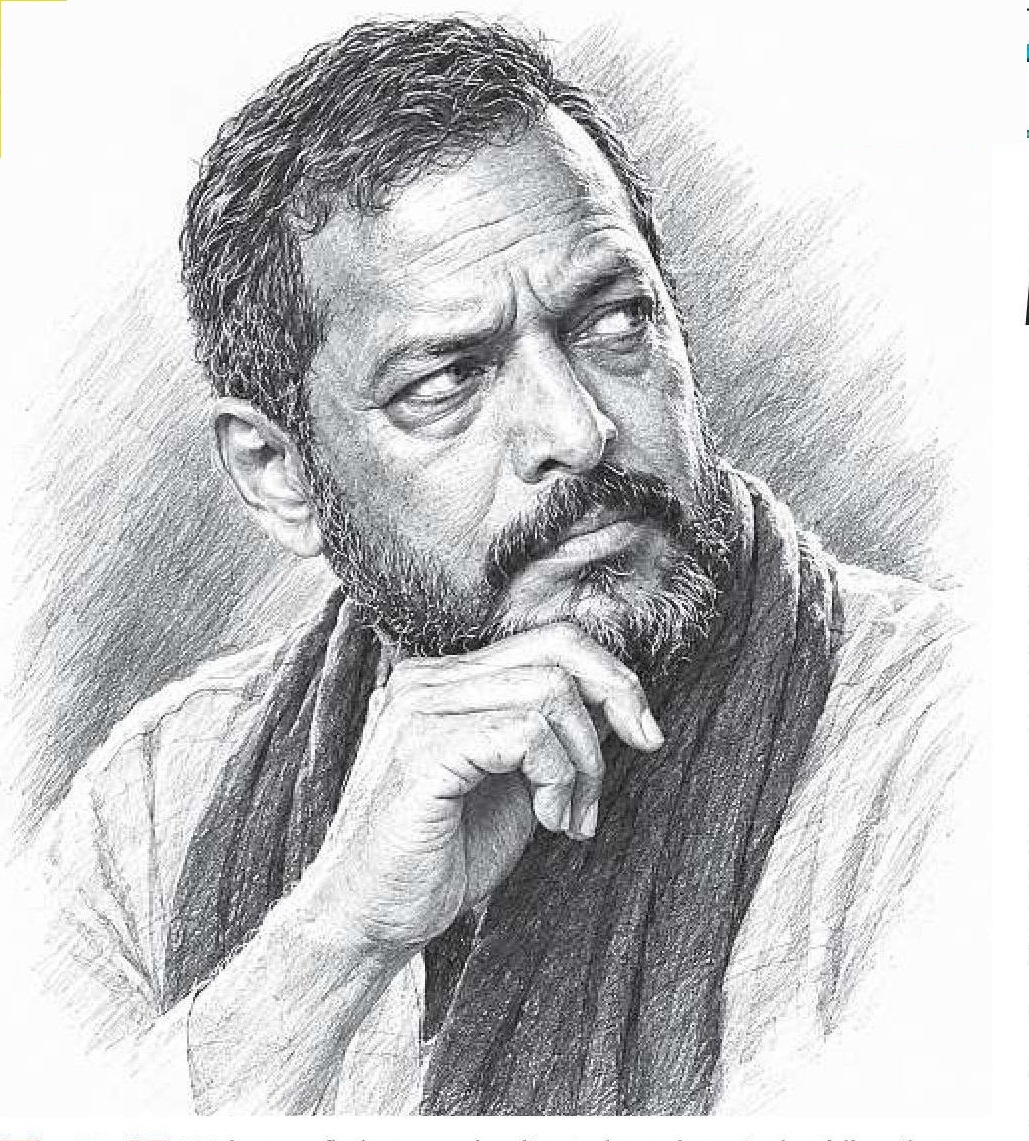
Nana wasn’t known
only for his fiery
temperament and the roles that demanded anger and frustration - roles in which he shone. He was a true actor, who could mould himself in any character.
Nana had range. But more than range, he had truth. He never looked as though he was trying to be an actor.
When the news flash appeared in my notification - Nana Patekar no more! - I closed my eyes - in reverence to the soul who, with each work of his - on the celluloid, on the stage, work done voluntarily for the people - has left behind an indelible impression. And a vaccum, that can never be filled.
And all I could, in that deathly silence of the warm dawn do was - hear his voice.
That voice - gravelly, angry, mischievous, sometimes almost a whisper - could make a perfectly ordinary sentence sound like a verdict. And now that voice has fallen silent.
Nana Patekar, at 75, left for his heavenly abode after a cardiac arrest at his Goa residence.
Well, some actors leave behind films. Some leave behind characters. Nana Patekar , like our own Nightingale whom we lost not many moons ago, leaves behind a voice.
It is difficult to write about Nana without hearing him.
“100 mein se 80 beimaan, phir bhi mera desh mahaan.”
When I left the theatre after watching Krantiveer, it was this line that stayed with me, not only because it had a whole lot of truth in it, but also because of the raw emotion of the character who voiced it. It left a deep impact.
There was not only anger in that line from Krantiveer, but also something else - disappointment. The kind that comes when you expect better from the country you love. His dialogues were never merely dialogues. They carried his personality.
Nana wasn’t known only for his fiery temperament and the roles that demanded anger and frustration - roles in which he shone.
He was a true actor, who could mould himself in any character.
So there was the Nana who could reduce an entire audience to helpless laughter.
“Ek machhar…” voiced by him. Funny, and so profound. One need not even complete it.
In another world Uday Shetty from Welcome did what perhaps only Nana could have done - turn a gangster into a comic character without losing the gangster’s temper. The same man who could terrify you in Parinda had audiences laughing at his exasperation with Majnu Bhai (Anil Kapoor). That was comedy where the laughter was genuine, and which gave birth to many memes too!
That was Nana’s magic.
He could be brutal one minute, vulnerable the next and make you burst into laughter teh very enxt minute.
In Krantiveer, he asked the question that remains painfully relevant: “Bata, ismein se Musalman ka kaunsa hai aur Hindu ka
kaunsa?”
Not an actor to believe in masking his anger, he let raw emotions flow when required to do so.
He threw them at you, and you shuddered. That was how powerful he was.
But then let’s not forget that it was not his voice that mattered in Kahmoshi: The Musical. Two movies - years apart were given five stars after I reviewed them. One was, of course, Chak De! India, and years before that Khamoshi: The Musical. The movie tanked, but it definitely won accolades for the superb performances by each and every character. Nana was in the forefront where he played Joseph, deaf-mute father of Manisha and husband of Seema Biswas. This was his true test for here was a role that lacked dialogue. Nana passed it with flying colours - expressing emotions through his
body language and his eyes.
Needless to say, on the stage he was magic, breathing life into each scene, each moment. While one moment he was breathing fire, the very next he would bring on a smile with his wry humour.
And there was no forced transition, it was completely natural - a true ability of a great actor.
And perhaps that is why we remember him.
His Yeshwant gave us the aforesaid mentioned unforgettable line about how something as small as a mosquito could make a man feel powerless. His Ab Tak Chhappan gave us the cold, matter-of-fact world of the police and the system. In Natsamrat, he moved in an entirely different direction - towards loneliness, the wounded pride, ageing and the pain of an actor whose stage has gone dark. He did not act, he lived them.
Nana had range. But more than range, he had truth. He never looked as though he was trying to be an actor.
Perhaps his difficult childhood had something to do with it. He had spoken about walking eight kilometres for a Rs 35 salary and surviving on one meal a day. Hunger and humiliation, he said, taught him things.
Whispers about him being crass often surfaced - maybe that is why there was very little polish in Nana. No doubt he was outspoken, he spoke without favour and fear. And that was precisely the charm.
He was not manufactured.
He was Nana.
A man who could be blunt, funny, angry, generous, difficult, sensitive and deeply compassionate. A man who questioned authority and also worked for farmers and rural communities through the Naam Foundation.
Today, tributes will pour in. Awards will be mentioned. National Awards. Padma Shri. Parinda. Krantiveer. Prahaar. Natsamrat. Welcome. The list is long.
But when the noise settles, I suspect what we will miss is that voice, that pause, that intense stare and occasionally that booming laughter, and of course that sudden explosion of a dialogue that made you sit up.
And perhaps, years from now, somebody watching an old Nana Patekar film will laugh, then fall silent for a moment and say:
“There really was nobody quite like him.”
And probably never will be - he really was one of a kind!
n