Wildlife Week concludes with a call for connected habitats through corridors
| Date :09-Oct-2026 |
Staff Reporter :
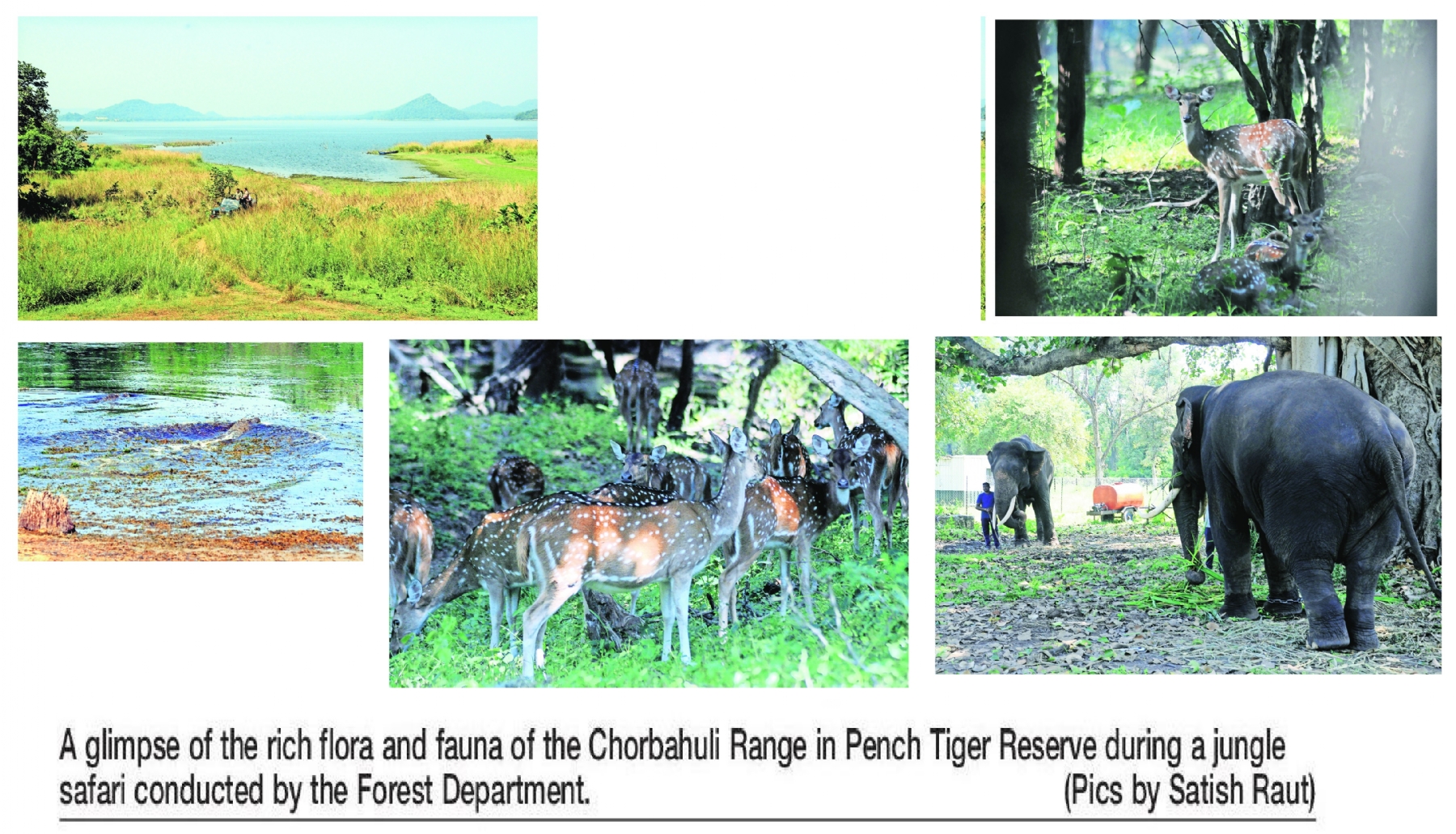
From classrooms and competitions to a close encounter with the forest, ‘Wildlife Week’ in city brought together students, conservationists and forest personnel around one central message — ‘Connecting Habitats, Thriving Wildlife’. The week-long programme concluded on Thursday with a safari through the Chorbahuli Gate of Pench Tiger Reserve (PTR), offering participants a first-hand experience of wildlife and its natural habitat.
During the safari, participants explored the flora, fauna and diverse habitat of the reserve, gaining an insight into the ecological landscape of the tiger reserve. The week-long event also emphasised corridor management in and around the tiger reserve to ensure better habitat connectivity and growth. Wildlife experts discussed various aspects of tiger habitat development, including grassland development, man-animal conflict and biodiversity conservation.
The field experience came after a series of activities organised through the week, including wildlife quizzes, poster, painting, essay, debate and power point presentation (PPT) competitions, workshops on wildlife corridors and habitat connectivity, nature education programmes and capacity-building sessions for Rapid Response Teams (RRT).
The Forest Department also conducted workshops on artificial intelligence and wildlife crime investigation and forensics. Speaking about the response to the activities, Officials, said the enthusiasm among college students was particularly encouraging. Students from different fields displayed considerable knowledge about forests and wildlife and showed eagerness to learn more.
Many also came up with solutions to challenges related to conservation. Explaining the theme, officials said maintaining connectivity between wildlife habitats has become increasingly difficult with the expansion of linear infrastructure and concrete landscapes in Central India. Fragmentation of habitats restricts the natural movement of animals, while disruption of their movement routes can increase the possibility of human-wildlife conflict. “The idea behind the theme is to ensure that habitats remain connected so that animals can move naturally between them. When these routes are disrupted, it affects wildlife movement and can also increase conflict,” officials said.
The safari also offered a glimpse into the importance of plant diversity and its traditional uses.
Participants were taken through a medicinal plants nursery, where forest personnel explained the properties and uses of several species. These included Arjuna, whose leaf extract was explained as beneficial for heart patients, and Bhui Neem, which was discussed for its traditional use in fever and diabetes. The week thus moved beyond awareness programmes, combining classroom learning, creative expression, field experience and practical training to underline that wildlife conservation requires both informed communities and connected habitats.