From beeswax threads to timeless metal art
Date :10-Nov-2026
By Sayli Watkar
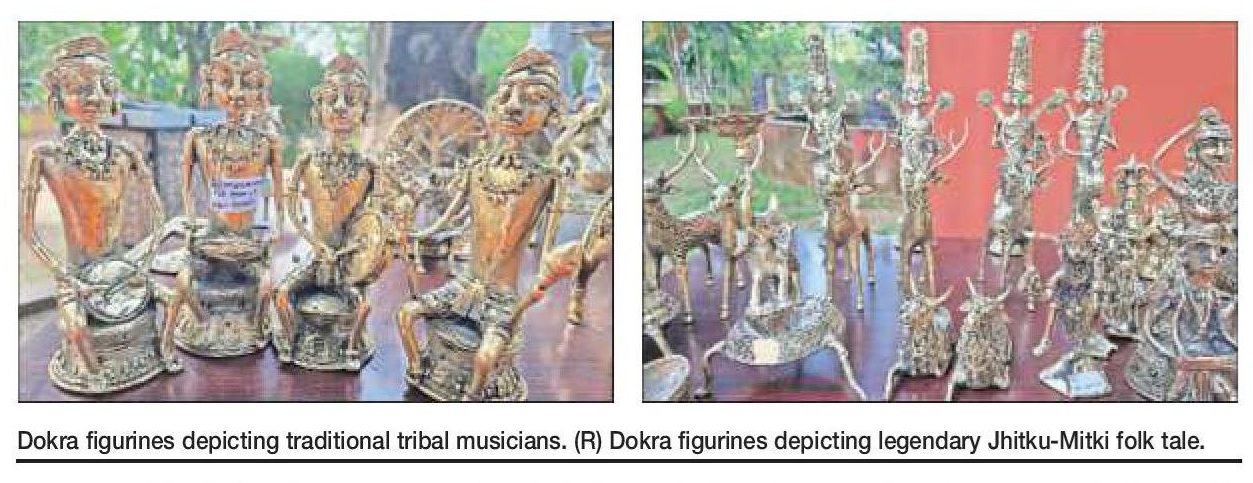
A little clay, delicate threads of beeswax and molten metal come together to create artefacts that carry generations of traditional craftsmanship. Dokra, an age-old tribal metal-casting art, reflects artistic knowledge and cultural heritage preserved by artisan families in Chhattisgarh.
Practised for generations, craft is known for its distinctive designs and intricate detailing. Its uniqueness lies in lost-wax casting technique, through which each piece is individually created rather than mass-produced.
The process begins with preparing basic structure using clay collected from riverbanks. Artisans then use beeswax, extracted from honeycombs, to make fine threads that are carefully shaped around clay structure. These threads are used to create intricate patterns, ornaments and other details that define final design. Wax-covered structure is then coated with additional layers of clay to form an outer mould.
Once mould is dried and heated, beeswax melts and escapes through small channels, leaving behind impression of the design. Molten metal, including copper, is then poured into mould.
After metal cools and solidifies, clay casing is broken to reveal the finished artefact. It is subsequently cleaned and given its final detailing by hand.
Beyond metal casting, Dokra also preserves tribal folklore and beliefs. One such example is the Jhitku-Mitki figurines, inspired by a tragic love story from Bastar.
According to local folklore, Jhitku was killed by Mitki’s brothers, following which she too died unable to bear the loss. “Their story represents love, sacrifice and devotion. Through our art, we preserve such stories and traditions passed down through generations,” said an artist at workshop organised recently by the South Central Zone Cultural Centre (SCZCC), where artisans from Chhattisgarh demonstrated the traditional craft.
For these artisans, Dokra is
more than an occupation; it is a family tradition passed down through generations.
Speaking about its future, the
artists said, “Our children also help us with this work after returning from school. They are familiar with the craft as they have grown up watching us practise it. However, whether they choose to continue this tradition in future depends on their own interest and willingness.”
As artisans continue to practise a skill inherited from their ancestors, each creation becomes reflection
of tradition shaped by patience and generations of craftsmanship