Chhath Puja: 4 days of devotion, faith, family prayers
| Date :13-Nov-2026 |
Staff Reporter :
From Nahay-Khay to Usha Arghya, devotees observe a rigorous fast and worship the setting and rising Sun
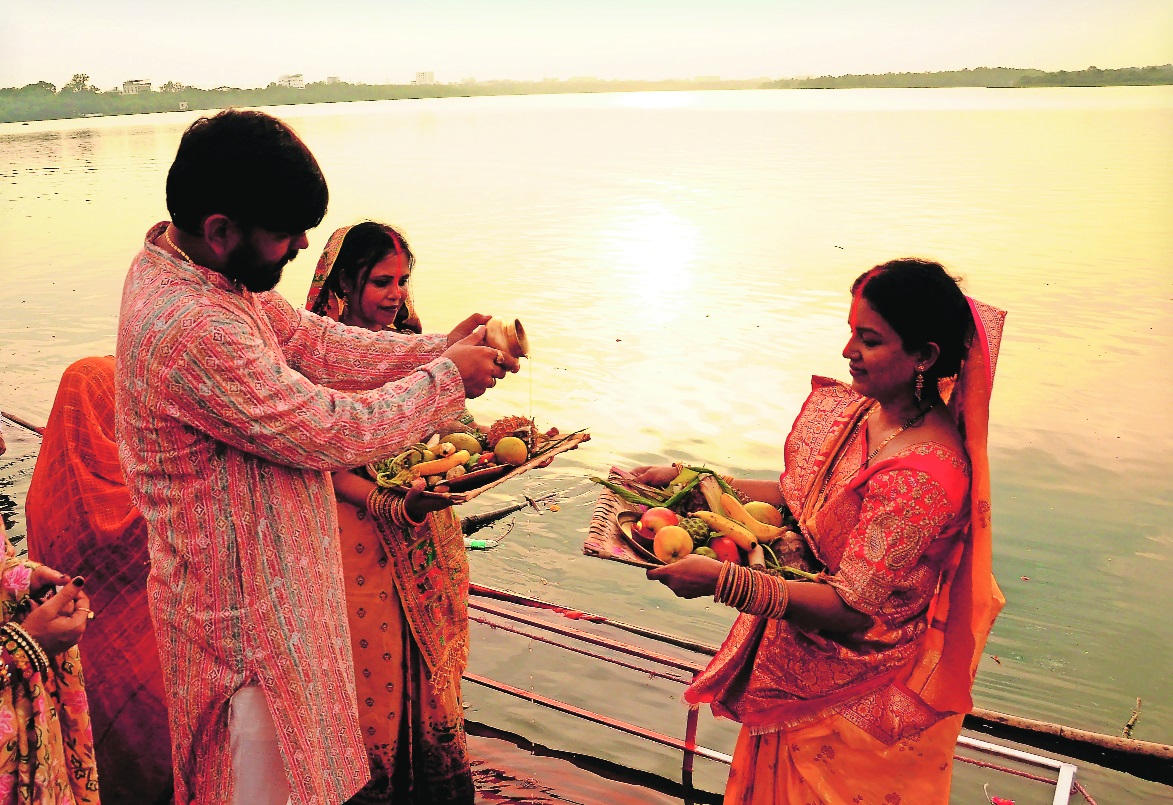
As evening sun dips towards horizon, families carrying bamboo baskets of home made traditional deep-fried sweet snack thekua, fruits and sugarcane, gather at riverbanks and ponds.
The festival is as significant as Diwali for many families from Bihar and Eastern Uttar Pradesh. Many who live or work far from their native places make the journey home to observe Chhath with their families.
Chhath Puja, a festival dedicated to Sun God and Chhathi Maiya, and is observed over four days from November 13 to 16 this year.
Rooted particularly in traditions of Bihar, Jharkhand and Eastern Uttar Pradesh, festival is also observed by families who have settled in other parts of country, including Nagpur. Its rituals centre on fasting, purity, offerings and prayers to the setting and rising Sun.
Observance begins with Nahay Khay on November 13.
Devotees take a ritual bath, clean their homes and prepare a simple vegetarian meal, traditionally including rice, chana dal and bottle gourd. The food is prepared and the day marks beginning of period of discipline and devotion. Second day, November 14, is observed as Kharna. Devotees fast through the day and offer prayers in evening before breaking fast with prasad, commonly consisting of jaggery-based kheer and roti. After Kharna, main 36-hour nirjala vrat begins, during which devotees abstain from both food and water.
On November 15, third day, devotees gather at river banks, ponds and other water bodies for Sandhya Arghya. Standing in water, they offer arghya to setting Sun using a soop or bamboo basket containing fruits, sugarcane, coconut, thekua and other traditional offerings. Folk songs and family participation form an important part of the gathering.
Final day, November 16, begins before sunrise with Usha Arghya, when prayers are offered to the rising Sun. The vrat is then concluded through parana, after the offering. Worshipping both the setting and rising Sun reflects gratitude for the natural forces that sustain life.
For Kshitija Sharma, who observes the Chhath fast, rituals are closely linked with prayers for her family’s well-being. The preparations and observance also involve her daughter, Muskan Sharma, making festival a shared family experience.
The demanding fast is undertaken as an act of devotion, with family’s welfare at its centre. Families share preparations, from cleaning homes and making prasad to carrying baskets and reaching water’s edge before sunrise together as well.
Unlike festivals centred on elaborate idol worship, Chhath is marked by direct offerings to the Sun and a strong emphasis on cleanliness, restraint and collective participation. From preparing prasad at home to gathering at the water's edge, each stage gives families an opportunity to renew their faith and pass the observance to the next generation.