Madhya Pradesh on fire! 7,762 farm fires, 445 in a single day
| Date :13-Nov-2026 |
By Shagun Shukla and
Bhupendra Singh :
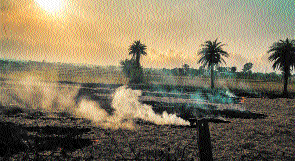
Madhya Pradesh has become the burning heart of India’s winter pollution crisis, with satellite data showing 7,762 fire and crop-burning incidents across the State between October 1 and November 11, including 445 fresh fires in a single day.
The figures come from the Madhya Pradesh Pollution Control Board’s Environment Surveillance Centre in Bhopal, based on NASA’s Fire Information for Resource Management System and VIIRS_NOAA20_NRT satellite data for the Kharif season. Every fire has been geo-tagged with latitude, longitude and brightness temperature.
Gwalior division is the worst affected with 2,151 fires, followed by Jabalpur with 1,398, Hoshangabad with 1,027 and Chambal with 952. Bhopal division recorded 682 fires, Rewa 473, Indore 414, Sagar 392 and Ujjain 271. Shahdol division reported just two fires.
At district level, Seoni leads the State with 830 fires, followed by Hoshangabad with 818, Sheopur with 699, Ashoknagar with 614 and Guna with 613. Sehore recorded 340 fires, Shivpuri 284, Singrauli 241, Jabalpur 223 and Gwalior 217.
The single-day spike on November 11, was sharpest in Jabalpur division, which added 118 fresh fires, including 54 in Seoni, 28 in Jabalpur and 24 in Katni. Gwalior division added 80 fresh fires, Chambal 67, Hoshangabad 58 and Rewa 57. Bhopal division added 36, Sagar 22 and Indore seven. Ujjain and Shahdol reported zero fresh fires that day.
The satellite map classifies fires by intensity. White marks extremely high-intensity fire, red marks high-intensity fire with very hot flames, orange marks moderate-intensity active burning and yellow marks low-intensity smouldering. Several locations crossed brightness values above 350,
indicating fierce and fast-burning fires.
With winter inversion setting in, cold air traps smoke close to the ground, turning local burning into regional smog that can travel hundreds of kilometres and worsen breathing problems and respiratory illness. This report focuses mainly on stubble burning, but post-Diwali pollution also played a major role in turning Madhya Pradesh into a gas chamber. Firecracker smoke, already hanging heavy in the cold, still air, mixed with fresh stubble smoke to choke cities and villages alike. Together, they pushed the state into a pollution chamber where every breath felt heavier.
The question is no longer whether stubble is being burnt in Madhya Pradesh. The satellite has answered that. The question is who will answer for 445 fires in one day.