Pachpaoli rly crossing closure adds to traffic chaos in nearby areas
| Date :13-Nov-2026 |
Staff Reporter :
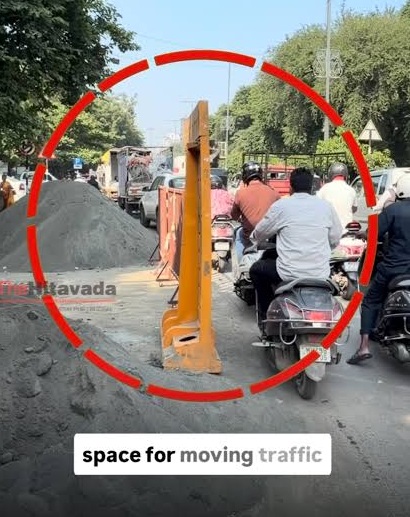
closure of two railway crossings in Pachpaoli for construction of railway underbridges (RuBs) has led to traffic chaos on nearby Kamal Chowk and Golibar Chowk, adding to congestion on roads already struggling to handle increased vehicle movement.
The situation has also raised concern over safety of motorists near Daga Memorial Government Women’s Hospital, where landing ramps of Indora-Dighori flyover have become
hazardous. Despite clear instructions prohibiting vehicles from using ramps in both the directions, motorists continue to flout the restriction. With the Railway crossings shut, vehicles travelling from Golibar Chowk towards Indora Square are now freely using these ramps, increasing the risk of accidents.
“Motorists travelling between Kamal Chowk, Itwari, Mahal and adjoining areas have lost their shorter routes.
They are now being pushed towards the flyover, putting additional pressure on its entry and exit ramps,” said Alok Humne, a regular commuter of the area.
Another commuter said absence of strict traffic regulation was making the situation more dangerous.
“Vehicles are approaching ramps from opposite directions, while closure of the crossings has increased volume of traffic. Unless traffic police regulate movement here, a serious accident is waiting to happen,” said Vishal Gade.
Nearly two months after Rs 998 crore Indora-Dighori flyover was opened in September, the National Highways Authority of India (NHAI) has begun work on the two RuBs, which were part of the original project but remained incomplete at the time of inauguration.
Closure of Motibagh Road from Kadbi Square has further reduced alternative routes available to commuters to cross the railway track. Traffic movement around Daga Hospital is particularly vulnerable as vehicles converge near the flyover ramps and narrow stretches of adjoining roads. The RuBs are intended to eliminate recurring traffic snarls at Railway crossings 571 and 572, where motorists often remain stranded whenever gates are shut for train movements. However, construction is expected to take three to four months, raising the prospect of prolonged disruption. NHAI had initially proposed constructing the flyover and RuBs simultaneously. However, police administration did not grant permission, citing lengthy detours that would have been imposed on motorists. NHAI subsequently revised its plan, completing the elevated corridor before taking up the underbridges.