Decoding AI
Date :16-Nov-2026
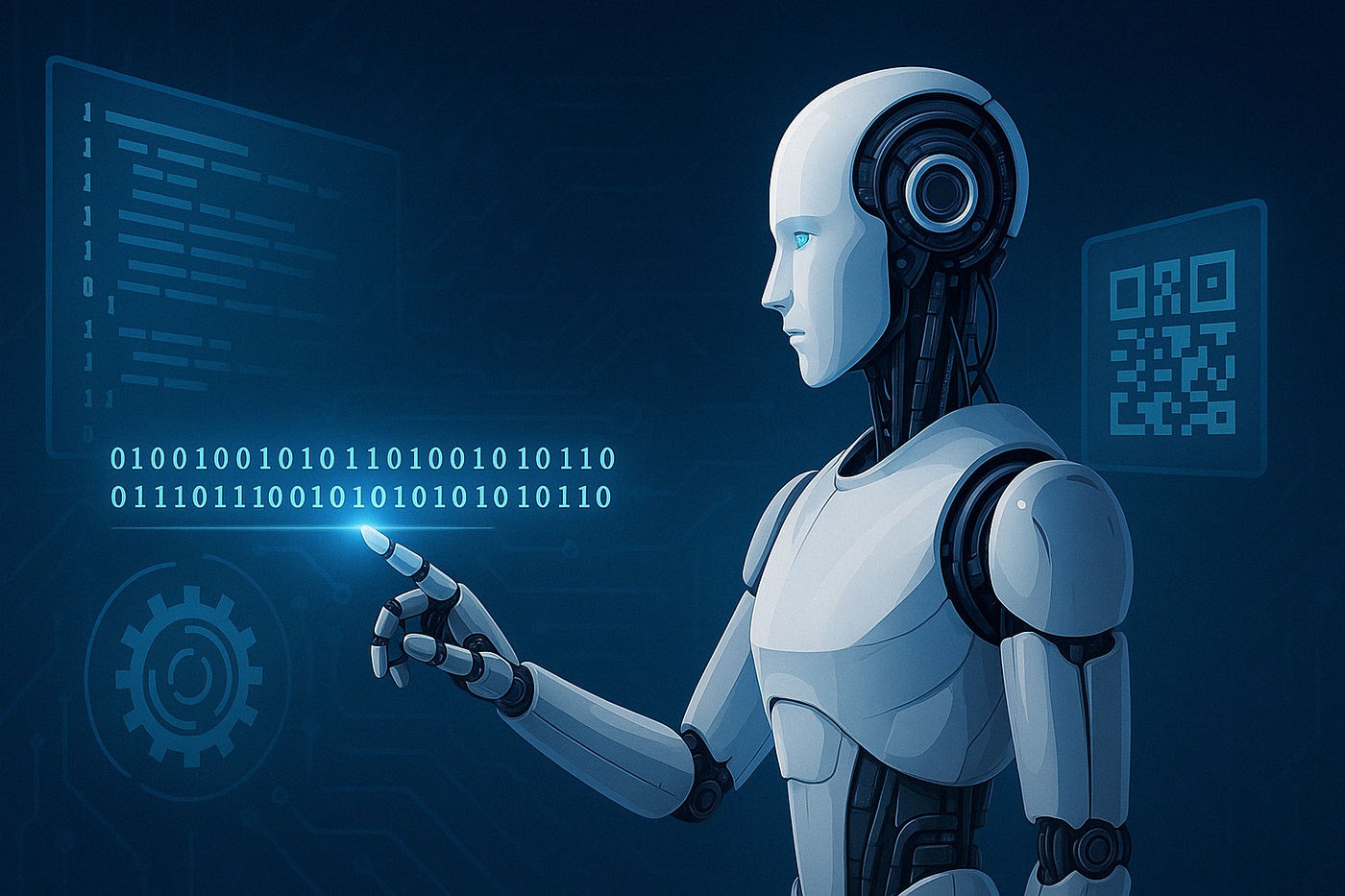
Artificial Intelligence (AI) is no longer just a concept from science fiction-it has become one of the most powerful technologies shaping the modern world. Today, we are living in an era where AI is transforming the way we think, learn, work, communicate and make decisions. AI has become an inseparable part of our daily lives.
Every time YouTube recommends a video, Netflix suggests a movie, Google Maps finds the fastest route, or a smartphone unlocks through facial recognition, AI is silently working behind the scenes.
Unlike traditional software that follows fixed instructions, AI can continuously improve by learning from experience, making it one of the most revolutionary innovations of the 21st century.
AI-powered platforms and virtual assistants have become valuable tools for students, teachers, researchers, writers, and programmers by helping with writing, coding, translation, research, and creative tasks. However, over-dependence on AI may weaken critical thinking, creativity, and independent problem-solving if students stop making an effort to think for themselves. AI should be viewed as a learning companion rather than a replacement for human intelligence.
Along with opportunities, AI also presents serious ethical and social challenges. The misuse of AI has led to deepfake videos, fake images, online fraud, cybercrime, data theft, misinformation, and digital manipulation, making it increasingly difficult to distinguish truth from falsehood. Such misuse can damage reputations, violate privacy, influence public opinion, and create distrust within society.
Another major concern is AI bias, where systems trained on biased data may produce unfair or discriminatory outcomes.
This highlights the need for transparency, accountability, and fairness in AI development.
Young people, being the largest users of AI, have a particularly important role to play. They should not only learn how to use AI effectively but also understand its limitations and verify information before accepting or sharing it.
One of the most common questions about AI is whether it will replace humans completely. While AI can process information faster, analyse data more efficiently, and automate many tasks, it cannot truly replicate human emotions, empathy, creativity, ethical judgment, imagination, and moral responsibility. AI can support human decision-making, but it should never replace human values.
Looking ahead, AI will continue to influence every aspect of society through smart cities, autonomous vehicles, intelligent healthcare systems, scientific research, climate solutions, and advanced education. Rather than fearing AI, we must learn to use it responsibly and wisely. Artificial Intelligence is undoubtedly one of the greatest technological achievements in human history. Its true impact, however, depends not on the technology itself but on the choices humans make while using it.

By Saloni Deshmukh
Shri Mathuradas
Mohota College Of Science