SIR exercise: BLOs in race against time to fill forms
| Date :16-Nov-2026 |
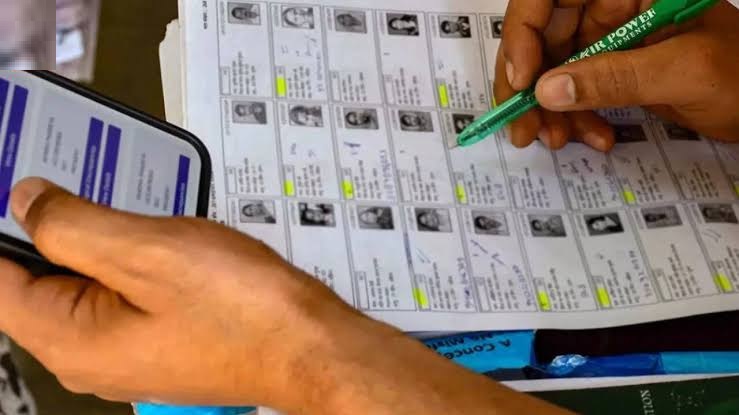
Staff Reporter :
With nearly 99.98 per cent of Nagpur district’s electorate cleared for inclusion in the final electoral roll, the Special Intensive Revision (SIR) has virtually reached completion.
However, the Election Commission of India’s decision to give voters categorised as Absent, Shifted, Dead and Duplicate (ASDD), whose enumeration forms were not returned, another opportunity to enrol has raised questions over the feasibility of completing the exercise before the final roll is published on November 30.
According to the latest Hearing and Notice Disposal Status, 31,91,174 electors have been cleared for final publication against a district total of 31,95,322.
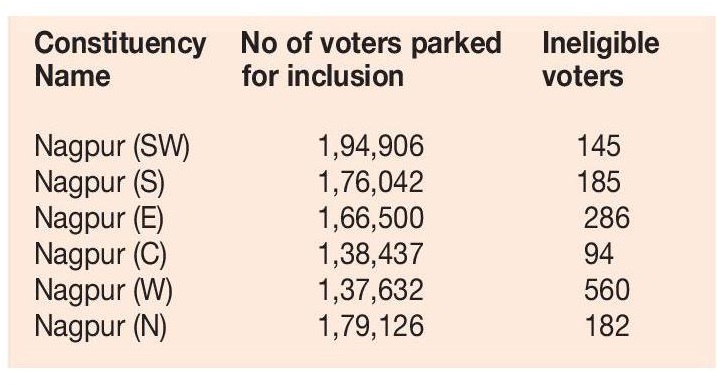
The report lists 3,179 voters as ineligible, while 518 cases remain pending across the district’s 12 Assembly constituencies. The figures indicate that the overwhelming majority of the electorate has cleared the verification process.
Saoner constituency has the highest number of voters found ineligible at 583, followed by Nagpur West (560), Kamptee (419) and Hingna (353).
Nagpur (East) has 286 such cases, Ramtek 206 and Nagpur (South) 185. Katol has 52, while Nagpur (Central) has 94. The latest report also puts the number of pending cases at 518.
Fresh exercise
for ASDD voters
The ECI’s November 6 directive has opened another window for electors marked as ASDD whose enumeration forms were not returned and whose names were consequently excluded from the draft roll. Their booth-wise lists must be displayed again at polling stations and local body offices and uploaded on the Chief Electoral Officer’s website.
Partially filled forms are to be generated afresh on the ECINET dashboard, with BLOs directed to contact electors through home visits, family members, neighbours, political party representatives and available phone numbers. Forms can also be delivered electronically or downloaded through the ECINET app.
However, the timing raises serious practical concerns. With the final roll scheduled for November 30 and hearings and disposal of notices due to end by November 25, officials have barely two weeks to identify these voters, distribute forms, collect completed documents, verify eligibility and process the entries.
This is a substantial task, particularly in urban constituencies
with large electorates and voters who may have shifted residence or whose contact details are unavailable. The Commission has already revised the Maharashtra SIR schedule several times. The September 26 revision extended claims and objections period from September 30 to October 12 and shifted final publication from November 4 to November 16. On October 29, the deadline for claims and objections was extended again, from October 26 to November 13, while disposal of notices was pushed from November 10 to November 25. Final publication was moved to November 30.
Risk of duplication
The district has received 60,900 Form 6 applications; 1,827 Form 7 applications seeking deletion; and 19,219 Form 8 applications for correction or shifting of residence. Nagpur (North) accounts for 15,015 Form 6 applications. For Form 8, Nagpur (North) has the highest number at 4,904, followed by Nagpur (West) with 4,564. The fresh ASDD exercise also raises the possibility of duplicate applications, particularly where voters have already submitted Form 6 for fresh enrolment after finding their names missing from the draft roll. The ECI’s November 6 directive specifically clarifies that such electors need not submit enumeration forms again; their Form 6 applications will be processed under the Commission’s November 3 clarification. It has also directed officials to put safeguards in place to prevent duplicate enrolment.
With the bulk of the verification exercise already completed, the challenge now is to ensure that eligible voters are not left out because of procedural or logistical delays. The tight schedule leaves little room for errors in a process that will determine who remains on the final electoral roll.