Jimmy N Tata backs Chandra, listing
| Date :17-Nov-2026 |
NEW DELHI :
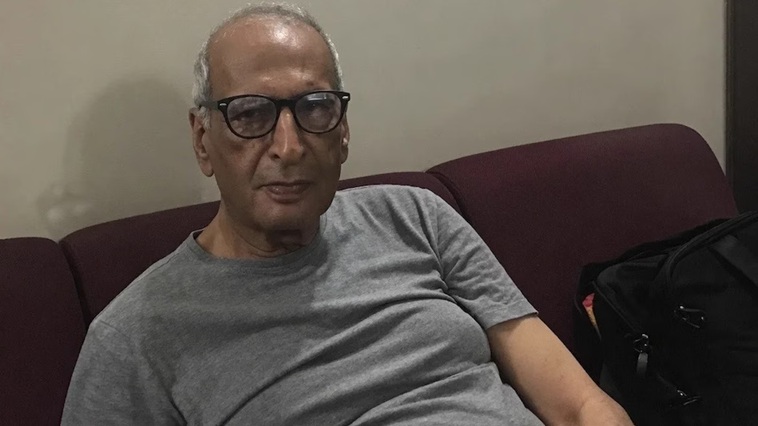
JIMMY N Tata, 85-year-old
younger brother of the late
Ratan Tata and a trustee of
the Sir Ratan Tata Trust, has
accused Tata Trusts Chairman
Noel Tata of seeking to consolidate family control over
the charitable institutions
and, through them, Tata Sons,
describing the developments
as a potential “back-door
takeover” of the conglomerate’s holding company.
Jimmy Tata has broken his
silence, backing N
Chandrasekaran for a third
term as Tata Sons chairman
and supporting the mandatory public listing of the group’s
holding company — putting
him directly at odds with his
half-brother, Noel Tata.
Jimmy warned against any
attempt to restructure Tata
Sons into smaller entities to
avoid the listing requirement,
alleging that such a move
would serve to preserve
secrecy and unchecked control. He also cited the public
listing of Tata Consultancy
Services under Ratan Tata as
an example of how the group
had benefited from opening
one of its flagship businesses
to public investors.
“Any proposal or move by
Noel Tata to break up Tata
Sons into smaller entities to
evade the RBI’s threshold
requirements for listing, is
deeply damaging and contrary to public and shareholder interests,” he said.
He urged the RBI to impose
strict timelines for listing and
called on the Government
and Charity Commissioner to
intervene to safeguard the
original objectives of the
trusts. The 85-year-old conveyed his views during a documented conversation with a
fellow Tata Trusts trustee,
who subsequently briefed
other trustees, people with
knowledge of the matter said.
Jimmy, according to the
people, said the induction of
multiple members of the
chairman’s family into the
trusts was inconsistent with
the intentions of their
founders, who had established the institutions to serve
the public rather than function as private family vehicles.
“What has transpired in recent
times is that the trusts are being
filled with family members of the
present Tata Trusts Chairman,
thereby securing a degree of control over Tata Sons that was never the settlers’ intention,” he said.
“It is entirely inappropriate for
more than one family member
to serve on a given trust; doing
so effectively confers ownership
rights over the trusts’ significant
shareholding in Tata Sons at no
consideration whatsoever.”
The intervention comes amid
an intensifying dispute over the
governance of Tata Trusts, which
collectively hold about 66 per
cent of Tata Sons, the holding
company of the USD 277-billion
Tata group, and disagreements
over its future ownership structure, the re-appointment of N
Chandrasekaran as Tata Sons
chairman and whether the holding company should be publicly
listed.
Tata Trusts Chairman Noel Tata
and trustee Darius Khambata
have opposed Chandrasekaran’s
re-appointment for another fiveyear term and resisted listing Tata
Sons, arguing that a public listing could undermine the distinctive governance structure of
the Tata Group and the Trusts’
ability to safeguard its long-term
interests.
Vice-Chairmen Venu
Srinivasan and Vijay Singh, however, have backed the Tata Sons
board’s decision to re-appoint
Chandrasekaran and argued that
the company must respect regulatory requirements, including
the RBI’s listing framework.
Jimmy’s remarks also follow
Noel’s appearance at the
‘Hindustan Times Leadership’
Summit on November 14, where
the Tata Trusts chairman defended keeping Tata Sons privately
held, warning that a public listing could shift the group’s priorities towards profits and away
from philanthropy.
Jimmy, however, argued that
the Sir Ratan Tata Trust (SRTT)
and Sir Dorabji Tata Trust (SDTT)
- two principal charitable trusts
that together hold 51.54 per cent
of Tata Sons - were established
through the wills and deeds of
their respective founders, who
had no children and bequeathed
their wealth and properties to create institutions for public benefit.
Their stated objectives included alleviating poverty and safeguarding Indian culture, he said,
adding that trustees were custodians of public charitable institutions rather than owners of
family assets.
He cited former Tata chairmen
JRD Tata and Naval Tata as leaders who understood the responsibility attached to managing the
trusts.
Jimmy also questioned
changes to the Tata Sons Articles
of Association around 2013-14,
arguing that they had fundamentally altered the relationship
between the charitable trusts and
the operating business.
Under the earlier framework,
he said, the welfare trusts were
kept separate from the commercial management of Tata
Sons. The subsequent amendments, however, gave the Tata
Trusts chairman what he
described as “unnatural, dictatorial veto powers” and the
authority to nominate directors,
undermining the collective decision-making powers of the board.
He also criticised differences
in trustee tenure rules, alleging
that fixed terms for some trustees,
alongside exemptions for others, had weakened institutional
independence and concentrated authority.
Citing the position of Venu
Srinivasan, whose term on the
Sir Ratan Tata Trust is due to
expire in December, Jimmy
alleged that Srinivasan was being
targeted because he opposed the
induction of Noel’s son into the
trust. He also referred to the earlier removal of Vijay Singh, alleging that it followed his publication of an article setting out factual concerns.
He contrasted the current
arrangements with an earlier tradition of appointing independent and eminent figures to the
trusts, naming jurist Nani
Palkhivala, industrialist Gautam
Sarabhai, nuclear scientist Homi
Sethna and physicist Homi
Bhabha.
The dispute has also spilled
over into the leadership of Tata
Sons, with Jimmy throwing his
support behind Chandrasekaran
and criticising Noel for opposing his proposed third term as
executive chairman.
Jimmy said Chandrasekaran
had helped turn around Tata
companies that were weighed
down by debt, delivering record
earnings and substantial dividend payouts to shareholders,
including Tata Sons.
He said Chandrasekaran had
received a 4-1 majority at the
Tata Sons board and unanimous
backing through a resolution
passed by Tata Trusts, but Noel
had nevertheless sought to block
his continuation by invoking the
veto provisions in the amended
Articles of Association.
“Despite Chandrasekaran
receiving overwhelming support
(including 4-1 in Tata Sons board
and a unanimous resolution
passed by Tata Trusts), Noel
sought to block him arbitrarily
by invoking the onerous veto
provisions in the amended
Articles of Association without
providing any justification or
accountability,” Jimmy said.
Interestingly, Shapoorji
Pallonji Group, its second-largest
shareholder with an 18.37 per
cent stake, has backed a stock
market float to unlock value from
its investment.
Jimmy has called for the
Reserve Bank of India (RBI) to
enforce the listing of Tata Sons,
arguing that a public float would
bring greater transparency and
statutory accountability to the
group.
The issue has acquired urgency
following the RBI’s September
2026 rejection of Tata Sons’ application to surrender its registration as a core investment
company.
The company had been classified as an upper-layer nonbanking financial company
(NBFC) in 2022, triggering a
three-year listing requirement
that expired in September 2025.
The RBI has retained Tata Sons
within its upper-layer regulatory framework, strengthening the
regulatory pressure for a listing.
Tata Sons had previously sought
to exit the framework after repaying substantial debt.
Jimmy Tata is the younger son
of Naval Tata and his first wife,
Sooni Commissariat, while Noel
Tata was born to Naval and his
second wife, Simone Dunoyer.