Nagpur breathing ‘very poor’ air
| Date :17-Nov-2026 |
Staff Reporter :
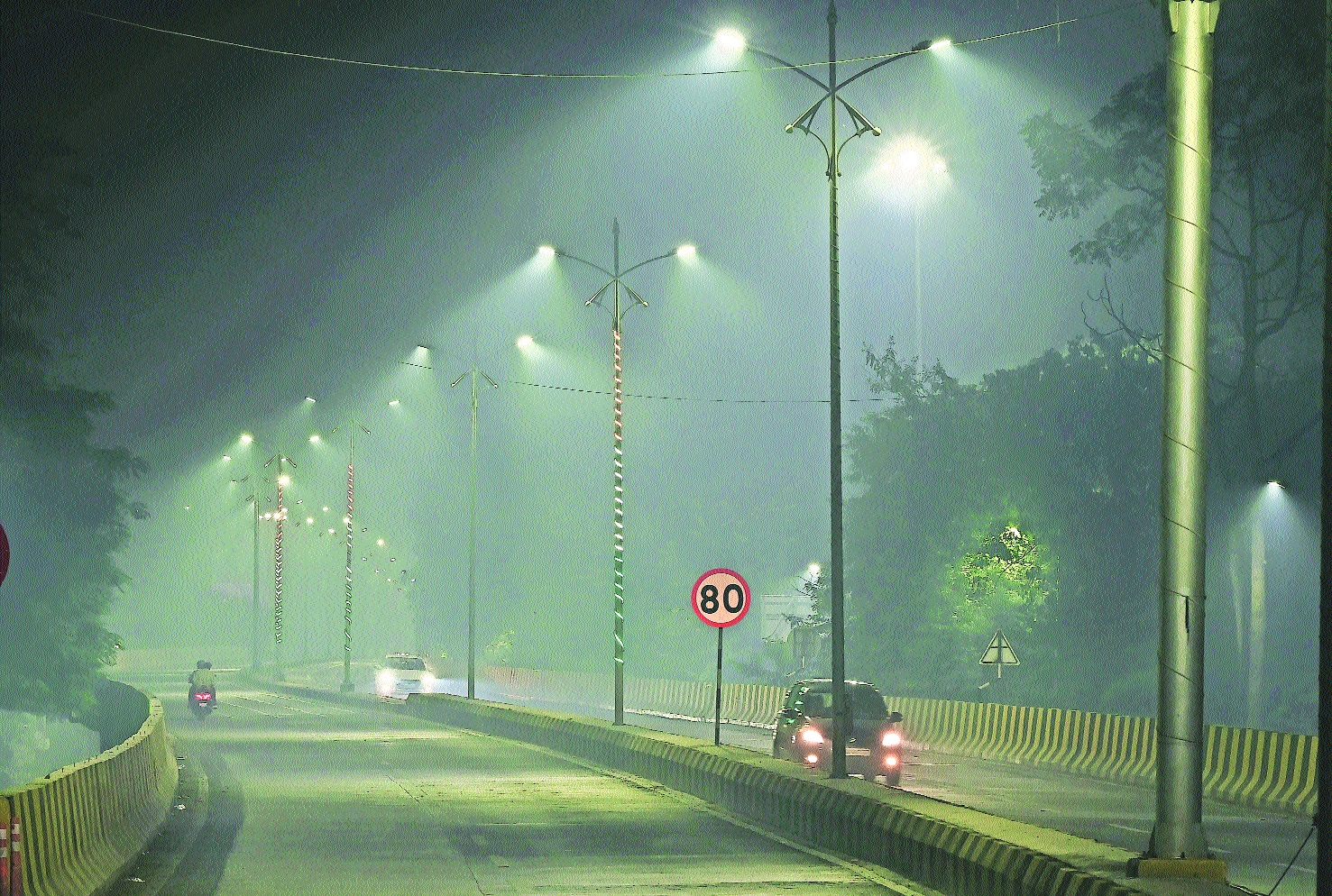
Monday’s air quality was worse than Diwali night
The Particulate Matter (PM2.5) pollution levels in Nagpur city once again shot up on Monday, causing breathing distress to those at risk.
Normally, Diwali festival is blamed for poor air quality throughout the country, but Monday’s air quality was worse than Diwali night in Nagpur.
Nagpur city has four Continuous Ambient Air Quality Monitoring Stations (CAAQMSs) which collect data of air quality 24x7. On Monday, out of four stations, three recorded PM2.5 level almost above 300 which is considered as ‘Poor’. The levels of PM2.5, mainly comprising dust and smoke, consistently entered the poor category during night hours, raising concerns among health experts and residents alike.
On Monday, The Mahal CAAQMS recorded the highest PM2.5 concentration of 326 µg/m³, falling in the ‘very poor’ category. Similarly, the CAAQMS at Ram Nagar recorded PM2.5 levels of 301 µg/m³. Even
the Civil Lines station, situated at GPO, showed the PM2.5 of 297 µg/m³.
Ambazari-based station recorded the PM2.5 levels of
219 µg/m³.
Experts say such fluctuations highlight the impact of local sources and meteorological factors on air quality.
While the presence of dust is largely attributed to temperature inversion, sharp temperature variations, and foggy conditions, smoke pollution is believed to come from the burning of dry articles, waste material, or wood by people forced to stay outdoors during night hours.
Calm wind conditions further prevent the dispersion of pollutants, allowing fine particulate matter to remain suspended close to the ground.
As per the Central Pollution Control Board (CPCB) bulletin released on Monday evening, Nagpur’s overall air quality index (AQI) from Sunday 9 pm to Monday 9 am stood at 186 in the moderate category.
This level of AQI was better than other major cities in the state, including Mumbai, Pune and Pimpri-Chinchwad which recorded an AQI of above 200. Despite being in the moderate bracket overall, several local monitoring stations showed alarming PM2.5 spikes during night hours. Vulnerable groups, including children, the elderly, and those with respiratory ailments, are advised to exercise caution, especially during late evenings and early mornings. According to doctors, one should refrain from night walks, running, or outdoor workouts when PM2.5 levels are elevated. Along with this, seal homes during late evening and night hours to prevent ambient smog from drifting indoors; and run indoor air purifiers with HEPA filters and
wear a properly fitted N95 mask if stepping outside is
unavoidable.