Maharashtra Cabinet approves cash rewards for information on weapons looted by Naxalites
| Date :18-Nov-2026 |
MUMBAI :
THE Maharashtra Cabinet on
Tuesday approved a cash reward
scheme for those providing information about weapons looted
by Naxalites from security forces,
with the payout varying according to the type and number of
firearms recovered, officials said.
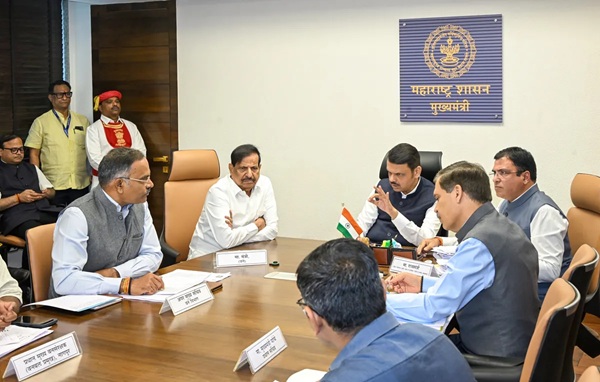
Chaired by Chief Minister
Devendra Fadnavis, the Cabinet
also cleared amendments to the
Maharashtra Public Universities
Act, 2016, revised norms under
the State textile policy, and
approved setting up a principal
district and sessions court in
Palghar, they said.
Under the Home Department’s
scheme to trace missing firearms,
rewards will be fixed according
to the category of weapons,
including automatic, semi-automatic and other firearms, as well
as ammunition, with payouts
going up to
around Rs 1.5
lakh depending on the weapon type, an official statement said.
The State Government said
Naxalites had looted weapons
from police stations and security teams during attacks over the
years.
While the State’s existing surrender policy for Naxalites provides additional financial assistance to cadres surrendering with
arms, there was no provision to
reward informants helping
recover weapons looted from
police stations and security
teams over the years, it noted.
The Home Department had
proposed the scheme to trace
the missing weapons.
Under the defined sanctioning powers, Superintendents of
Police can approve rewards up
to Rs 10 lakh, while Deputy
Inspectors General of the
Gadchiroli range can clear
amounts exceeding Rs 10 lakh
and up to Rs 25 lakh.
Similarly, the Special Inspector
General of Police (Anti-Naxal
Operations) can sanction
rewards between Rs 25 lakh and
Rs 50 lakh, and the Additional
Director General of Police
(Special Action) can approve
amounts ranging from Rs 50 lakh
to Rs 1 crore.
In another decision, the
Cabinet approved an ordinance
to amend the Maharashtra Public
Universities Act, 2016, which
came into force on March 1, 2017,
in view of evolving higher education needs and the implementation of the National
Education Policy.
An amendment to Section
13(12) will empower the
Chancellor to remove a Pro-ViceChancellor on the recommendation of the Vice-Chancellor of
the university concerned, while
a change to Section 100(5)(a) will
allow university construction and
development works to be executed through the Public Works
Department under the supervision of the Management Council.
The Cabinet also approved
changes to the Integrated and
Sustainable Textile Policy 2023-
28, revising the zone classification by moving districts in Zone
2 to Zone 1, Zone 3 to Zone 2,
and Zone 4 to Zone 3, effectively abolishing Zone 4. Palghar,
being a tribal district, has been
placed in Zone 1.
Under the revised norms,
installing additional machinery
worth 10 per cent or more of the
book value of machinery
installed in the previous financial year will qualify as
expansion.
Textile projects with bank loans
sanctioned before June 1, 2023 -
or self-financed units that made
advance machinery payments -
which began production during
the 2023-28 policy period can
now opt for benefits under either
the 2018-23 or the 2023-28 policy. The Cabinet also cleared setting up a principal district and
sessions court, a Chief Judicial
Magistrate’s Court and a district
public prosecutor’s office in
Palghar, which was carved out of
Thane on August 1, 2014, and
comprises eight talukas - Palghar,
Vasai, Dahanu, Talasari, Jawhar,
Wada, Mokhada and Vikramgad.
For the principal district and
sessions court, 79 new posts will
be created, 29 transferred fromother courts, and 39 hired
through outsourcing.
Additionally, 16 new posts and
three outsourced positions have
been sanctioned for the Chief
Judicial Magistrate’s Court,
alongside five new posts and one
outsourced position for the district public prosecutor’s office.