Breakthrough: India’s first home-grown shield against deadly bird flu
| Date :19-Nov-2026 |
Staff Reporter :
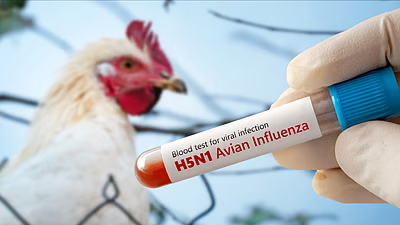
India is set to script history in poultry health as Union Agriculture and Farmers’ Welfare Minister Shivraj Singh Chouhan will dedicate the country’s first indigenous H5N1 (Clade 2.3.2.1a) bird flu vaccine to the nation on November 20 at the ICAR-National Institute of High Security Animal Diseases (ICAR-NIHSAD) in Bhopal.
Developed indigenously by scientists at ICAR-NIHSAD, the inactivated vaccine is specifically designed to protect chickens against the highly pathogenic avian influenza (HPAI) virus belonging to Clade 2.3.2.1a, the strain responsible for most bird flu outbreaks in Indian poultry.
A single dose provides protection for up to six months, making it particularly suitable for layer and breeder chickens. Until now, no specific commercial vaccine was available against this clade, leaving poultry farmers dependent only on surveillance, culling and movement restrictions to contain the infection.
The launch comes at a critical time. Fresh outbreaks have been reported in Tamil Nadu and Andhra Pradesh. In Tamil Nadu’s Cuddalore district, H5N1 was confirmed in November after sudden bird deaths, with 35,647 birds dead as of November 13 and culling operations launched in the affected zone.
Andhra Pradesh reported an outbreak in October in Anantapur district, where infected and surveillance zones were declared to check the spread.
Since bird flu was first detected in India in 2006, more than 500 combined outbreaks of H5N1 and H5N8 subtypes have been reported across the country. Outbreaks can cause nearly 100 per cent mortality among infected birds, besides trade curbs and huge financial losses for farmers. The 2006 outbreak alone
caused estimated direct and indirect losses of Rs 2,200-3,000 crore. The new vaccine is expected to reduce farmers’ losses, strengthen India’s outbreak response and lower the risk of transmission from chickens to other animals and humans.