No local control centre City’s ambulances fail to serve mishap victims
| Date :19-Nov-2026 |
By Saniya Chakraborty :
Emergency calls are first routed to Pune and
subsequently transferred to local centres depending on where the
accident has occurred
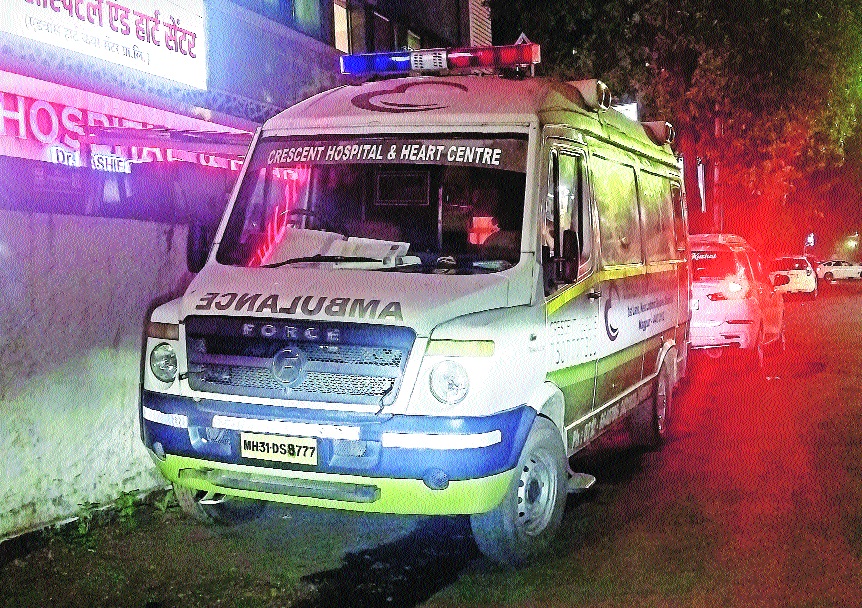
An accident takes place. Victim lies injured on the road. Bystanders rush to help and dial for an ambulance, expecting immediate assistance. But instead of an ambulance being dispatched, the call travels from Nagpur to Pune and back to a local centre. The caller has to explain the location again, describe the victim’s condition and wait for the request to reach the right people. By then, nearly half an hour may have passed. This alleged call-routing process has raised serious questions about Nagpur’s ambulance response system, particularly when every minute matters.
The first hour after a traumatic injury is known as the ‘Golden Hour’, a critical period during which timely medical intervention can improve a victim’s chances of survival.
Losing a significant part of this window to call transfers and repeated communication can have serious consequences. Raju Wagh, founder of the Road Mark Foundation, alleged that Nagpur does not have a dedicated central emergency call centre to coordinate ambulance services. According to him, emergency calls are first routed to Pune and subsequently transferred to local centres depending on where the accident has occurred.
Wagh said callers may have to repeat the accident location and explain the victim’s condition each time the call is transferred. Depending on the area, the call may reach centres serving Umred Road, Hingna Road or Butibori. This communication process alone can consume nearly 30 minutes before an ambulance is dispatched.
When ‘The Hitavada’ tried to contact the concerned official, they did not receive the call.
The delay becomes particularly concerning when Nagpur district has 40 ambulances under the State’s 108 Maharashtra Emergency Medical Services (MEMS) network, including nine Advanced Life Support (ALS) and 31 Basic Life Support (BLS) vehicles. Private operators, hospitals and the municipal corporation also run ambulances. However, the availability of vehicles means little if the system cannot dispatch them promptly. A GPS-enabled mechanism should automatically share the caller’s location with the nearest available ambulance, eliminating repeated explanations and unnecessary transfers. A centralised local control centre, could improve coordination and reduce response time. People has to arrange private vehicles or autorickshaws to transport injured victims because waiting for an ambulance was not an option. Such arrangements, however, can be dangerous for critically injured people who may require oxygen, medical equipment or trained assistance, said Wagh.
The foundation, which has been working in road safety since 2001, claims to have assisted around 9,000 accident victims and helped save more than 600 lives.
Wagh also raised concerns about highway contractor ambulances allegedly refusing to cross their designated stretches, even when victims need treatment at hospitals in Nagpur. For an accident victim, the emergency begins at the moment of impact. The ambulance response should begin then too - not after a call has travelled between cities, locations have been repeated and precious minutes have been lost.