327 illegal sand, stone transport cases; Rs 4.80 crore recovered in 19 months
| Date :20-Nov-2026 |
Staff Reporter :
District’s Revenue Department registered 327 cases of illegal transportation of sand and stone and recovered approximately Rs 4.80 crore in penalties between April 2025 and October 2026. However, only 18 cases were registered with the police and no arrests were recorded during the period, according to departmental figures. Of the 327 cases recorded by the Mining Department, 261 were registered during 2025-26, resulting in recovery of Rs 3.89 crore.
Parseoni reported the highest number of cases at 44, followed by Mouda with 42. Mouda topped the recovery chart with Rs 80.16 lakh, followed by Parseoni at Rs 73.79 lakh and Saoner at Rs 44.30 lakh. During the first seven months of 2026-27, from April to October, another 66 cases were recorded, with Rs 91.59 lakh recovered. Umred reported the highest number of cases at 11, while Narkhed, Saoner and Kalmeshwar recorded eight each. Narkhed led in recovery with Rs 23.41 lakh, followed by Kalmeshwar at Rs 15.76 lakh and Saoner at Rs 10.78 lakh.
Under the enforcement mechanism, offenders transporting minerals illegally are liable to a penalty of five times the average rate per brass fixed by the Tehsildar.
An additional penalty of Rs 2 lakh applies in cases involving vehicle confiscation. Cases will be heard in courts.
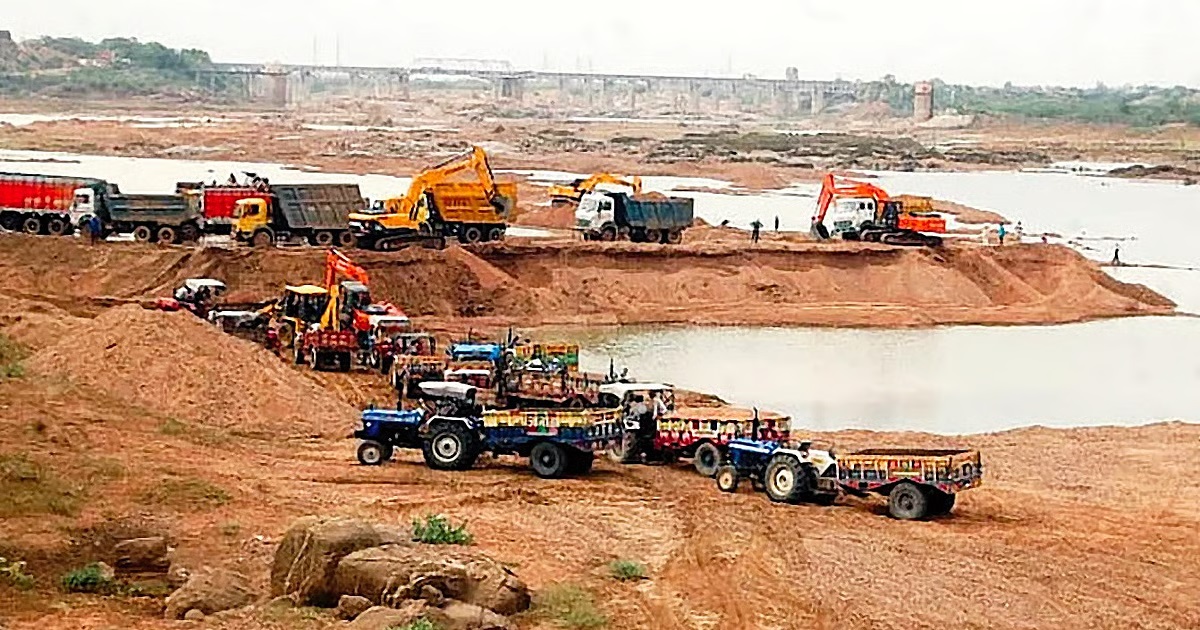
The figures come against the backdrop of repeated action against illegal sand extraction and transportation in Nagpur district. River beds, particularly along the Kanhan belt, have witnessed complaints of unauthorised excavation, excessive extraction and night-time
mining.
Police operations in Ramtek, Bhiwapur, Umred and other areas have resulted in the seizure of sand-laden tippers, tractors and excavated stock.
In separate operations during 2025, police seized illegally mined sand and vehicles worth Rs 1.60 crore in the Ramtek subdivision and over Rs 1.56 crore in coordinated raids across Bhiwapur, Umred and Ramtek.
Despite recoveries of nearly Rs 4.81 crore, the absence of arrests and seizure of vehicles deposited with the Government in the departmental records raises questions about the deterrent effect of the enforcement mechanism. Sustained surveillance of vulnerable river stretches and stricter action against repeat offenders remain crucial to
curbing illegal mineral transportation.