39% water going down the drain despite Rs 187 crore pipeline work
Date :22-Nov-2026
Staff Reporter
Some areas get water for barely 2 hours a day
Nearly 39 per cent of the water supplied to Nagpur remains unaccounted for, meaning almost two out of every five litres pumped into the city’s distribution network fail to generate revenue. Despite spending Rs 186.80 crore on replacing 433 km of pipelines, Nagpur Municipal Corporation (NMC) has failed to bring water losses within the prescribed limit.
The shortfall is raising questions about the performance of private operator Orange City Water (OCW) and the civic body’s monitoring. Official records obtained by Congress corporator and Standing Committee member Abhijeet Jha from NMC’s Public Health Engineering Department show that Non-Revenue Water (NRW) stood at 39 per cent in 2024-25.
This was 8.22 percentage points above the target of 30.78 per cent set for the year.
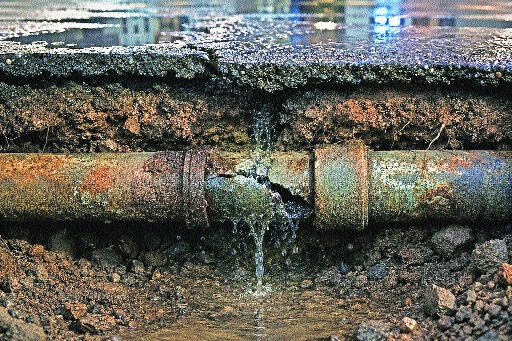
NRW refers to water that enters the supply network but does not generate revenue. This includes water lost through leaking pipelines, unauthorised connections and errors in billing. Such losses mean that a significant portion of treated water is wasted or supplied without payment.
This also puts additional pressure on the city’s water resources and affects the amount of water available to consumers. The figure has come down from 52 per cent when the OCW agreement began. However, the improvement has been much slower than expected.
According to a directive issued by Nagpur Environmental Services Limited (NESL) on March 31, 2022, OCW was required to reduce NRW to 30.78 per cent in 2024-25, 27 per cent in 2025-26 and 25 per cent in
2026-27. Despite missing the first target, the civic administration has not imposed any penalty. It has also not provided certified figures for the subsequent years.
The problem is not limited to water losses. The official data also exposes wide differences in daily supply hours across the city, raising questions about the implementation of the 24x7 water supply scheme. While residents of Trimurti Nagar receive water for 18 to 24 hours, Dhantoli and Chinchbhuvan get supply for 18 to 22 hours.
In contrast, areas under Dighori, Kharbi, Sakkardara Tank No 3 and Seminary Hills receive water for barely two to two-and-a-half hours daily.
This uneven supply forces residents in several localities to depend on storage tanks and manage their daily needs within a limited supply window. It also raises concerns over whether the promised round-the-clock supply has reached all parts of the city.
Questioning the expenditure and lack of accountability, Jha said, “Public money worth Rs 186.80 crore has been spent to replace 433 km of pipelines, yet NRW remains well above the target.
The administration must explain how much water was saved and why no action was taken against OCW.” A senior NMC official alleged that the company had failed to implement the 24x7 scheme and that the Water Supply Department had not monitored its performance properly.